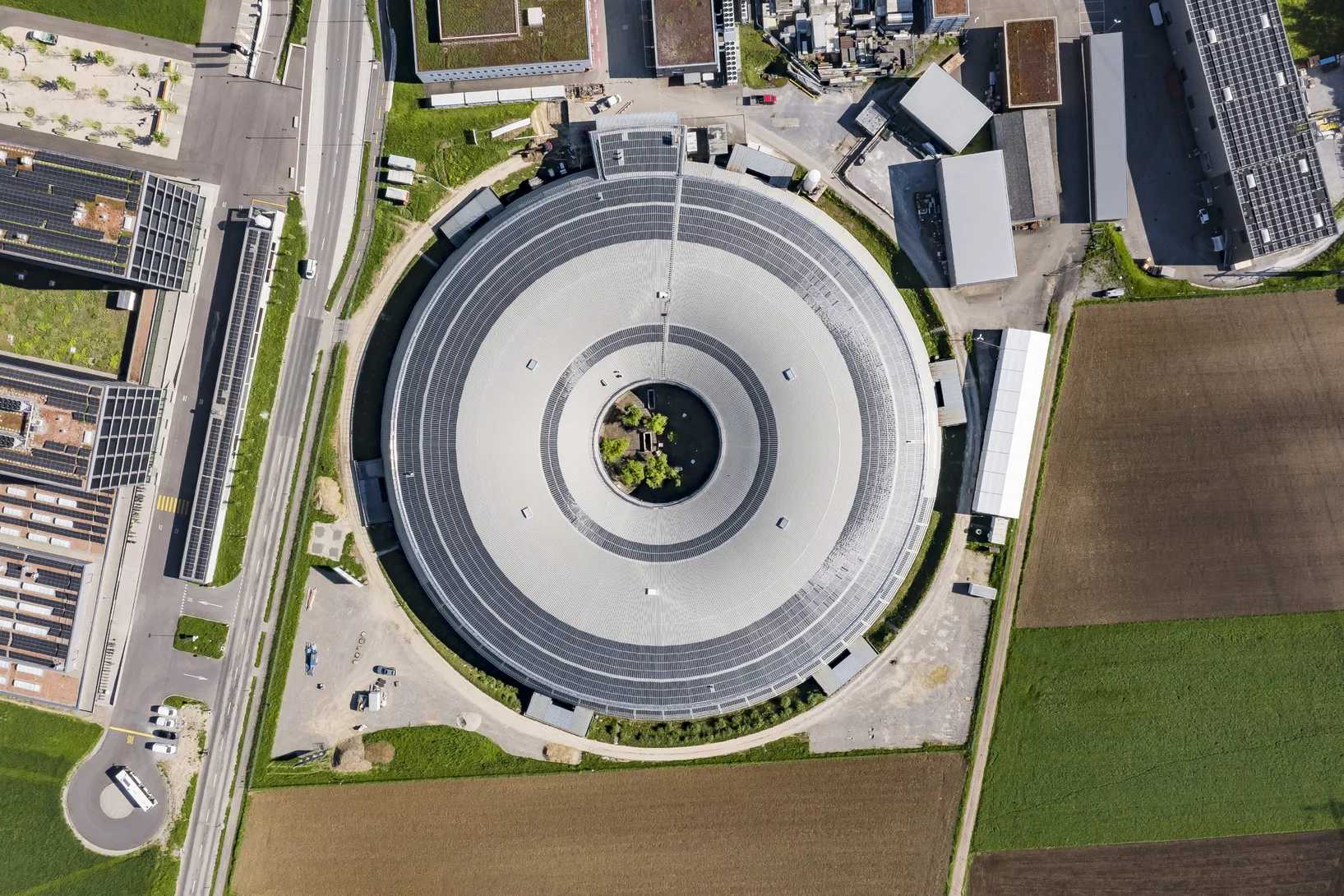
Das PSI bietet mit seiner weltweit einmaligen Forschungsinfrastruktur einzigartige Möglichkeiten für die nationale und internationale Spitzenforschung.

Die Forschungsschwerpunkte des PSI
Aktuelle Highlights aus unserer Forschung

Schweizer Biomethan hat Potenzial
Durch die intelligente Nutzung von Biomasse könnte die Schweiz einen substanziellen Anteil des eigenen Gasbedarfs selbst decken und so die Schweiz unabhängiger vom Weltmarkt machen.

Eine Zeitmaschine zum stabilsten Zustand
Mit der Open-Source-Software GEMS lässt sich die Chemie komplexer Systeme berechnen. Ein neues nationales Konsortium stellt nun die langfristige Weiterentwicklung sicher.

Warum Zellen im Alter «falsch» reagieren
Forschende des PSI haben geklärt, warum unsere Körperzellen im Alter anders auf Reize und Signale reagieren als junge Zellen. Die Untersuchung menschlicher Hautzellen zeigte: Die gepackte Form des Erbguts im Zellkern, das sogenannte Chromatin, spielt eine zentrale Rolle.
Möchten Sie unsere Anlagen für Ihre Forschung nutzen?
Erfahren Sie mehr über unsere Grossforschungsanlagen und weiteren Forschungseinrichtungen.
PSI Center & Labs
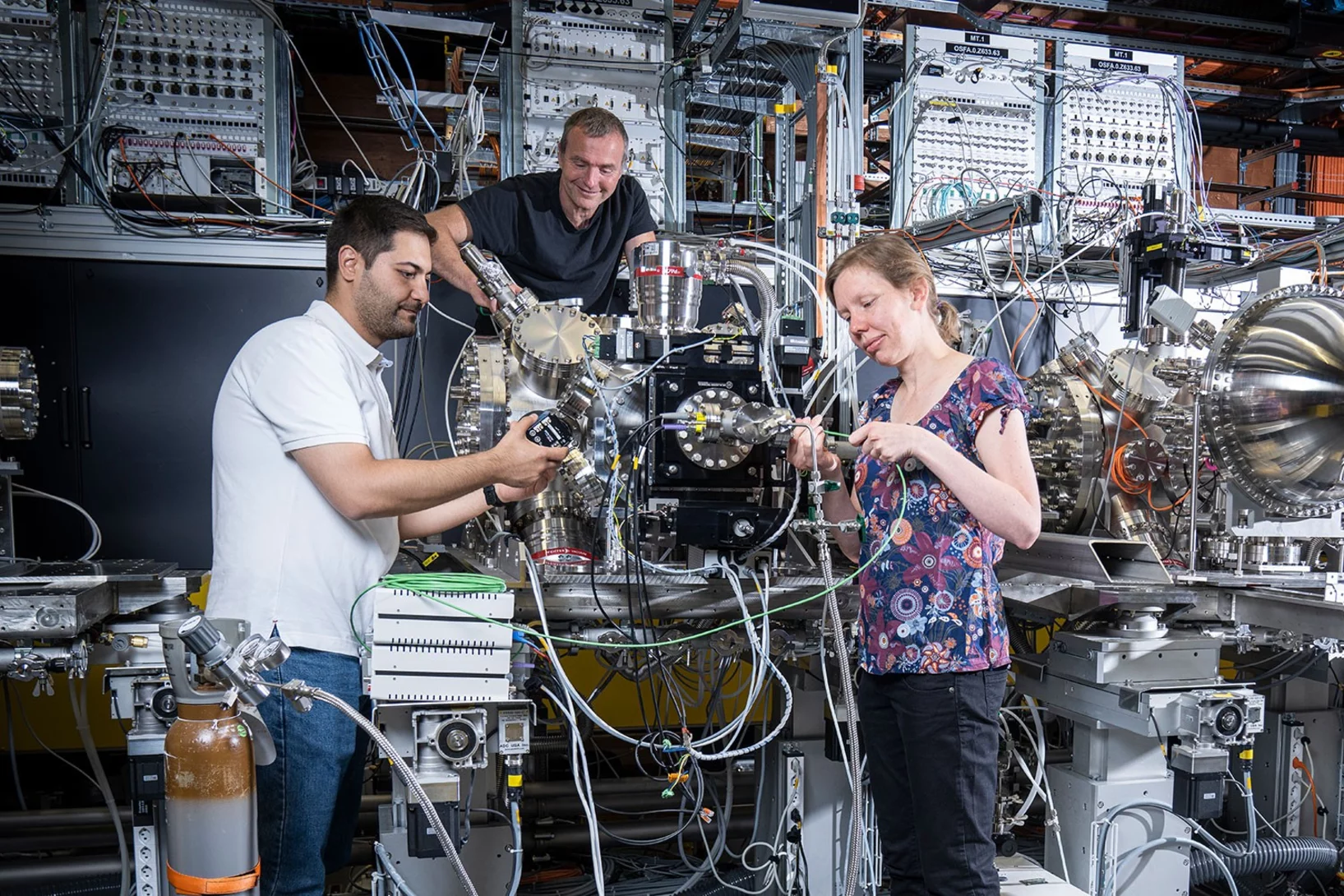
Unsere Forschungs- und Servicezentren betreiben international anerkannte Spitzenforschung in den Natur- und Ingenieurwissenschaften und stellen der Wissenschaft wie auch der Industrie hochkomplexe Grossforschungsanlagen für eigene Forschungsvorhaben zur Verfügung.
Scientific Highlights aus unseren Centren

Experimental observation of short-range magnetic correlations in amorphous Nb2O5 and Ta2O5 thin films
We use muon spin rotation/relaxation/resonance (μSR) to investigate the magnetic properties of niobium pentoxide (Nb2O5) and tantalum pentoxide (Ta2O5) thin films. In both oxides, we observe a magnetic response at the lowest available temperature of 2.8 K ...

Vanishing ordered moment in the frustrated triangular lattice antiferromagnet CuNdO2
The steady decline of neutron imaging (NI) facilities—driven in part by the shutdown of several research reactors—has increased the need to maximize the use of existing infrastructure. In this context, a collaborative effort between PSI-CNM, PSI-NES, and EPFL-LRS has led to the development ...

Collaborative Development of a New Neutron Imaging Beamline at the Zero-Power CROCUS Reactor
The steady decline of neutron imaging (NI) facilities—driven in part by the shutdown of several research reactors—has increased the need to maximize the use of existing infrastructure. In this context, a collaborative effort between PSI-CNM, PSI-NES, and EPFL-LRS has led to the development ...