
TATTOOS stands for Targeted Alpha Tumour Therapy and Other Oncological Solutions. With TATTOOS, PSI wants to significantly expand its current production of radionuclides – medicinal substances that can be used to treat cancer. At PSI, the Center for Radiopharmaceutical Sciences specialises in research on these active agents.
A new facility is being built as part of TATTOOS where high-energy HIPA protons will be fired at specific materials – so-called targets – to produce a variety of useful radionuclides. Researchers plan to use these radionuclides to develop drugs that perform a dual function in the fight against tumours: first marking the tumours for precise diagnosis, and then targeting and destroying the tumour cells specifically on site.
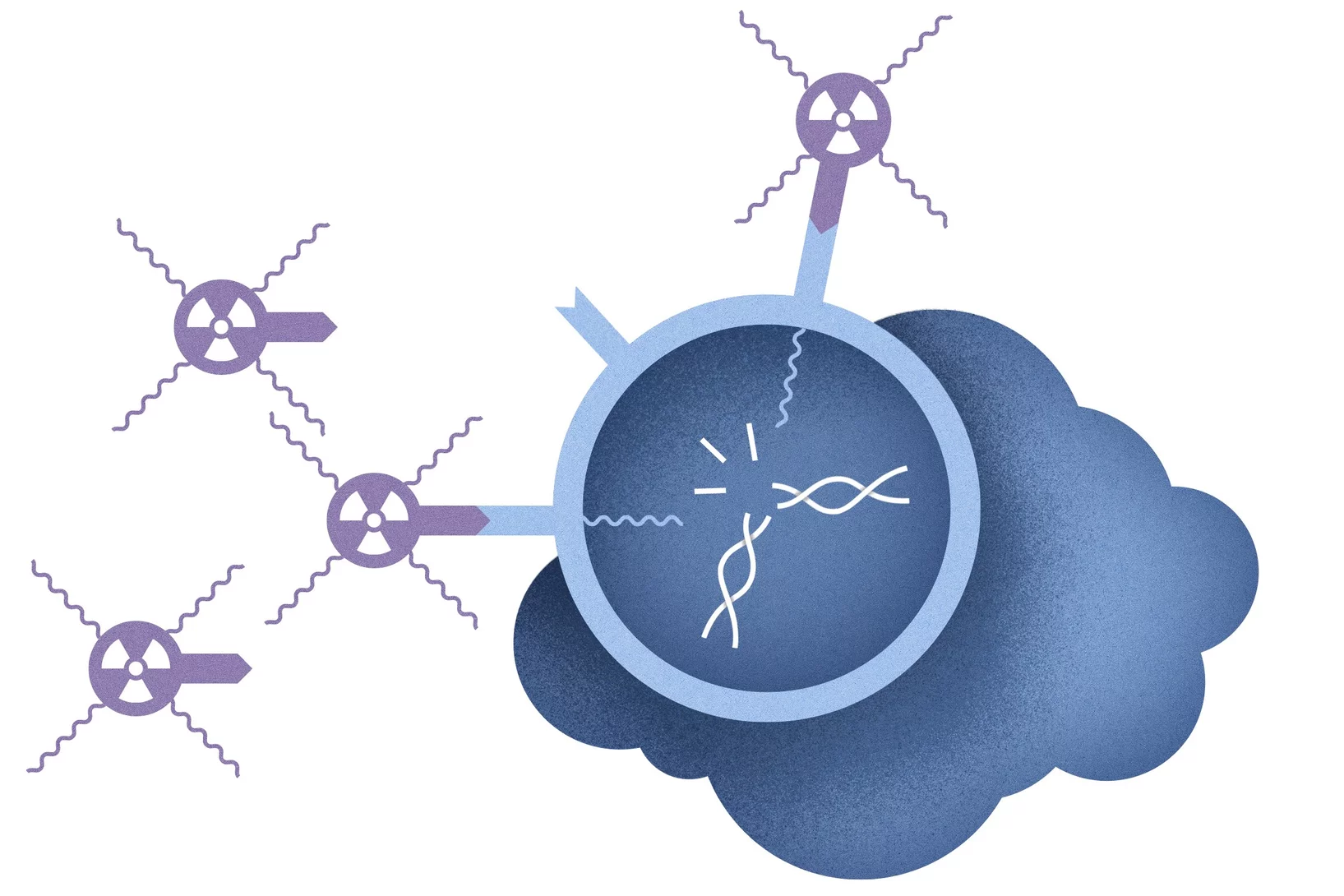
To achieve this, the radionuclides are joined to a tumour-targeting molecule and injected into the bloodstream. They specifically recognise and dock onto the tumour cells, delivering the radiation directly to where it is needed. In this way, tumours can be treated effectively whilst sparing healthy tissue.


Different radionuclides offer distinct properties and medical advantages for treatment and diagnosis. Many of them are extremely rare or can only be produced with advanced technology; and only a few facilities worldwide are able to supply them. Moreover, as some radionuclides decay quickly, they must reach researchers or patients soon after production. By enabling reliable, on-site production, PSI’s new facility will be invaluable for research and clinical applications with these promising medical tools.
To bring these new drugs into clinical use, TATTOOS is a collaboration between PSI, the University of Zurich and the University Hospital of Zurich. With the new facility, PSI will be able to both increase the range of radionuclides available for research and increase the quantity produced – thus strengthening medical innovation in Switzerland for the future benefit of patients.
Additionally, radionuclides will be produced for applications in materials research and fundamental research.
News

Radiopharmacy: past, present and future
Radiopharmaceuticals allow some types of cancer to be targeted with tailor-made therapies. The current state of the art was preceded by decades of intensive research – and the future promises even better treatment options.

Taking the fear out of cancer
Researchers at PSI are developing new technologies and drugs to eliminate tumours more effectively: with greater precision and personalised approaches
Using terbium against lymphoma
Promising laboratory experiments at PSI show that radionuclide therapy with the radioactive element terbium could combat lymphoma effectively.
New approaches to cancer treatment
The ETH/PHRT-funded clinical studies “RAPID 01” and “PROGNOSTICS” have successfully started recruiting patients.