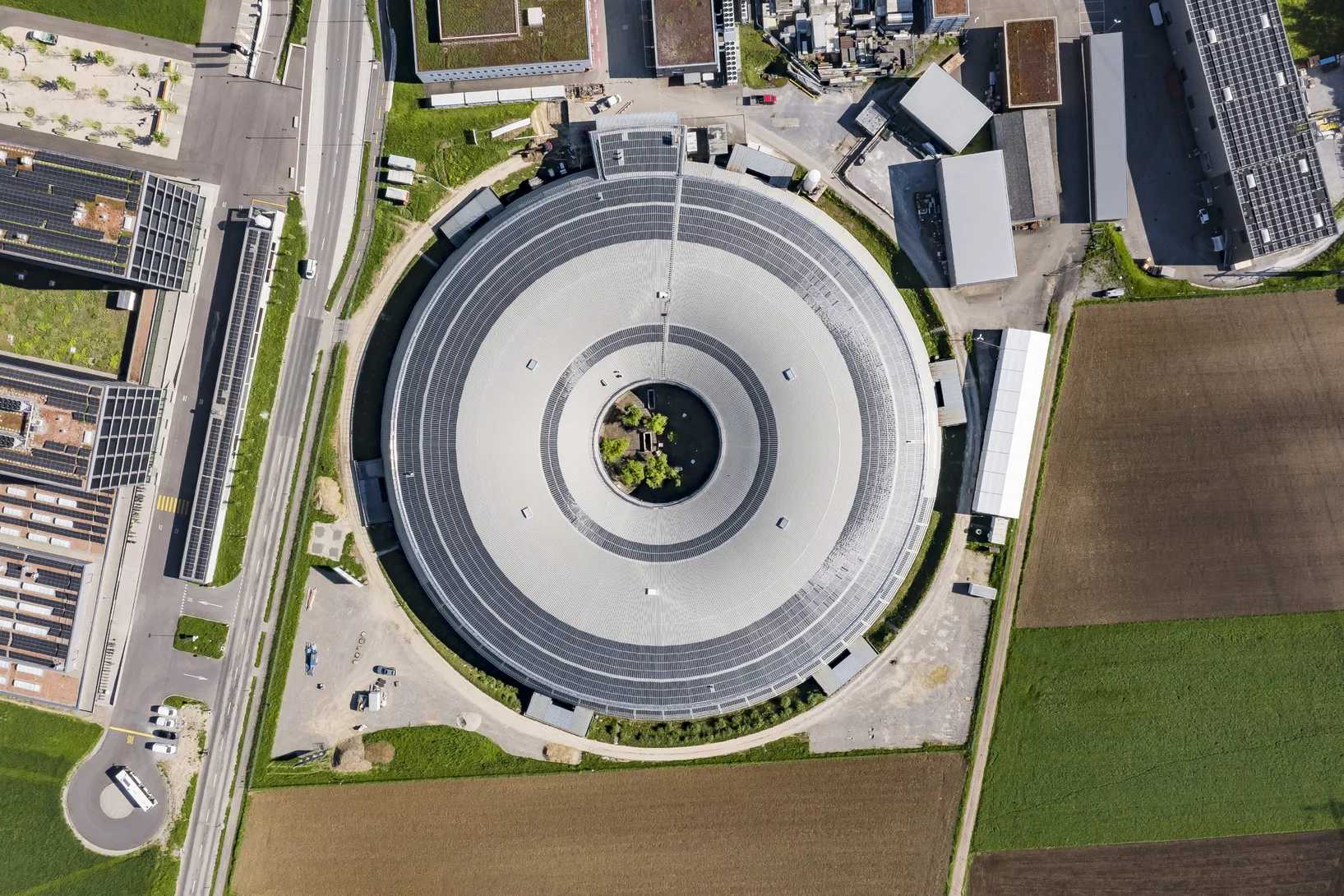
With its globally unique research infrastructure, PSI offers unrivalled opportunities for cutting-edge national and international research.

The main areas of research at PSI
Recent highlights from our research

X-rays show how quasiparticles interact in solids
Thanks to a new experimental technique at SwissFEL, researchers uncover the interplay between electronic, magnetic, and lattice excitations in a solid.

Technologies for the energy transition
The future begins in the laboratory. Researchers at the Paul Scherrer Institute PSI are working on technologies that can accelerate the energy transition, with a view to reconciling climate protection with security of supply.

New method for inspecting fuel rods
PSI researchers have successfully used a new method to analyse the cladding tubes of spent fuel rods from nuclear reactors at very high resolution for the first time. They found that the cladding tubes remained leak-tight.
Interested in doing research at PSI? Do you want to use our infrastructure for cutting-edge research?
Find out more about our large-scale research facilities and other research centres.
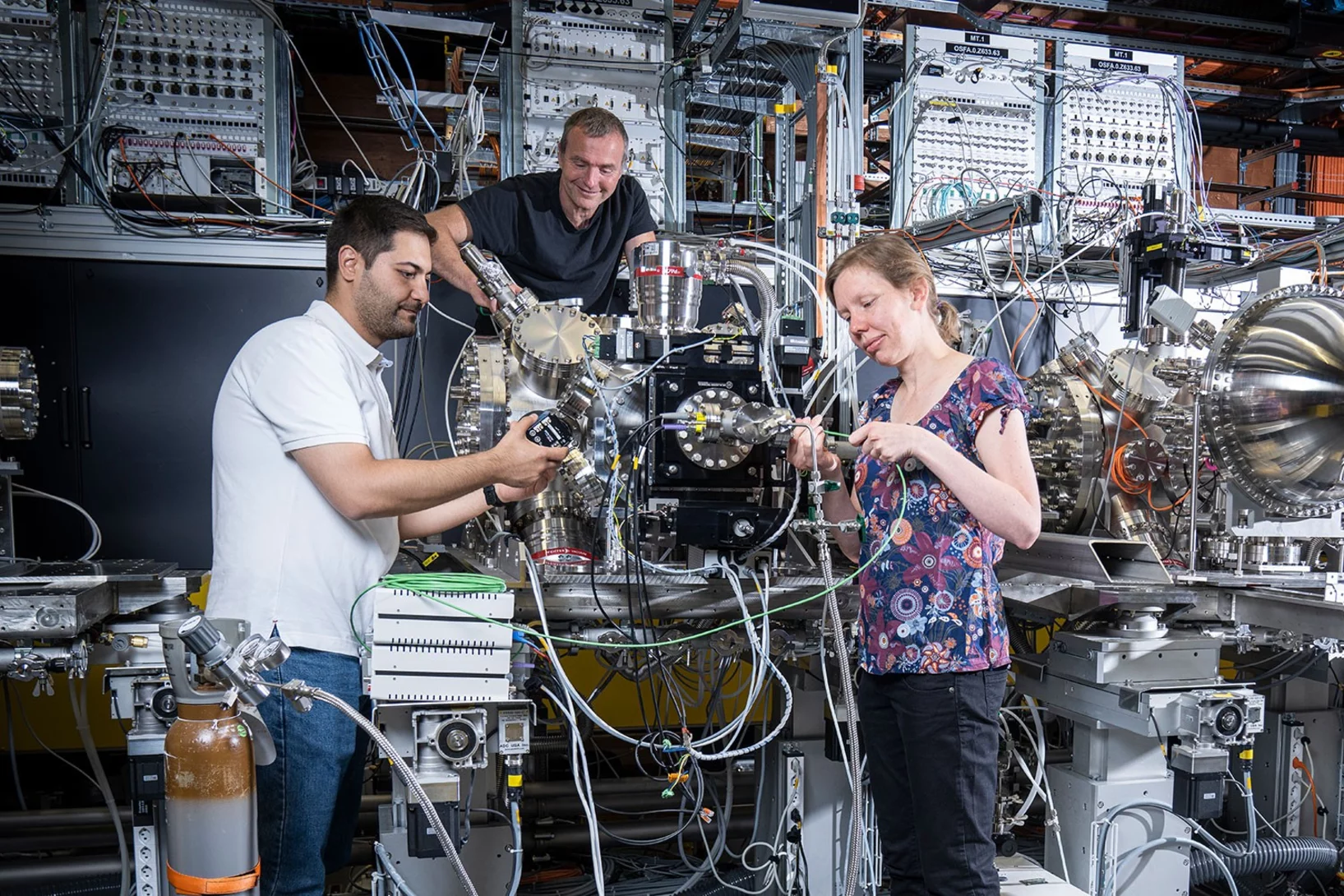
Research Centers & Labs
Our research and service centres conduct internationally recognised cutting-edge research in the natural and engineering sciences and make highly complex large research facilities available to science and industry for their own research projects.
Scientific Highlights from our Centers

Measurement of the neutron incoherent scattering length of 199Hg using stored ultracold neutrons
Physical Review C Editor's suggestion: In this study, the nEDM Collaboration, with the experiment based at the Paul Scherrer Institute, directly investigates this subtle neutron-mercury interaction. The results provide a precise characterization of an important systematic effect, improving the control of a key source of uncertainty in EDM measurements.

The stripe state at 1/8 Ba doping hosts optimal superconductivity in La-214 cuprates under low in-plane stress
The cuprate system La2−xBaxCuO4 (LBCO) exhibits a pronounced sensitivity to in-plane uniaxial stress, particularly near the 1/8 doping anomaly, where stripe order strongly suppresses bulk superconductivity. ...

A B.B. King recording brings PSI scientists and tape preservation experts together to rethink magnetic tape degradation
PSI researchers have shown that several apparently different forms of magnetic tape degradation share the same underlying chemical origin but fail for different microscopic reasons – resolving a preservation puzzle first raised by an unplayable B.B. King recording from the Claude Nobs Collection of the Montreux Jazz Festival.