
HIMB stands for High-Intensity Muon Beams. This part of IMPACT is an upgrade of the muon facility.
PSI already holds the world record for the number of muons that are produced per second for research purposes. With HIMB, this intensity is expected to increase again – by a factor of 100 – to ten billion muons per second. In addition, a new laboratory is planned at the University of Zurich, where essential components for HIMB’s new experimental setups are to be developed.
At PSI muons are used to investigate materials and understand their fundamental properties. Muons are also used in questions of particle physics, for example to pursue previously unsolved mysteries of the universe. Both areas require the enormous amounts of muons that can only be produced at PSI.
The National Centre of Competence in Research (NCCR) Muoniverse – hosted by PSI and the University of Zurich from 2026 – will draw on the HIMB infrastructure to strengthen Switzerland’s leading role in muon science even further.


Looking inside materials with muons
To investigate the properties of materials, scientists use muons to reveal what is happening beneath the surface. By tuning their energy, researchers decide how deep the muons should be implanted – down to just a few nanometres below the surface, making them ideal for studying ultra-thin films and high-tech materials. Once inside, the muons behave like miniature compasses: by observing how they rotate in a material’s internal magnetic fields, researchers can uncover hidden properties such as how superconductors work or how magnetic layers behave in data storage devices.
This technique is known as muon spin rotation, and PSI is world famous for it. With HIMB, more muons will enable deeper insights, faster measurements and the ability to explore new classes of materials – speeding up progress to practical technologies.
Exploring the mysteries of the universe
Muons are not only powerful tools for studying materials – they also enable us to explore the deepest questions in physics. Studying these unstable particles can help scientists test the foundations of our understanding of nature, from the behaviour of fundamental forces to the search for new physics beyond the Standard Model. By tracking how muons decay or interact, researchers can look for tiny deviations that might point to undiscovered particles or hidden symmetries of the universe.
With the HIMB upgrade producing 100 times more muons than today, scientists will be able to probe extremely rare processes, such as forbidden muon decays, with far greater precision – the kind of measurements that require vast numbers of particles to detect the faintest possible signals. This will make PSI the only place in the world where certain experiments are possible, keeping Switzerland at the forefront of precision particle physics research.
News

Novel Particle Beam Could Challenge Einstein’s Theory of Gravity
An intense, cold beam of muonium will allow researchers to test the universality of free fall.

Quantum material under pressure
High pressure enhances superconductivity in a quantum material and alters its properties. PSI researchers have uncovered the microscopic mechanism behind this effect.
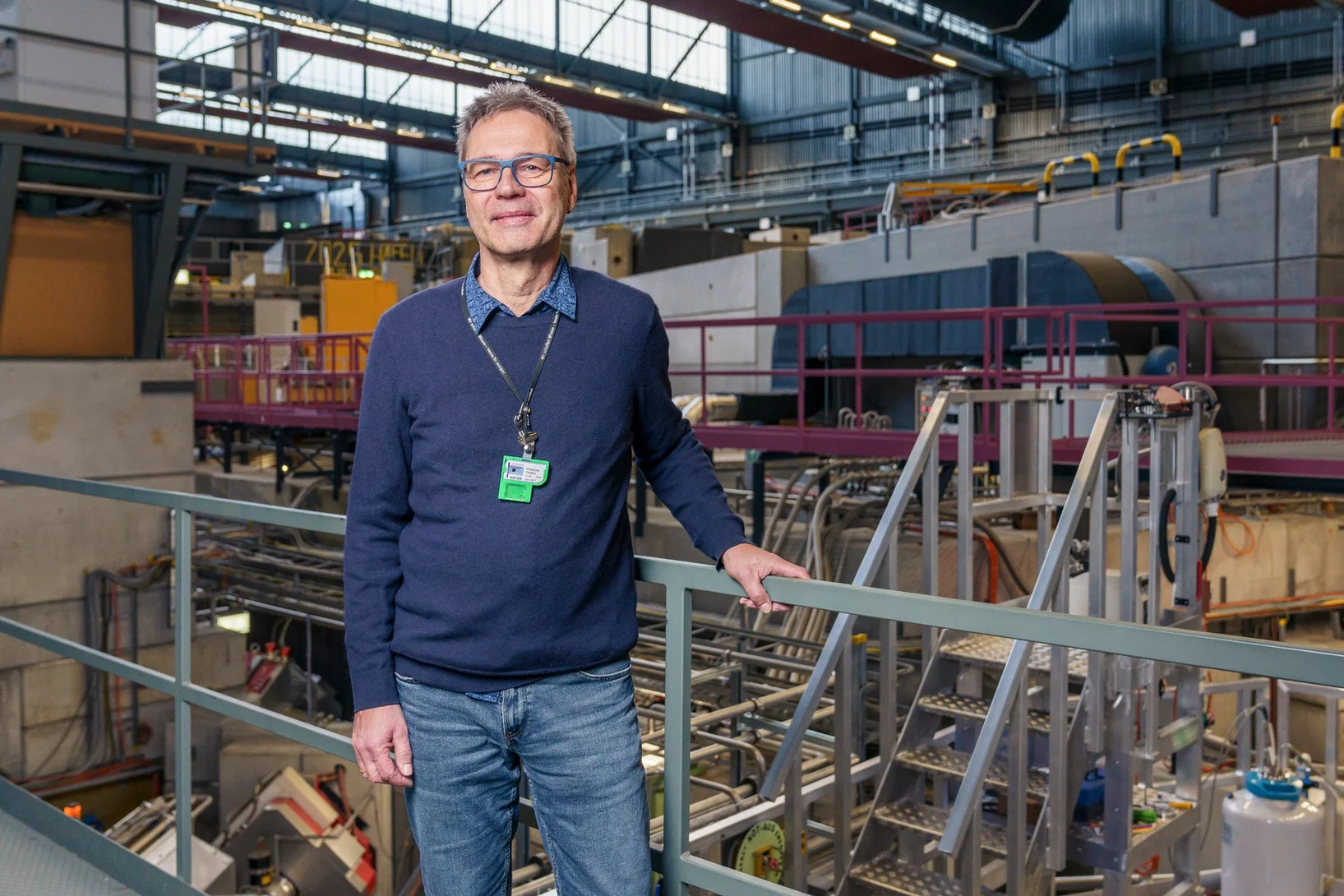
“We’re pulling out all the stops”
PSI is increasing the intensity of its muon beams a hundredfold. This opens up entirely new possibilities for physics and materials research.
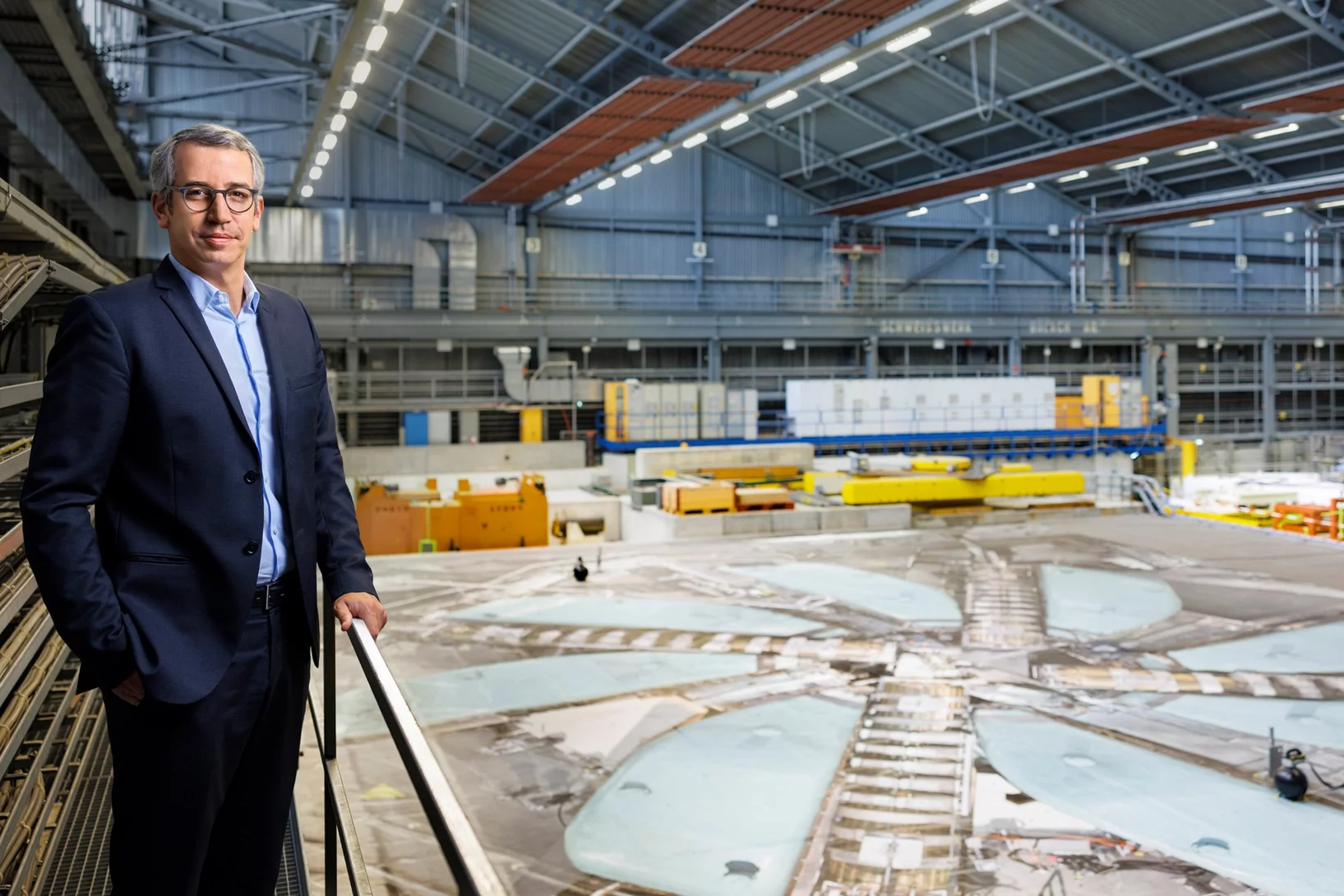
IMPACT: Upgrade at PSI research facility approved
Financing for renovations to PSI’s proton accelerator facility has been approved by the Swiss Parliament.