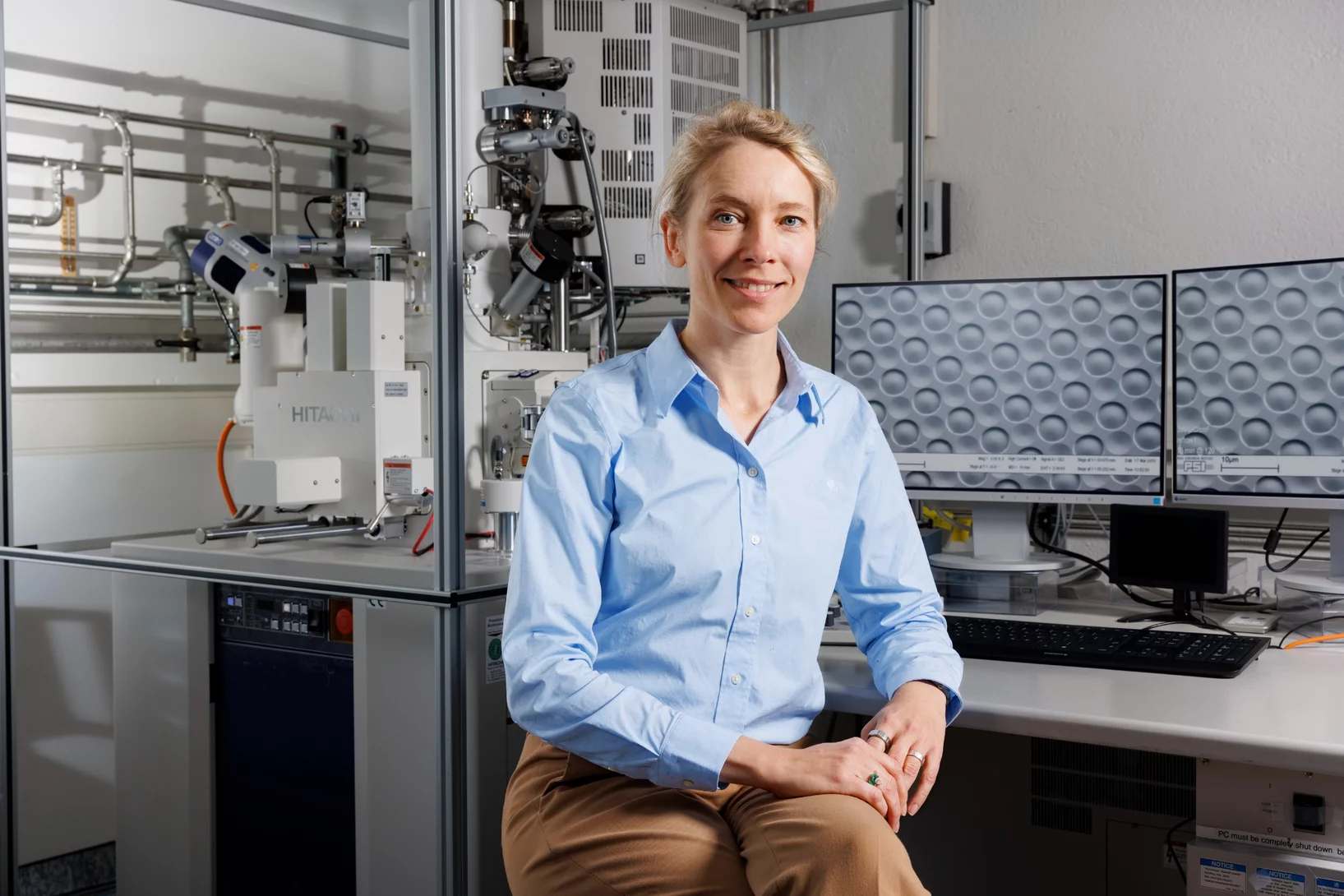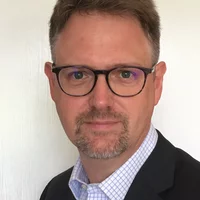
Kirsten Moselund carries out research into nano and quantum technologies at the Paul Scherrer Institute PSI and was one of the initiators of the technology transfer centre Swiss PIC. As the UNESCO International Year of Quantum Science and Technology 2025 draws to an end, she gives an overview of the current state of quantum research in Switzerland – and talks about the importance of cooperating with the EU.

What is currently happening in quantum research, and how does Switzerland compare internationally?
Kirsten Moselund: We have a very active field here in Switzerland. Some Swiss groups, working at universities and research institutes, are truly world leaders when it comes to research into quantum computers and the quantum bits needed for them. PSI is also involved – among other things, we set up the Quantum Computing Hub in 2021 together with ETH Zurich. That is located here at PSI, and through it we are driving the development of quantum computers.
Is it always about quantum computers?
No, there are other exciting fields, such as quantum sensor technology and quantum communication.
In Switzerland, it is primarily smaller companies that are involved in quantum sensor technology. Quantum effects can be used to build high-precision sensors for very specific applications in industry and research. Such sensors are already very advanced and well established as industrial products. We collaborated with the company Qnami and the Swiss Centre for Electronics and Microtechnology, CSEM, on a joint project: the long-term goal is to use quantum sensors to measure the weak magnetic fields inside the brain. Because having a better understanding of the brain can lead to better treatments for neurological diseases.
And quantum communication is about encryption technologies?
Among other things. It deals with encrypted and secure communications. Quantum communication was established early on. For example, single-photon devices are being developed. The company ID Quantique was launched back in 2001 as a spin-off from the University of Geneva. Today, this technology is used for so-called quantum key distribution in secure communications.
You are the head of the Laboratory for Nano and Quantum Technologies at the PSI Center for Photon Science. What are you currently studying?
Our laboratory comprises seven different research groups, four of which specialise in quantum computing technologies. The scientists working in these groups are developing different approaches for quantum bits: superconducting qubits, ion trap qubits, bosonic qubits and qubits based on neutral atoms. Research into all these is currently needed in order to determine which type of quantum computer can best be implemented in the long term and which type of qubit is best suited.
We also operate a special cleanroom at Park Innovaare, right next to PSI: the Park Innovaare Cleanroom for Optics and Innovation, or PICO for short. This facility specialises in quantum technologies – for example, we have special equipment for superconducting materials and for advanced lithography.
My own research primarily focuses on integrated photonics and nanoelectronics. The idea is to use light to transmit information. We are developing elements that can serve quantum technologies by connecting them to the classical world. We are also studying adaptive photonic networks as a platform for artificial intelligence.
In 2022, you and other renowned researchers wrote an open letter calling for quantum technologies to receive more funding in Switzerland. How did that come about?
The backdrop to this was the inconclusive outcome in 2021 of talks on developing a framework agreement for all bilateral treaties between Switzerland and the EU. As a result of this, many collaborations with the EU were put on ice. Among other things, we were no longer able to take part in the “Horizon Europe” research programme. However, we were doubly impacted in the field of quantum research, because the exclusion criteria for all non-EU research groups were even stricter here.
Did that set Swiss quantum research back?
Overall, it did. Established researchers subsequently sought bilateral collaborations with other countries. We had joint projects with the USA, for example, and there was also a quantum call with South Korea. But those have to be set up first. Younger researchers found it particularly challenging, because it’s far more difficult for them to initiate overseas collaborations. On the one hand, they are in particular need of research funding – but here too: money isn’t everything. Above all, they need a close and good collaboration with partners. And as a small country in the middle of Europe, we depend on being able to collaborate with EU groups.
Since the beginning of November 2025, Switzerland has once again been fully associated with EU research programmes – meaning that Swiss researchers can once again participate in a total of six EU research programmes, including “Horizon Europe”.
We are very pleased about this, and it’s something we researchers have always campaigned for. But in order to bridge the last four years, we needed other solutions, and that’s where the open letter had a real impact. It led to the Swiss Quantum Initiative, which was launched by the Federal Council and provided additional funding for fundamental research and international collaborations.
And even now, not everything has been decided. There will probably be a referendum, though the exact date has yet to be set. The referendum will decide on the framework agreement with the EU – which means our research collaborations will once again be on the line. We very much hope that the people of Switzerland understand how important these collaborations are.
Especially in the field of quantum research?
The road to commercialisation is particularly long in the quantum sector – much longer than for other technologies. This is particularly evident when it comes to quantum computers. In the end, they won’t be replacing personal computers. Instead, high-performance data centres will have a quantum computer alongside a supercomputer, because the former is much better suited to certain calculations. If Switzerland doesn’t want to fall behind in this area, we need access to research funding and we must cooperate with the EU.
In addition to your own research, you were also one of the initiators of Swiss PIC, a technology transfer centre. What is that about?
Swiss PIC was founded in 2023, and we’ve just had our official inauguration at the end of November 2025, together with the opening of our production centre for light-based microchips at Park Innovaare. This will support the Swiss photonics industry, especially start-ups and SMEs. If they want to sell a photonic component, it needs to be integrated into the electronics – what we call “photonic packaging”. This calls for very high levels of precision, for example when joining glass fibres. It also requires highly specialised equipment and expertise. This is why photonic packaging represents a substantial fraction of the production cost. For start-ups, this can be a significant obstacle to market entry. So Swiss PIC helps them turn a research idea into a marketable application more quickly.
Contact
Prof. Dr. Kirsten Moselund
PSI Center for Photon Science
Paul Scherrer Institute PSI
+41 56 310 34 15
kirsten.moselund@psi.ch
[German, English, French, Danish]