

The Materials Software and Data (MSD) group develops simulation software, algorithms and data infrastructure to predict and interpret the properties of novel materials, with particular focus on the experiments performed at PSI's large research facilities, especially neutron and muon spectroscopies [1].
Our methodological work combines first-principles electronic structure, in particular Wannier-function-related methods [2], with machine learning and generative AI, for instance diffusion models that reconstruct hydrogen positions in crystal structures [3]. We also contribute to building the large, curated datasets on which machine-learning interatomic potentials are trained, and are working to extend machine-learning models to the electronic Hamiltonian itself. A recurring theme across this work is robustness: we develop accurate and efficient simulation protocols and pseudopotential libraries [4], together with methods to verify that different density-functional-theory implementations agree on the quantities they compute [5].
We lead the development of the AiiDA workflow engine [6] and are one of the core development teams behind the Materials Cloud web portal [7] and the AiiDAlab simulation platform [8]. Through this open-science platform we provide simulation services to researchers at PSI and worldwide, combining automated high-throughput simulations, accessible web interfaces, and open curated databases on Materials Cloud such as MC2D and MC3D [9]. We further work to make computational materials science reproducible and interoperable, developing common workflows that run across different simulation codes and co-organising OPTIMADE, the community API for exchanging materials data.
We use this infrastructure to drive our own materials-discovery projects, e.g. in the search for novel BCS superconductors [10], thermoelectrics and non-linear Hall materials. The long-term goal of the group is to accelerate discovery and characterisation by enabling autonomous laboratories that combine automated simulations with robotic experiments, driven by autonomous algorithms. We are already applying this approach to battery optimisation, to autonomous thin-layer growth, and to the mapping of the Fermi surface of metals.
Selected publications
[1] P. Bonfà et al., Magnetostriction-driven muon localization in an antiferromagnetic oxide, Phys. Rev. Lett. 132, 046701 (2024); I. J. Onuorah et al., Automated computational workflows for muon spin spectroscopy, Digit. Discov. 4, 523 (2025).
[2] G. Pizzi et al., Wannier90 as a community code: new features and applications, J. Phys. Condens. Matter 32, 165902 (2020); A. Marrazzo et al., Wannier-function software ecosystem for materials simulations, Rev. Mod. Phys. 96, 045008 (2024).
[3] T. Reents et al., Score-based diffusion models for accurate crystal-structure inpainting and reconstruction of hydrogen positions, npj Comput. Mater. 12, 203 (2026).
[4] G. de Miranda Nascimento et al., Accurate and efficient protocols for high-throughput first-principles materials simulations, npj Comput. Mater. 12, 272 (2026).
[5] E. Bosoni et al., How to verify the precision of density-functional-theory implementations via reproducible and universal workflows, Nat. Rev. Phys. 6, 45 (2024).
[6] S. P. Huber et al., AiiDA 1.0, a scalable computational infrastructure for automated reproducible workflows and data provenance, Sci. Data 7, 300 (2020).
[7] L. Talirz et al., Materials Cloud, a platform for open computational science, Sci. Data 7, 299 (2020).
[8] X. Wang et al., Making atomistic materials calculations accessible with the AiiDAlab Quantum ESPRESSO app, npj Comput. Mater. 12, 72 (2026); A. V. Yakutovich et al., Accelerating discovery across scientific disciplines through reproducible workflows with AiiDAlab, Digit. Discov. 5, 2310 (2026).
[9] N. Mounet et al., Two-dimensional materials from high-throughput computational exfoliation of experimentally known compounds, Nature Nanotech. 13, 246 (2018); S. P. Huber et al., MC3D: The Materials Cloud computational database of experimentally known stoichiometric inorganics, Digit. Discov. 5, 1114 (2026).
[10] M. Bercx et al., Charting the landscape of Bardeen-Cooper-Schrieffer superconductors in experimentally known compounds, PRX Energy 4, 033012 (2025).
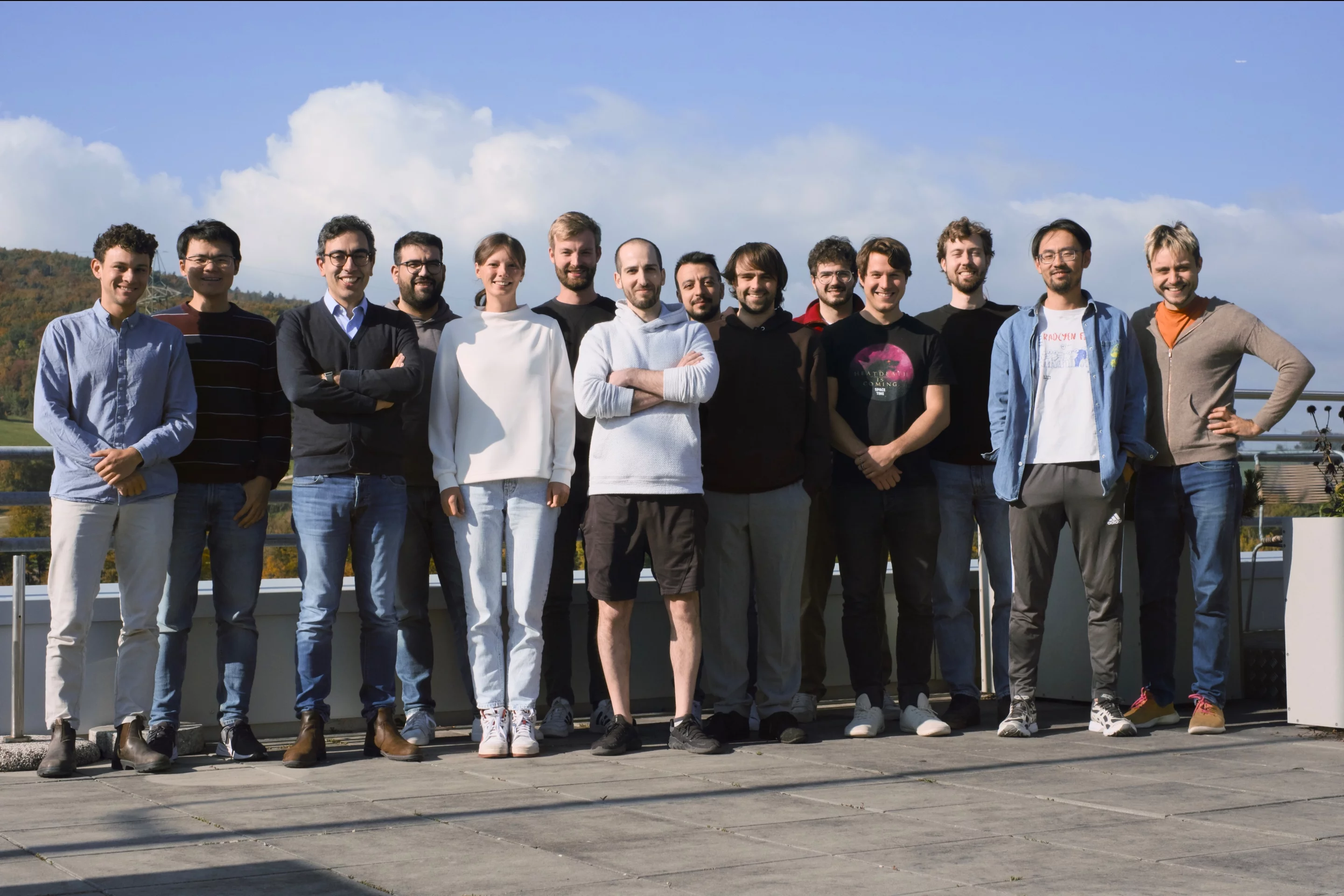
Group photo
News

On the trail of the missing hydrogen atoms
Representations of the crystal structures of materials often lack information about the positions of hydrogen atoms. PSI researchers have found a way to fill this gap, using AI.

AiiDAlab: software that drives research forward
The software platform AiiDAlab was developed for computer simulations in materials research. It’s now becoming clear that it's also useful in many other areas, such as atmospheric research, controlling experiments and teaching.

A new database of inorganic materials is available on the Materials Cloud
A team of scientists, led by researchers at PSI, has introduced the Materials Cloud Three-Dimensional Structure Database (MC3D), a systematically curated database of quantum-mechanical calculations for inorganic materials derived from experimental crystal structures. The database contains more than 32 000 structures whose relaxed geometry and electronic structure were computed using carefully standardized DFT workflows, using three different functionals and/or computational protocols. Beyond providing a consistent reference dataset for computational materials science, MC3D also supports emerging data-driven approaches. For example, it served as a starting point for datasets used to train machine-learning interatomic potentials.

There’s an app for that: atomistic materials calculations made more accessible by the AiiDAlab Quantum ESPRESSO app
Powerful atomistic simulation tools have transformed materials research, but their complexity still limits who can use them and how easily results can be reproduced: a gap that a new web-based app now helps close. The AiiDAlab Quantum ESPRESSO app, described in a recent publication in npj Computational Materials, can run not only isolated calculations but also complete, end-to-end computational workflows involving multiple passages over several different materials, lowering the barrier for both experimentalists and computational experts. This is achieved through the tight integration of the widely-used Quantum ESPRESSO simulation software package with the AiiDA engine, a workflow-management system to help automate complex simulations in materials science (whose development is led by the Materials Software and Data group at PSI), which has provided substantial support to its development alongside contributions from the broader community.
Mapping the ecosystem of Wannier Functions software
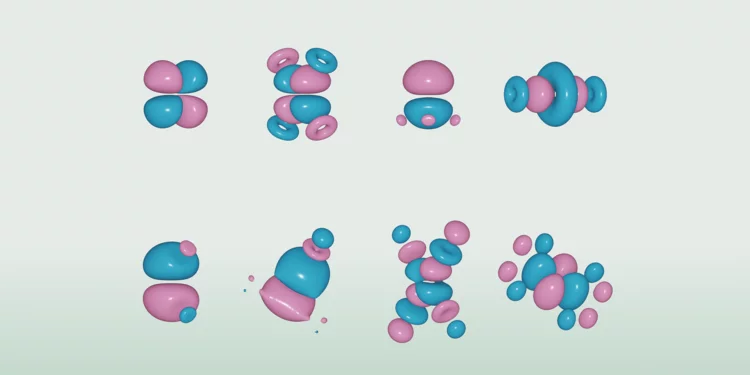
A new review article, just published in Reviews of Modern Physics and highlighted on the journal cover, provides a map to the vast landscape of software codes that allow researchers to calculate Wannier functions, and to use them for materials properties predictions. The authors, from all over Europe and the USA, include two PSI scientists. After providing readers with the theoretical foundations on Wannier functions and their calculation, together with intuitive graphical schematics to explain what Wannier functions are, the authors map the existing Wannier codes and the key applications.
New widgets and extensions expand the OSSCAR platform for educational notebooks in materials science
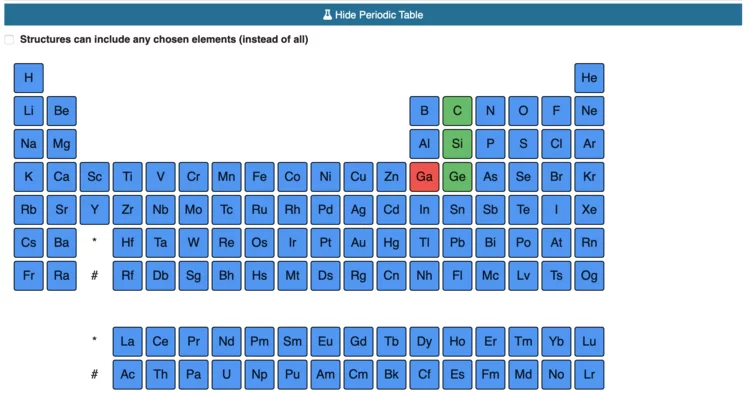
In a new article published in Computer Physics Communications, the team of the Open Software Services for Classrooms and Research project (OSSCAR) describes how to create custom widgets and extensions that can be used in interactive notebooks to teach computational materials science. The article also introduces two new entries in OSSCAR: a widget to display an interactive periodic table that allows users to group elements into different states, and one to plot and visualize electronic band structures and density of states.
MSD Projects
The research of the MSD group is supported by several projects. They are listed in the Project page of the LMS laboratory.
In addition, the group develops and maintains several open-source software codes, as well as the web-based open science portal Materials Cloud, listed in the Software page of the LMS laboratory.
MSD Group Members

Group leader
Materials Software and Data Group >>
Building/Room: OVGA/202

Scientist
Materials Software and Data Group >>
Building/Room: OVGA/201

Postdoc
Materials Software and Data Group >>
Building/Room: OVGA/201

Postdoc
Materials Software and Data Group >>
Building/Room: OVGA/201

Postdoc
Materials Software and Data Group >>
Building/Room: OVGA/201


Postdoc
Materials Software and Data Group >>
Building/Room: OVGA/307

Postdoc
Materials Software and Data Group >>
Building/Room: OVGA/203B

PhD student
Materials Software and Data Group >>
Building/Room: OVGA/203

PhD student
Materials Software and Data Group >>
Building/Room: OVGA/200A

Phd student
Materials Software and Data Group >>
Building/Room: OVGA/201

PhD student
Materials Software and Data Group >>
Building/Room: OVGA/203B

Postdoc
Materials Software and Data Group >>
Building/Room: OVGA/203A
MSD Publication List
-
Gazzarrini E, Cersonsky RK, Bercx M, Adorf CS, Marzari N
Reply to: an explanation for the rule of four in inorganic materials
npj Computational Materials. 2026; 12: 43 (3 pp.). https://doi.org/10.1038/s41524-025-01755-7
DORA PSI -
Huber SP, Minotakis M, Bercx M, Reents T, Eimre K, Paulish N, et al.
MC3D: the materials cloud computational database of experimentally known stoichiometric inorganics
Digital Discovery. 2026; 5(3): 1114-1131. https://doi.org/10.1039/d5dd00415b
DORA PSI -
Suter F, Coleman T, Altintaş İ, Badia RM, Balis B, Chard K, et al.
A terminology for scientific workflow systems
Future Generation Computer Systems. 2026; 174: 107974 (12 pp.). https://doi.org/10.1016/j.future.2025.107974
DORA PSI -
Wang X, Bainglass E, Bonacci M, Ortega-Guerrero A, Bastonero L, Bercx M, et al.
Making atomistic materials calculations accessible with the AiiDAlab Quantum ESPRESSO app
npj Computational Materials. 2026; 12: 72 (12 pp.). https://doi.org/10.1038/s41524-025-01936-4
DORA PSI -
Bastonero L, Malica C, Macke E, Bercx M, Huber S, Timrov I, et al.
First-principles Hubbard parameters with automated and reproducible workflows
npj Computational Materials. 2025; 11(1): 183 (13 pp.). https://doi.org/10.1038/s41524-025-01685-4
DORA PSI -
Bercx M, Poncé S, Zhang Y, Trezza G, Ghezeljehmeidan AG, Bastonero L, et al.
Charting the landscape of Bardeen-Cooper-Schrieffer superconductors in experimentally known compounds
PRX Energy. 2025; 4(3): 033012 (14 pp.). https://doi.org/10.1103/sb28-fjc9
DORA PSI -
Blundell SJ, Bonacci M, Bonfà P, De Renzi R, Huddart BM, Lancaster T, et al.
Electronic structure calculations for muon spectroscopy
Electronic Structure. 2025; 7(2): 023001 (14 pp.). https://doi.org/10.1088/2516-1075/adcb7c
DORA PSI -
Felder F, Granata V, Minotti C, Zade O, Potier FT, Giovanni P, et al.
Recommendation on how to implement the DataCite Metadata Schema for research data
Dübendorf: Eawag: Swiss Federal Institute of Aquatic Science and Technology; 2025. https://doi.org/10.55408/eawag:35606
DORA PSI -
Filser J, Bainglass E, Reuter K, Andreussi O
Coupling all-electron full-potential density functional theory with grid-based continuum embeddings
Journal of Chemical Physics. 2025; 163(16): 164103 (16 pp.). https://doi.org/10.1063/5.0288363
DORA PSI -
Janssen J, George J, Geiger J, Bercx M, Wang X, Ertural C, et al.
A python workflow definition for computational materials design
Digital Discovery. 2025; 4(11): 3149-3161. https://doi.org/10.1039/d5dd00231a
DORA PSI -
Jiang Y, Qiao J, Paulish N, Zhao W, Marzari N, Pizzi G
Robust Wannierization including magnetization and spin-orbit coupling via projectability disentanglement
npj Computational Materials. 2025; 11: 353 (11 pp.). https://doi.org/10.1038/s41524-025-01835-8
DORA PSI -
Li X, Wang X, Beck A, Artsiusheuski M, Liu Q, Liu Q, et al.
Quantifying electronic and geometric effects on the activity of platinum catalysts for water-gas shift
Nature Communications. 2025; 16(1): 6641 (12 pp.). https://doi.org/10.1038/s41467-025-61895-8
DORA PSI -
Liu JC, Li C, Chahib O, Wang X, Rothenbühler S, Häner R, et al.
Spin excitations of high spin iron(II) in metal–organic chains on metal and superconductor
Advanced Science. 2025; 12(7): 2412351 (7 pp.). https://doi.org/10.1002/advs.202412351
DORA PSI -
Mazitov A, Chorna S, Fraux G, Bercx M, Pizzi G, De S, et al.
Massive Atomic Diversity: a compact universal dataset for atomistic machine learning
Scientific Data. 2025; 12(1): 1857 (12 pp.). https://doi.org/10.1038/s41597-025-06109-y
DORA PSI -
Onuorah IJ, Bonacci M, Isah MM, Mazzani M, De Renzi R, Pizzi G, et al.
Automated computational workflows for muon spin spectroscopy
Digital Discovery. 2025; 4(2): 523-538. https://doi.org/10.1039/d4dd00314d
DORA PSI -
Blum V, Asahi R, Autschbach J, Bannwarth C, Bihlmayer G, Blügel S, et al.
Roadmap on methods and software for electronic structure based simulations in chemistry and materials
Electronic Structure. 2024; 6(4): 042501 (60 pp.). https://doi.org/10.1088/2516-1075/ad48ec
DORA PSI -
Bonfà P, Onuorah IJ, Lang F, Timrov I, Monacelli L, Wang C, et al.
Magnetostriction-driven muon localization in an antiferromagnetic oxide
Physical Review Letters. 2024; 132(4): 046701 (7 pp.). https://doi.org/10.1103/PhysRevLett.132.046701
DORA PSI -
Bosoni E, Beal L, Bercx M, Blaha P, Blügel S, Bröder J, et al.
How to verify the precision of density-functional-theory implementations via reproducible and universal workflows
Nature Reviews Physics. 2024; 6: 45-58. https://doi.org/10.1038/s42254-023-00655-3
DORA PSI -
Du D, Baird TJ, Eimre K, Bonella S, Pizzi G
Jupyter widgets and extensions for education and research in computational physics and chemistry
Computer Physics Communications. 2024; 305: 109353 (11 pp.). https://doi.org/10.1016/j.cpc.2024.109353
DORA PSI -
Evans ML, Bergsma J, Merkys A, Andersen CW, Andersson OB, Beltrán D, et al.
Developments and applications of the OPTIMADE API for materials discovery, design, and data exchange
Digital Discovery. 2024; 3(8): 1509-1533. https://doi.org/10.1039/d4dd00039k
DORA PSI -
Kraus P, Bainglass E, Ramirez FF, Svaluto-Ferro E, Ercole L, Kunz B, et al.
A bridge between trust and control: computational workflows meet automated battery cycling
Journal of Materials Chemistry A. 2024; 12(18): 10773-10783. https://doi.org/10.1039/d3ta06889g
DORA PSI -
Marrazzo A, Beck S, Margine ER, Marzari N, Mostofi AA, Qiao J, et al.
Wannier-function software ecosystem for materials simulations
Reviews of Modern Physics. 2024; 96(4): 045008 (54 pp.). https://doi.org/10.1103/RevModPhys.96.045008
DORA PSI -
Vogler M, Steensen SK, Ramírez FF, Merker L, Busk J, Carlsson JM, et al.
Autonomous battery optimization by deploying distributed experiments and simulations
Advanced Energy Materials. 2024; 14(46): 2403263 (13 pp.). https://doi.org/10.1002/aenm.202403263
DORA PSI -
Bonacci M, Qiao J, Spallanzani N, Marrazzo A, Pizzi G, Molinari E, et al.
Towards high-throughput many-body perturbation theory: efficient algorithms and automated workflows
npj Computational Materials. 2023; 9(1): 74 (10 pp.). https://doi.org/10.1038/s41524-023-01027-2
DORA PSI -
Campi D, Mounet N, Gibertini M, Pizzi G, Marzari N
Expansion of the Materials Cloud 2D database
ACS Nano. 2023; 17(12): 11268-11278. https://doi.org/10.1021/acsnano.2c11510
DORA PSI -
Du D, Baird TJ, Bonella S, Pizzi G
OSSCAR, an open platform for collaborative development of computational tools for education in science
Computer Physics Communications. 2023; 282: 108546 (12 pp.). https://doi.org/10.1016/j.cpc.2022.108546
DORA PSI -
Ghiringhelli LM, Baldauf C, Bereau T, Brockhauser S, Carbogno C, Chamanara J, et al.
Shared metadata for data-centric materials science
Scientific Data. 2023; 10: 626 (18 pp.). https://doi.org/10.1038/s41597-023-02501-8
DORA PSI -
Medrano G, Bainglass E, Andreussi O
Uncoupling system and environment simulation cells for fast-scaling modeling of complex continuum embeddings
Journal of Chemical Physics. 2023; 159(5): 054103 (12 pp.). https://doi.org/10.1063/5.0150298
DORA PSI -
Qiao J, Pizzi G, Marzari N
Automated mixing of maximally localized Wannier functions into target manifolds
npj Computational Materials. 2023; 9(1): 206 (9 pp.). https://doi.org/10.1038/s41524-023-01147-9
DORA PSI -
Qiao J, Pizzi G, Marzari N
Projectability disentanglement for accurate and automated electronic-structure Hamiltonians
npj Computational Materials. 2023; 9(1): 208 (14 pp.). https://doi.org/10.1038/s41524-023-01146-w
DORA PSI -
Vogler M, Busk J, Hajiyani H, Jørgensen PB, Safaei N, Castelli IE, et al.
Brokering between tenants for an international materials acceleration platform
Matter. 2023; 6(9): 2647-2665. https://doi.org/10.1016/j.matt.2023.07.016
DORA PSI -
Tohidi Vahdat M, Agrawal KV, Pizzi G
Machine-learning accelerated identification of exfoliable two-dimensional materials
Machine Learning: Science and Technology. 2022; 3(4): 045014 (9 pp.). https://doi.org/10.1088/2632-2153/ac9bca
DORA PSI