In the following, you can find potential summer student projects of the PSI Center for Neutron and Muon Sciences. Please see "How to apply" for details on submitting your application for one of the projects.
Sample preparation of gold nanoparticles with different shapes
Controlling chemical reactions at the nanoscale is a central goal in chemistry and materials science, with significant applications in fields such as medicine, cosmetics, and a wide range of industrial and high-end products. A powerful strategy is to subject the reactant to confined environments that alter reaction conditions by restricting their movement, thus affecting both kinetics and thermodynamics. Such confined conditions are called nanoreactors 1–3.
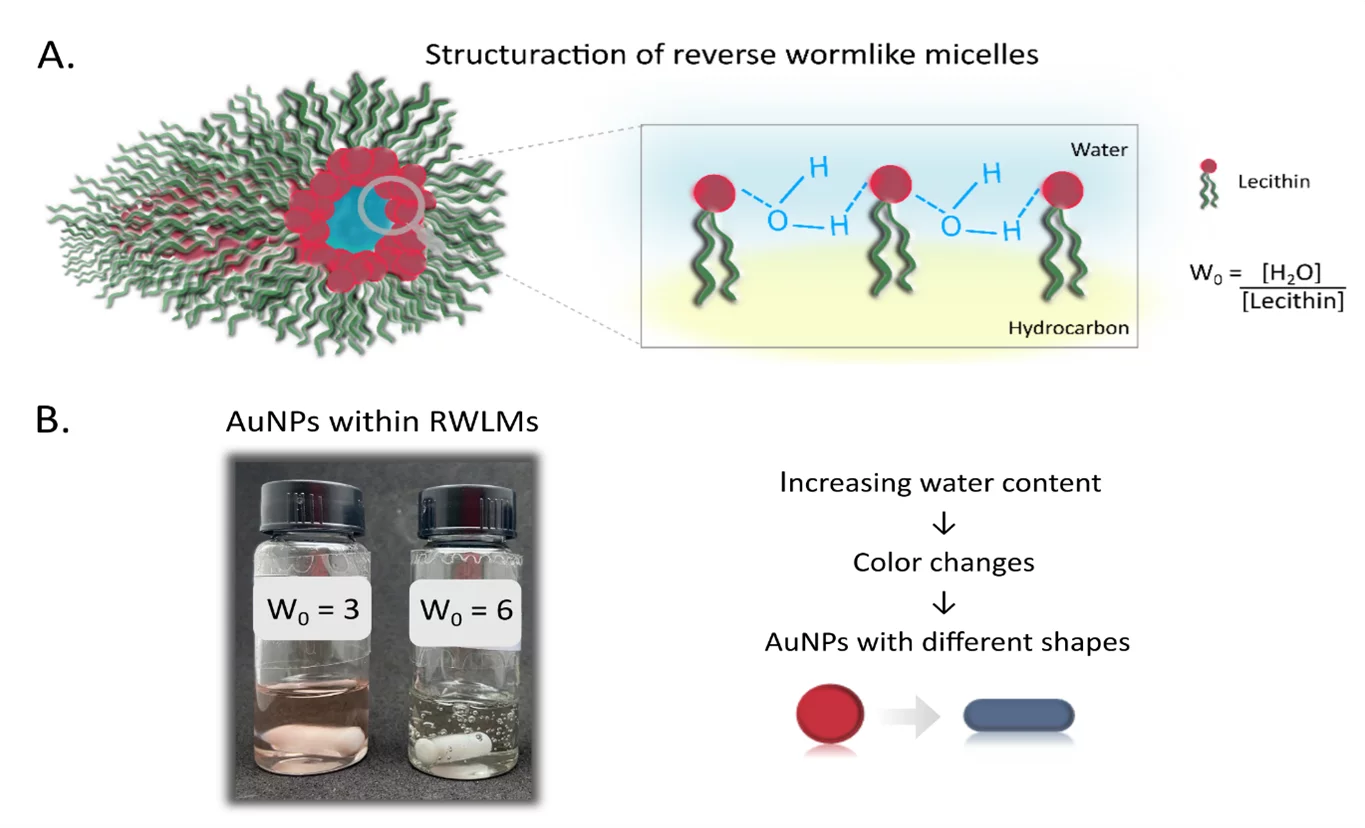
Within this project, we will use reverse wormlike micelles (RWLMs) as nanoreactors. These are ternary systems formed by the surfactant lecithin, cyclohexane, and water. In this medium, lecithin molecules self-assemble into long and narrow water channels, creating a unique confined environment for performing reactions 6.
The goal of this project is producing gold nanoparticles (AuNPs) with different shapes by simply changing the of the nanoreactor, as well as the concentration of the reactants. The work is divided into four steps:
- Prepare samples with different reactants concentration using RWLMs with fixed .
- Prepare samples using RWLMs with different and fixed reactant concentration.
- Characterize the formed systems using rheology.
- Analyze the AuNPs formed using UV-vis spectroscopy.
- Data analysis to process, plot, and interpret the data.
We are seeking a motivated student with a background in Chemistry, Physical Chemistry, or Materials Science eager to work on an interdisciplinary nanoscience project.
For more details, please contact: hilda.nascimento-nogueira@psi.ch
Preparation and characterisation of non-aqueous emulsions
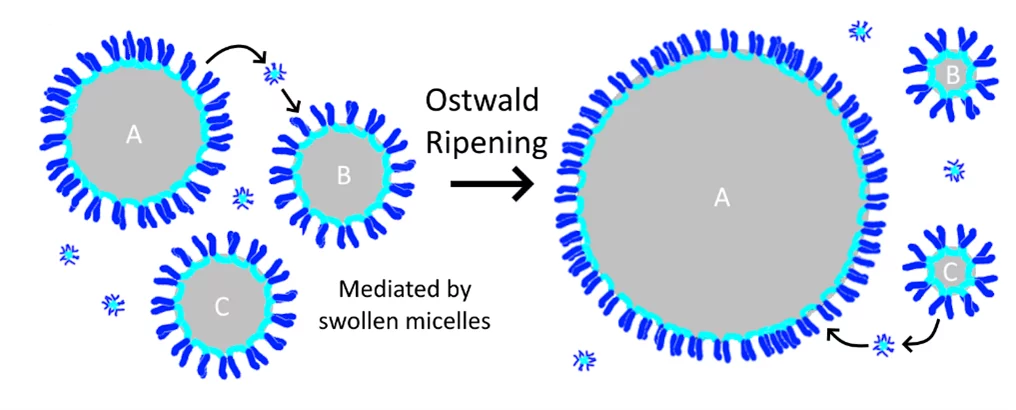
Emulsions, consisting of one liquid phase dispersed in another, have wide-ranging applications from the kitchen to large-scale industrial processes. This makes studying of the properties of emulsions an important field, especially since (macro)emulsions are only kinetically stable and hence their properties change due to time or external forces.
In this project, we will study the stability of two non-aqueous emulsions, namely one consisting of decane in dimethyl sulfoxide (DMSO) and one with glycerol droplets in silicone oil. While the first system requires the presence of a surfactant to be stable, emulsions of glycerol in silicone oil exhibit anomalous stability even in the absence of an emulsifier. The goal of the project is to determine how the stability of these systems depends on the concentration of the dispersed phase and the presence of surfactant as an emulsifier. This will include the following tasks:
- Prepare emulsions with differing concentrations of the dispersed phase and surfactant.
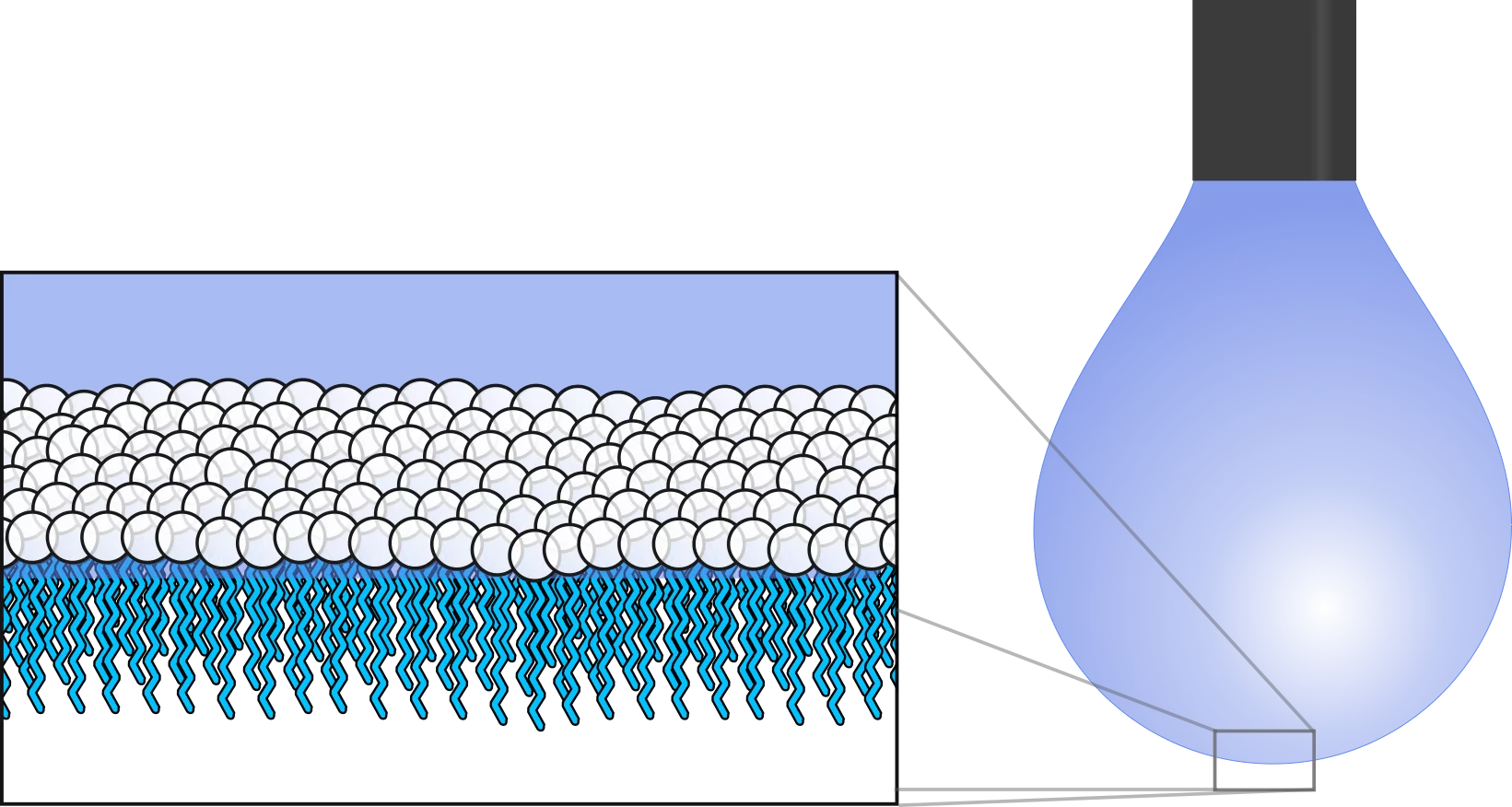
- Determine the saturation adsorption of surfactant at the decane/DMSO interface using pendent drop tensiometry.
- Characterise the size distribution of emulsion droplets using optical microscopy.
We are looking for a motivated student with a background in chemistry, physics or materials science looking to gain experience preparing and characterising soft matter systems.
For more information, please contact Wouter Grünewald, wouter.gruenewald@psi.ch
Micromagnetic Simulations of skyrmion dynamics and design
Project description:
Magnetic skyrmions are nanoscale spin textures that can be moved using electric currents and are promising for next-generation data storage and logic devices. This project explores skyrmion dynamics using micromagnetic simulations, with possibilities ranging from racetrack geometries (skyrmions pushed along a magnetic “wire”) to multilayer systems where chiral asymmetries may lead to “skyrmion rainbow” formation effects. You aims will be to run numerical simulations, analyse their emergent magnetic textures, and evaluate how underlying symmetry and materials parameters determine skyrmion behaviour. Work will be primarily computer-based using micromagnetic simulation software and Python for analysis.
Area of study:
Computational condensed matter physics, magnetism, materials science, computational modelling. Students should ideally have a background in physics, materials science, applied mathematics, or a related field.
Necessary background and skills:
- Basic understanding of magnetism
- Some experience in numerical computation
- Python (essential)
- Familiarity with Linux or Unix environments (helpful)
- Experience with large-scale computational packages (e.g. Mumax3, Spirit) is not required but would be a bonus
What you (the student) will learn:
- Running and interpreting micromagnetic simulations
- Modelling approaches to topological magnetic structures
- Visualisation and analysis of large simulation datasets in Python
- Understanding how material parameters and symmetry affect emergent magnetism
- Experience in computational research workflows
Contact: Samuel Moody, samuel.moody@psi.ch
Experimentally investigating magnetic skyrmion formation
This project explores how chemical substitution alters the formation and stability of magnetic skyrmions in the well-known chiral magnet Cu₂OSeO₃. The student will characterise pristine and doped samples using experimental methods including magnetometry (MPMS) and neutron scattering (SANS). Typical tasks include sample alignment, magnetic measurements, data reduction, and analysis of phase diagrams to determine whether doping enhances or suppresses the skyrmion phase. Day-to-day work will be a mix of laboratory measurements at PSI and office-based data processing.
Area of study:
Condensed matter physics, magnetism, materials science, experimental solid-state physics. Students should ideally have a background in physics, materials science, or a related field.
Necessary background and skills:
- Basic understanding of magnetism and phase diagrams
- Experience with laboratory measurement equipment (helpful)
- Python or MATLAB for data analysis (or similar)
- Ability to work carefully in a laboratory environment
- Experience interpreting large experimental datasets (advantageous)
What you will learn:
- Hands-on operation of MPMS magnetometry systems
- Neutron scattering workflows and data interpretation
- Processing and analysis of magnetic phase diagrams
- Direct experimental investigation of topological spin textures
- Experience in real-world laboratory planning, measurement, and data reporting
Contact: Samuel Moody, samuel.moody@psi.ch
Hydrogen-bonding at an interface
Interactions of materials at interfaces drives the performance of many everyday products. Soaps and shampoos interact with dirt to clean, with air to form bubbles and with oil and water to form stable emulsions. Recent works have shown that the bulk behaviour of the surfactants can be manipulated by introducing hydrogen bonding groups, enabling the formation of various micellar structures [1]. We are looking for a motivated student with a background in chemistry, physics or materials science to investigate the interaction strength of novel amino acid-based formulations. By measuring changes in surface tension and surface excess concentrations, through pendant drop tensiometry, the project aims to further quantify the strength of synergistic interactions.
In this project, you will generate surfactant concentration series' and measure their surface tensions with a custom tensiometry setup to relate changes in interfacial adsoprtion, tension, and critical micelle concentration to uncover molecular interaction strengths.
[1] Lutz-Bueno, V.; Williams, A. P. Hydrogen Bonding Exacerbates Viscoelasticity of Amino Acid– and Betaine Surfactant Self-Assemblies. Journal of Colloid and Interface Science 2026, 704, 139382.
Area of study: Physical chemistry / Soft Matter
For more information, please contact: Ashley Williams, ashley.williams@psi.ch
Nuclear and magnetic structure of high entropy oxides
High entropy oxides (HEOs) are promising materials for electrocatalysis and multiferroic applications. Mullite-type HEOs based on Bi2M4O9 (M = Ga, Al, Fe, Mn) are structurally complex materials, especially the magnetic structure, which changes when multiple elements are incorporated on the M site. Neutron diffraction is a suitable technique to probe the nuclear and magnetic structure of the HEOs.
Analysis of neutron diffraction data using different methods to obtain information about the long-range and local nuclear and magnetic structures will be performed. This will involve visualization of the data, finding trends, and refinements using different refinement software (e.g., FullProf, TOPAS, PDFgui).
Area of study: Materials Chemistry
Necessary background and skills:
- Inorganic chemistry (synthesis not required)
- Understanding of material characterization
- Understanding of diffraction experiments and/or refinements of diffraction data
What you will learn:
- Analysis of diffraction data and extraction of structural information
- Data reduction
- Visualization of data and crystal structures
Contact for questions: ida.nielsen@psi.ch
Characterization and test of the LIGHT detector system
Project description
The LIGHT project develops next-generation timing detectors for high-energy physics applications.
The student will contribute to the preparation of the full ASIC + sensor detector module
for an upcoming test beam campaign at DESY in August. The work focuses on characterising
the detector in the laboratory, validating the readout chain, and performing systematic measurements
to ensure the setup is ready for operation under beam conditions.
The student will work closely with a PhD student who provides day-to-day supervision, as
well as with researchers who designed both the ASIC and the sensor. This offers a unique
opportunity to learn directly from the people who built the system and to follow the full R&D
chain from design to real-world testing.
Everyday work alternates between hands-on tasks in the electronics laboratory (oscilloscopes,
pulse generators, probe stations) and offline data analysis on a Linux workstation. The project
blends experimental work, quantitative reasoning, and methodical data processing.
Area of study
Electrical Engineering / Microelectronics / Experimental Particle Physics / Applied Physics
(Students should have at least a basic background in electronics or detector instrumentation.)
Necessary background and skills
• Basic understanding of analog and digital electronics
• Comfortable working in a Unix/Linux environment
• Experience with Python for data analysis
• Familiarity with oscilloscopes, signal generators, and general laboratory measurement
techniques
• Optional but helpful: experience with semiconductor sensors, ASICs, or DAQ systems
• Nice to have: ROOT or similar scientific data frameworks
• Nice to have: Git version control
What the student will learn
• Practical experience in testing ASIC-based detector systems
• Operation of laboratory equipment for precision electronic measurements
• Data acquisition workflows for sensor and front-end ASIC characterisation
• Statistical analysis and interpretation of detector performance data
• Understanding of timing-detector behaviour under realistic operating conditions
• Preparation procedures for high-energy physics test beam campaigns
• Collaborative detector R&D, working directly with designers and a supervising PhD student
This project is ideal for a motivated student who enjoys both hands-on experimental work and
data analysis. The work directly contributes to a real test-beam experiment and provides close
mentorship from the detector development team.
Contact: Abderrahmane Ghimouz, abderrahmane.ghimouz@psi.ch
Stimuli-responsive nanofribillar hydrogels
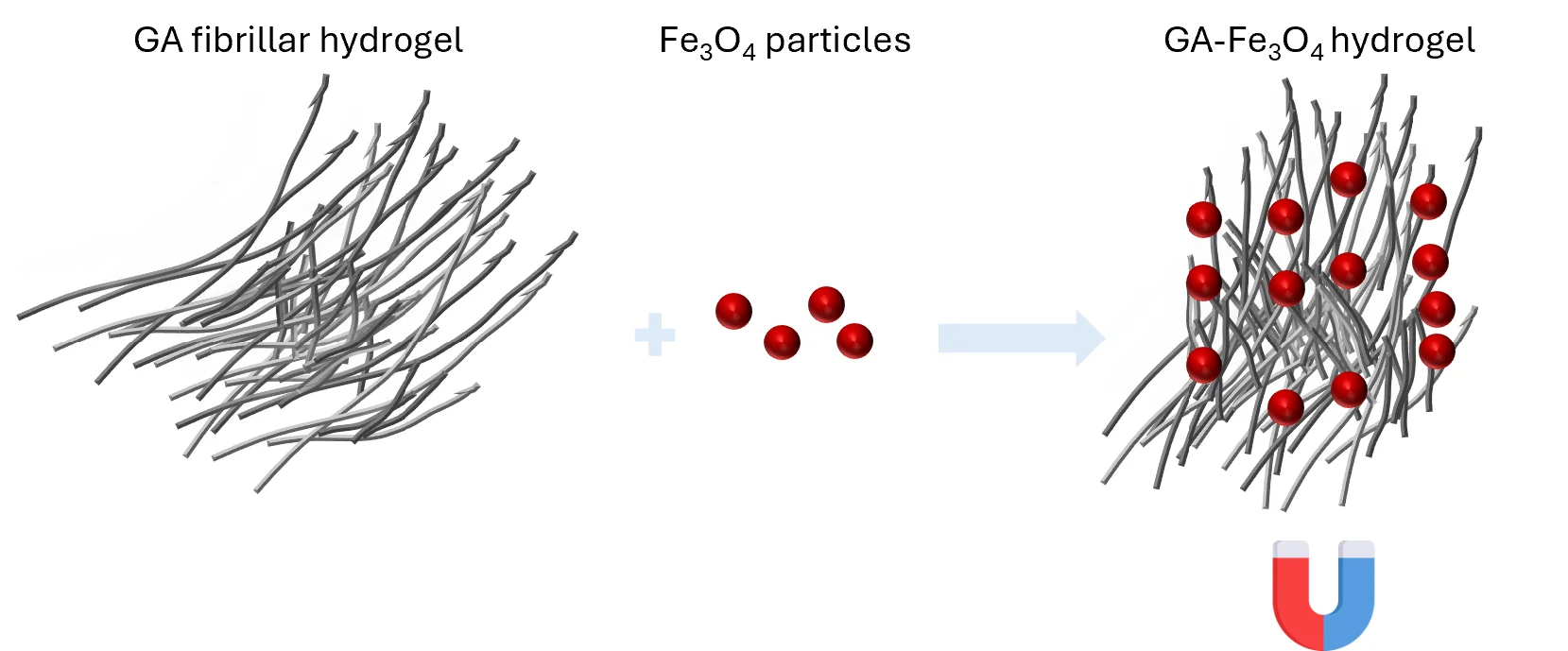
Self-assembly is the essence of nature, where small molecules combine and form complex functional units. Of particular interest are bioderived molecules that can undergo anisotropic self-assembly and form nanostructures such as nanotubes, nanofibrils and ribbons. Glycyrrhizic acid (GA), which is derived from licorice roots, is a common example of self-assembling biomolecule that forms nanofibrils in water. Owing to large range of applications as anticancer, antiviral drugs and treating skin diseases, GA based self-assemblies are studied extensively. Interesting fact, GA is 50 times sweeter than sugar. In this project we will be developing fibrillar hydrogels using GA. The amphiphilic nature of GA, owing to both the hydrophilic and hydrophobic functional groups, allows it to form nanofibrils in water. With increasing concentrations of GA, the length of nanofibrils increases, finally leading to a hydrogel network. It has been demonstrated that the hydrogel is formed by a network of ’infinitely’ long fibrils and short fibrils. Due to electrostatic repulsion between them, a nematic order is created by the orientation of the long fibrils. Upon applying shear forces, the longer fibrils break into shorter ones, and reorient, contributing to the shear-thinning properties of the gel.
The goal of this project is to induce this shear force through magnetic particles. When a magnetic field is applied to a particle laden gel, the particles will rearrange themselves in the direction of the field, which in turn will induce a shear in the gel. We want to investigate the effect of this shear force on the re-orientation of the nanofibrils constituting GA hydrogels. Following will be the mains tasks for the project:
- Prepare GA-Fe3O4 fibrillar hydrogels with varying concentrations of GA and Fe3O4 particles.
- Rheological characterization (shear-thinning and viscoelastic properties) using a rotational rheometer.
- Measure birefringence using high-speed polarization camera to analyze the orientation of fibrils under magnetic field.
We are looking for a motivated student with background in chemistry, material science, chemical engineering or related fields to take up this interesting project. You will be working in an international group, with researchers from various disciplines and with common excitement for soft matter. If this project has piqued your interest and you want to know more, please contact Somashree Mondal somashree.mondal@psi.ch
Calculation of muon stopping sites
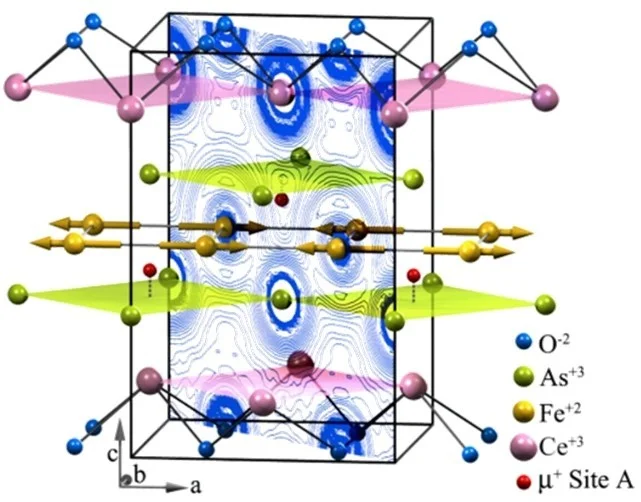
Muon spin spectroscopy is an incredibly sensitive experimental technique that has applications in magnetism, superconductivity, battery research, and fundamental physics. To help interpret the measurements, it is really important to calculate where the muon stops in a particular material. There are a few different techniques to do this; the best approach is an expensive computational calculation, however there are also some approximations which are relatively computationally cheap. The problem is, we currently don’t know when the approximations work and when they don’t! In this project you will perform some calculations on various different materials of interest to lots of different areas of physics, materials science, and chemistry, and help identify when these approximations can be used. Day to day work will be mostly computational, however there is also the opportunity to get involved in some of the muon spin spectroscopy experiments that we perform with users from all over the world at PSI if desired.
We are looking for a student with a background in physics, chemistry, materials science, or a related field, who is keen on learning more about how we perform computational calculations to support the interpretation of experiments. Some basic experience of coding would be beneficial.
For more information, please contact: thomas.hicken@psi.ch
Noise Performance Studies of CMS Inner Tracker TEPX Pixel Modules Under Varying Temperature Conditions
Project Description
The CMS Inner Tracker (IT) is undergoing a major upgrade for the High-Luminosity LHC, including
the new Tracker Endcap Pixel (TEPX) system. The High Energy Physics (HEP) group at PSI is the
major institute responsible for the production and qualification of the TEPX pixel modules, providing a
unique environment for hands-on detector R&D and testing. Understanding how module noise behaves
under different operating temperatures is essential for ensuring reliable detector performance.
In this project, the student will investigate how electronic noise in TEPX pixel modules changes across
a controlled temperature range. The work involves operating modules in a clean-room laboratory,
performing repeated data acquisition scans using PSI’s TEPX module test setup, and analyzing the
resulting data to quantify temperature-dependent noise behavior. Typical tasks will include running
predefined data acquisition scripts, modifying configuration parameters, monitoring module response,
and performing data processing and
Area of Study
Particle Physics/Particle Detectors/Scientific Computing/detector instrumentation/silicon sensor technology
Necessary Background and Skills
• Basic understanding of semiconductor detectors (helpful but not required)
• Experience with Python for data analysis
• Familiarity with the Unix shell (helpful but not required)
• Ability to follow laboratory safety and clean-room procedures
• Interest in experimental detector R&D and hands-on measurements
What You Will Learn
• Operation and qualification of silicon pixel detector modules
• Practical experience with temperature-controlled measurements and DAQ systems
• Statistical analysis and visualization of detector noise data
• Working in a clean-room environment, including handling sensitive detector hardware
• Understanding of CMS Inner Tracker upgrade technologies and module production workflows
Contact for Questions
Amrutha Samalan (amrutha.samalan@psi.ch)
Automating Dirac Algebra for Particle Physics (added on 19.12.2025)
Calculations in particle physics often involve working with gamma matrices and taking so-called Dirac traces. While the basic rules are simple, they become involved when using dimensional regularization, where spacetime is split into a four-dimensional part and an extra-dimensional part. In this project, the student will develop a Python program that implements these rules in a fully systematic and reliable way. The work connects abstract theory with hands-on coding, and the resulting tool will be directly relevant for modern precision calculations in particle physics.
Area of study: Theoretical Particle Physics / Computational Physics
(mandatory background in physics with exposure to quantum mechanics and linear algebra)
Necessary background and skills:
- Solid Python programming skills
- Linear algebra (vectors, matrices, traces)
- Basic quantum mechanics (operators, spinors)
- Familiarity with special relativity and Lorentz indices (helpful but not mandatory)
What you will learn:
- Basic concepts of Quantum Field Theory computations
- How calculations in particle physics are carried out in practice
- Experience working at the interface of theoretical physics and scientific computing
Contact for questions: jason.aebischer@psi.ch
Testing the electrode system for the muEDM experiment at PSI (added on 14.01.2026)
The muEDM experiment at Paul Scherrer Institute (PSI) is at the forefront of precision particle physics. Its goal is to search for the electric dipole moment (EDM) of the muon—a tiny, yet profoundly important quantity. A non-zero muon EDM would signal time-reversal (and CP) violation beyond the Standard Model, providing a new window on the origin of matter–antimatter asymmetry in the Universe. The instrument, designed and build by an international collaboration, is currently being commissioned. In 2026 we want to demonstrate for the first time ever the frozen-spin technique which consists of applying a radial electric field to a muon stored on a circular orbit within a magnetic storage trap.
Your Role in the Project
This summer project gives you the opportunity to contribute directly to a cutting-edge experiment that probes the foundations of particle physics. Working closely with a PhD student and senior scientists, you will:
- Develop and test high-voltage electrode systems
Optimize ground and high-voltage electrodes made of conductive strips printed onto a 80µm Kapton cylinder, a key component of the storage trap. - Build and commission a dedicated test bench
Assemble mechanical structures, high-voltage components, and diagnostics to characterize electrode performance under realistic conditions. - Program control and readout electronics
Interface power supplies, sensors, and data acquisition systems to monitor electric fields, stability, and breakdown behavior. - Iterate on innovative designs
Use 3D-printed prototypes to explore different geometries and materials, validating that the final design can reliably withstand electric fields exceeding 10 kV/cm.
Contact for questions: Philipp Schmidt-Wellenburg, philipp.schmidt-wellenburg@psi.ch
Probing Uniaxially-Pressurized Superconductors with NMR (added on 16.01.2026)
When a large number of electrons interact strongly in solids, many intriguing quantum phases can emerge. Among them, superconductivity has the potential to transform multiple industries, yet fundamental questions about the mechanism of superconductivity in high-temperature superconductors remain outstanding.
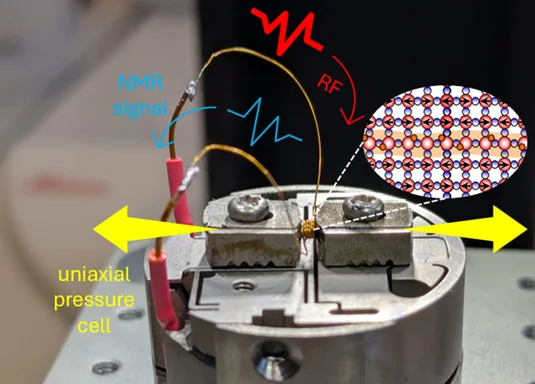
One such question concerns the role of other phases that compete or coexist with superconductivity. In particular, when copper-based superconducting crystals are cooled down, one can also encounter symmetry-lowering structural transitions and the appearance of both spin and charge orders. Nuclear magnetic resonance (NMR) experiments that locally probe the magnetic environments and spin dynamics have proved central to understanding the interplay between spin, charge, and lattice degrees of freedom in such materials, especially if we can study NMR variables as a function of doping, or alternatively, as a function of (uniaxial) pressure.
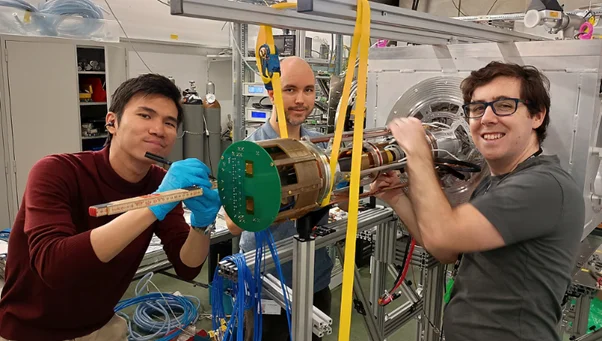
At PSI, we have recently set up instrumentation to perform such NMR measurements under uniaxial pressure. We are excited to offer a motivated student the opportunity to join our summer NMR campaign on controlling a superconductor with uniaxial pressure. The work is centered around a mixture of hands-on experimental work that includes electronics, RF circuits, and cryogenic cooling, as well as analysis and modelling to resolve the interdependence of the low-temperature phases in the cuprate superconductors.
Contact for questions: Gediminas Simutis, gediminas.simutis@psi.ch