
Show filters
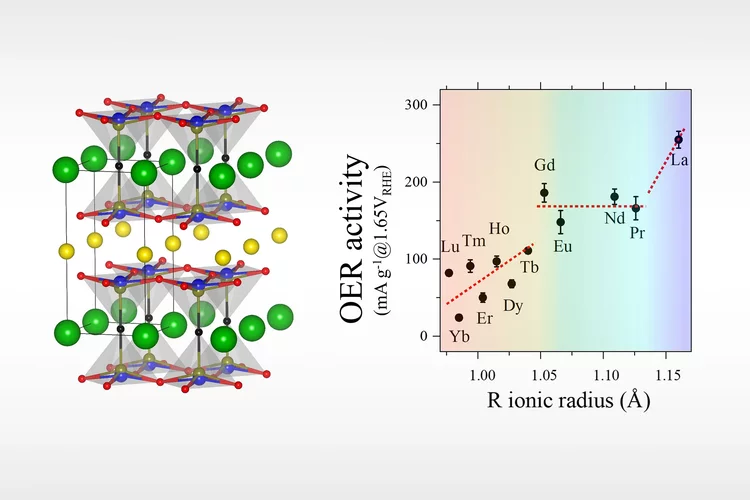
Cobalt-free layered perovskites RBaCuFeO5+d (R = 4f lanthanide) as electrocatalysts for the oxygen evolution reaction
Co oxides with perovskite-related structure are particularly promising, cost-effective OER catalysts. However, the increasing Co demand by the battery industry is pushing the search for Co-free alternatives. Here we investigate the potential of the Co-free layered perovskite family RBaCuFeO5+δ (R = 4f lanthanide), where we identify the critical structural and electronic variables leading to high OER catalytical performance. The employed methodology, based in the use of advanced neutron and X-ray synchrotron techniques combined with ab initio DFT calculations allowed to reveal LaBaCuFeO5+δ as new, promising Co-free electroctalyst. Moreover, we could show that this material can be industrially produced in nanocrystalline form. We believe that the reported results and methodology may contribute to the implementation of new technologies aimed to generate energy with lower carbon emissions, and can also inspire the scientific community in their search of other Co-free materials with good OER electrocatalytical properties.

Two post-doc positions funded by SwissTwins open in the MSD group
Two new post-doc opportunities (post-docs/research software engineers) are open, to join the AiiDA development team (MSD group), focusing on supporting large data scales and next-generation HPC infrastructures.
These positions are funded under the SwissTwins project, offering close collaboration opportunities with project partners such as the Swiss Supercomputer Center CSCS, and other institutions in Switzerland and Europe.
Deadline: July 30, 2023

Consortium led by LMS wins funding to establish ORD practices
A consortium led by Dr. Giovanni Pizzi, Group leader of the “Materials Software and Data” group in the Laboratory for Materials Simulations, has won funding of almost CHF1.3 million for a three-year project dubbed PREMISE: “Open and reproducible materials science research.”
MARVEL team wins inaugural PRACE HPC Excellence award
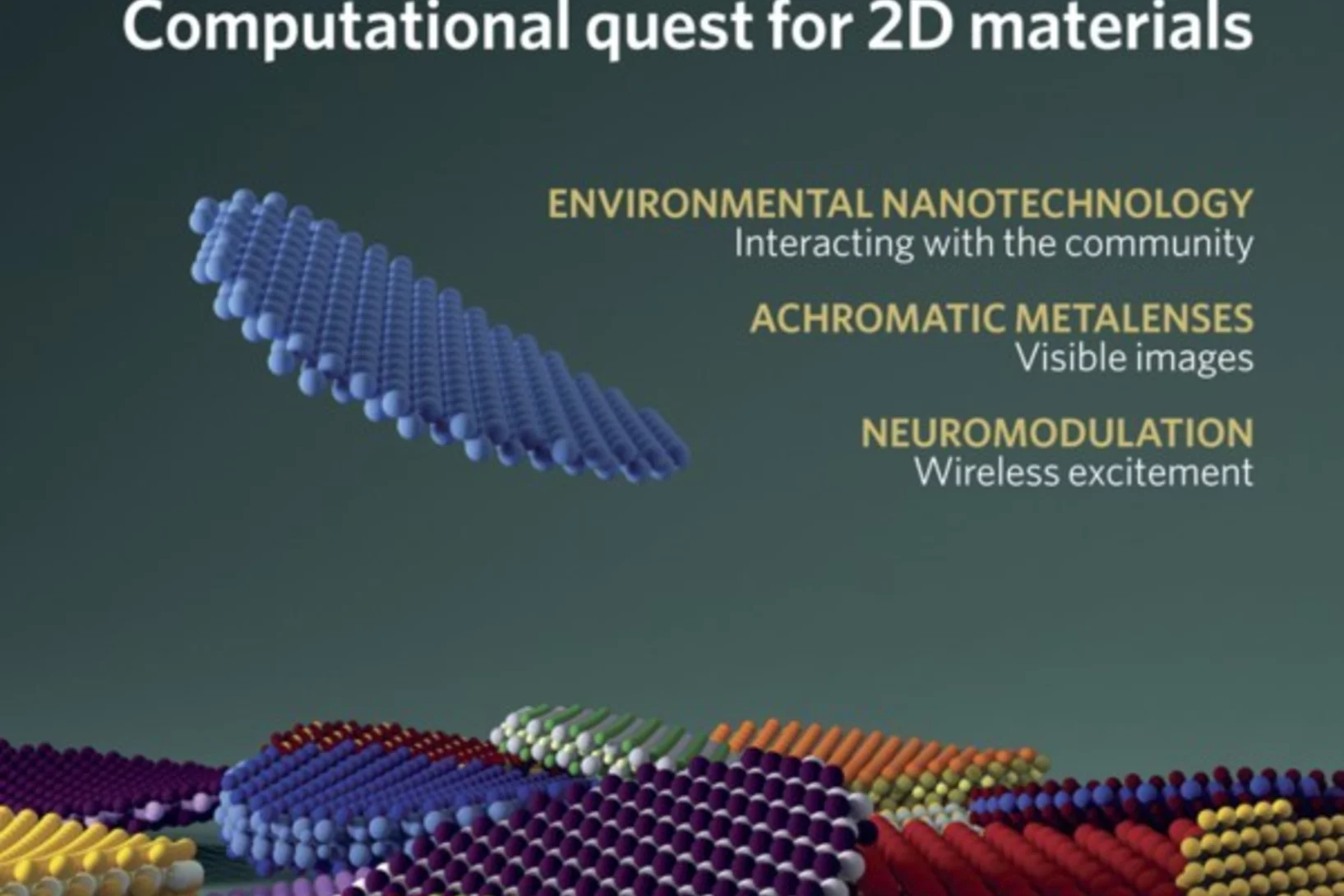
The first ever PRACE (Partnership for Advanced Computing in Europe) HPC Excellence Award has been awarded to a team led by Professor Nicola Marzari, head of Theory and Simulation of Materials at EPFL's School of Engineering and Materials Simulations at PSI, and director of NCCR MARVEL. The € 20,000 award is given to “an outstanding individual or team for ground-breaking research that leads to significant advances in any research field through the usage of high-performance computing”, and recognizes the team’s effort in the discovery and characterization of novel two-dimensional materials.

Electronic-structure methods for materials design
The accuracy and efficiency of electronic-structure methods to understand, predict and design the properties of materials has driven a new paradigm in research. Simulations can greatly accelerate the identification, characterization and optimization of materials, with this acceleration driven by continuous progress in theory, algorithms and hardware, and by adaptation of concepts and tools from computer science.