
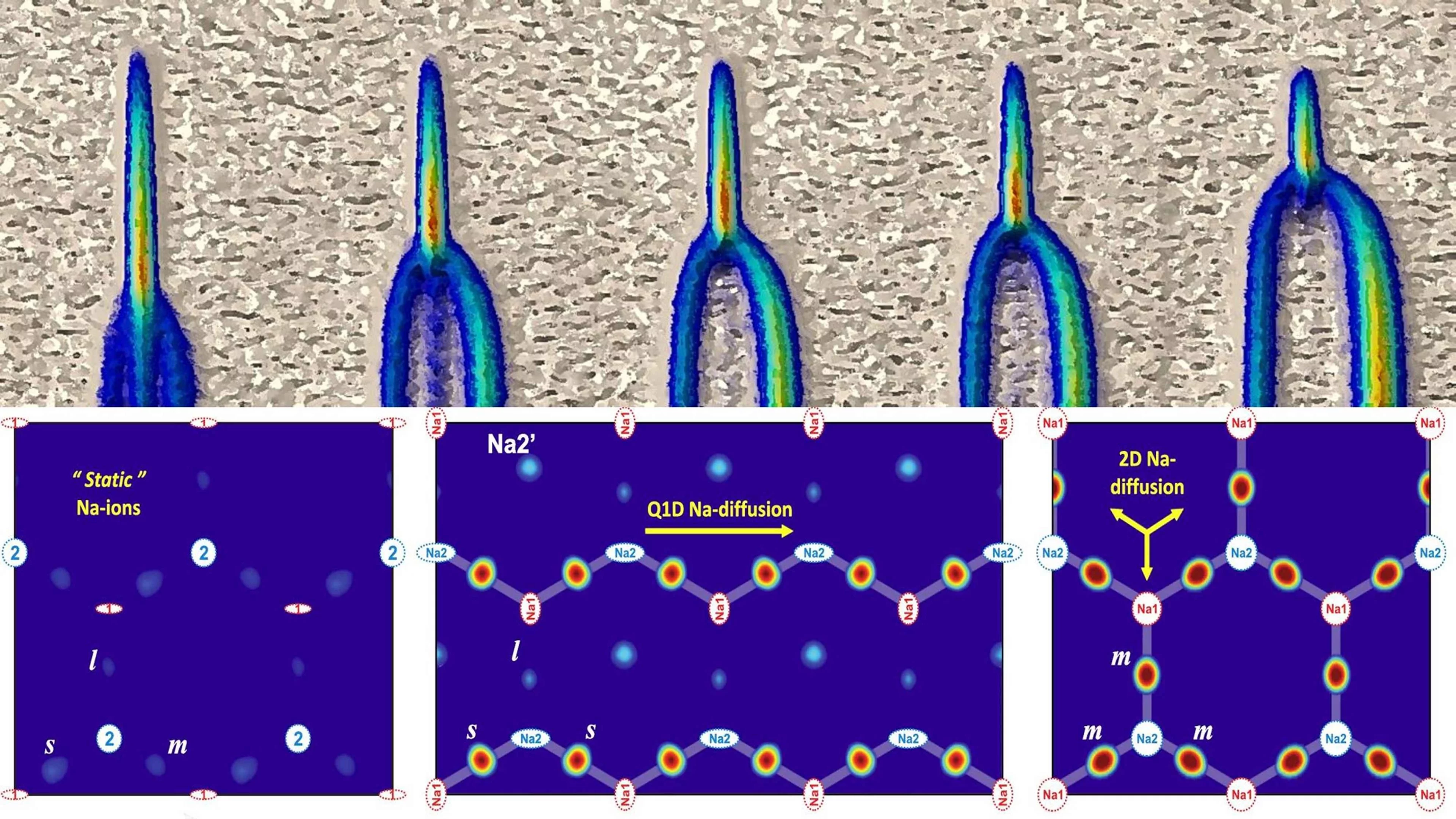
The Physical Properties of Materials Group prepares and characterizes advanced materials featuring novel structural, electric and magnetic properties. For these fundamental studies we use in-house equipment in combination with experiments at the PSI large scale facilities.
News
News

Renommierte Förderung für Spin-Quanten-Kombination
Aus zwei mach eins: Giacomo Sala verbindet am PSI zwei getrennte Physikwelten – die etablierte Spintronik und die junge Quantengeometrie. Der ERC fördert sein hochinnovatives Projekt mit rund 2,2 Millionen CHF. Es könnte den Weg zu effizienteren Datenspeichern ebnen.

Giacomo Sala wins SPS Award in Condensed Matter Physics
Giacomo Sala wins the SPS Award 2026 in Condensed Matter Physics.
NCCR-MARVEL Highlight 2021
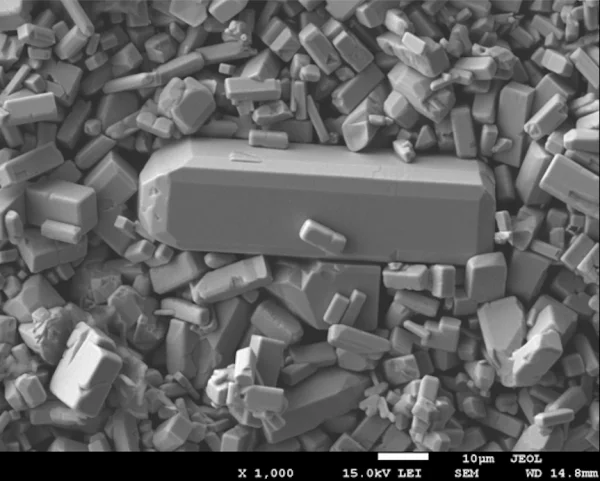
First-ever rare earth nickelate single crystals lead to first experimental evidence supporting predicted multiferroicity
Scientific Highlights

Unconventional Superconductivity in ScIr2 Chiral Crystal With a Kagome Lattice
Materials with a kagome lattice host exotic quantum phenomena driven by the interplay between band topology, spin–orbit coupling, magnetism, and electronic correlations. While the magnetism of kagome materials ...
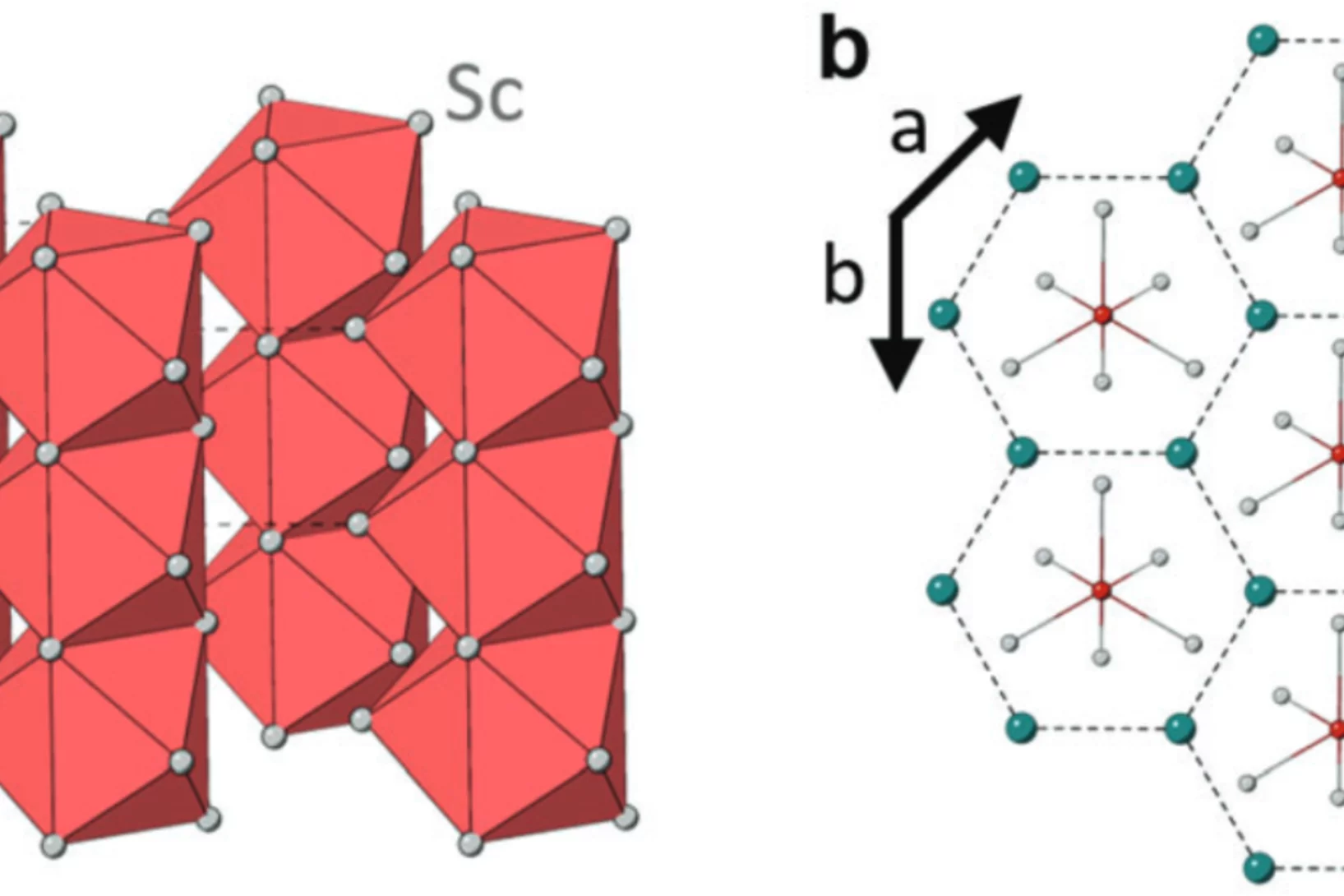
Tailoring the Normal and Superconducting State Properties of Ternary Scandium Tellurides, Sc6MTe2 (M = Fe, Ru, and Ir) Through Chemical Substitution
The pursuit of a unifying theory for non-BCS superconductivity has faced significant challenges. One approach to overcome such challenges is to perform systematic investigations into superconductors containing d-electron metals in order to elucidate their underlying mechanisms. Recently, the Sc6MTe2 (M = d-electron metal) family has emerged as a unique series of isostructural compounds exhibiting superconductivity across a range of 3d, 4d, and 5d electron systems.
In this study, muon spin rotation, neutron diffraction, and magnetization techniques are employed to probe ...
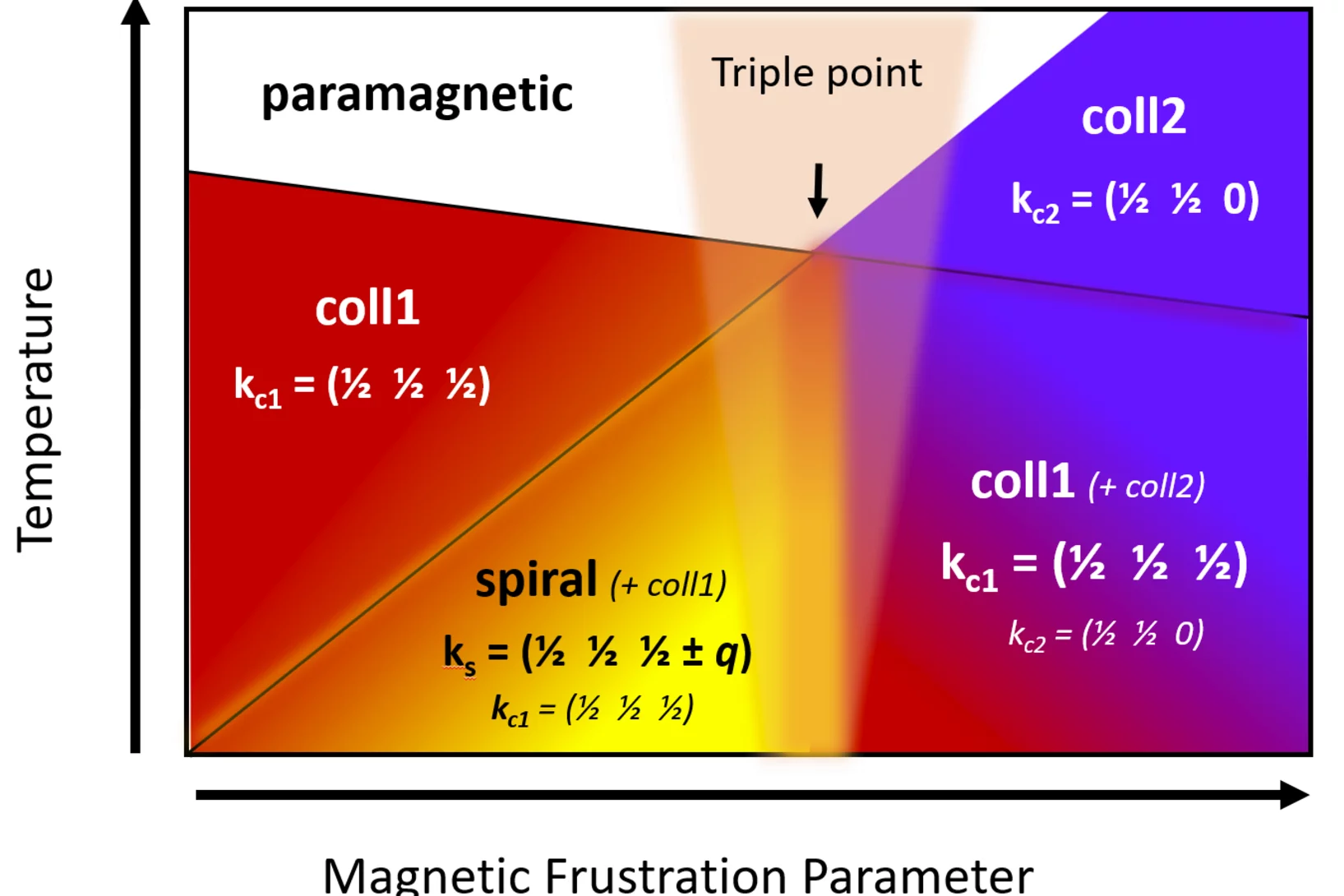
YBa1−𝑥Sr𝑥CuFeO5 layered perovskites: An attempt to explore the magnetic order beyond the paramagnetic-collinear-spiral triple point
Layered perovskites of general formula AA'CuFeO5 are characterized by the presence of spiral magnetic phases whose ordering temperatures 𝑇spiral can be tuned far beyond room temperature by introducing modest amounts of Cu/Fe chemical disorder in the crystal structure. This rare property makes these materials prominent candidates to host multiferroicity and magnetoelectric coupling at temperatures suitable for applications. Moreover, it has been proposed that the highest 𝑇spiral value that can be reached in this structural family ( ∼400 K) corresponds to a paramagnetic-collinear-spiral triple point with potential to show exotic physics. Since generating high amounts of Cu/Fe disorder is experimentally difficult, the phase diagram region beyond the triple point has been barely explored. To fill this gap we investigate here eleven YBa1−𝑥Sr𝑥CuFeO5 solid solutions (0≤𝑥≤1 ), where we replace Ba with Sr with the aim of enhancing the impact of the experimentally available Cu/Fe disorder. Using a combination of bulk magnetization measurements, synchrotron x-ray and neutron powder diffraction we show that the spiral state with 𝐤𝑠=(1/2,1/2,1/2±𝑞) is destabilized beyond a critical Sr content, being replaced by a fully antiferromagnetic state with ordering temperature 𝑇coll2≥𝑇spiral and propagation vector 𝐤𝑐2=(1/2,1/2,0). Interestingly, both 𝑇spiral and 𝑇coll2 increase with 𝑥 with comparable rates. This suggests a common, disorder-driven origin for both magnetic phases, consistent with theoretical predictions.