


Here you find current and previous news from the PSI Center for Neutron and Muon Sciences.
Show filters
Aldo Antognini Adjunct Professor at ETHZ
Aldo Antognini, currently lecturer and senior scientist at both ETH Zurich and the Laboratory for Particle Physics at NUM/PSI was awarded the title of Adjunct Professor at ETH Zurich.
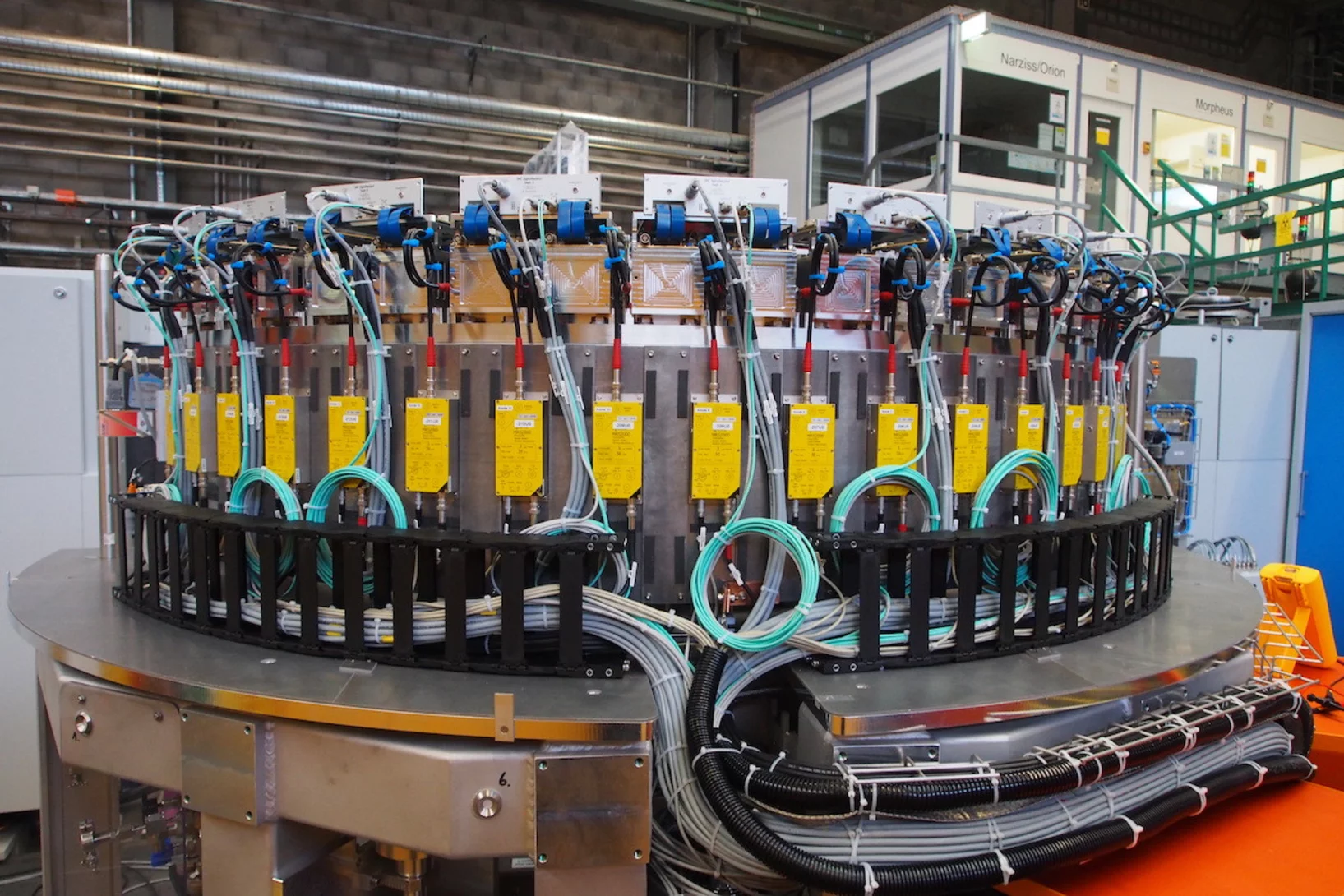
High-performance detector for DMC enters hot commissioning phase
The cold neutron diffractometer DMC at SINQ is currently undergoing major upgrades. After the recent replacement of the cold neutron guide as part of the SINQ upgrade program, the installation of the new high-performance 2D position-sensitive detector successfully entered the hot commissioning phase.
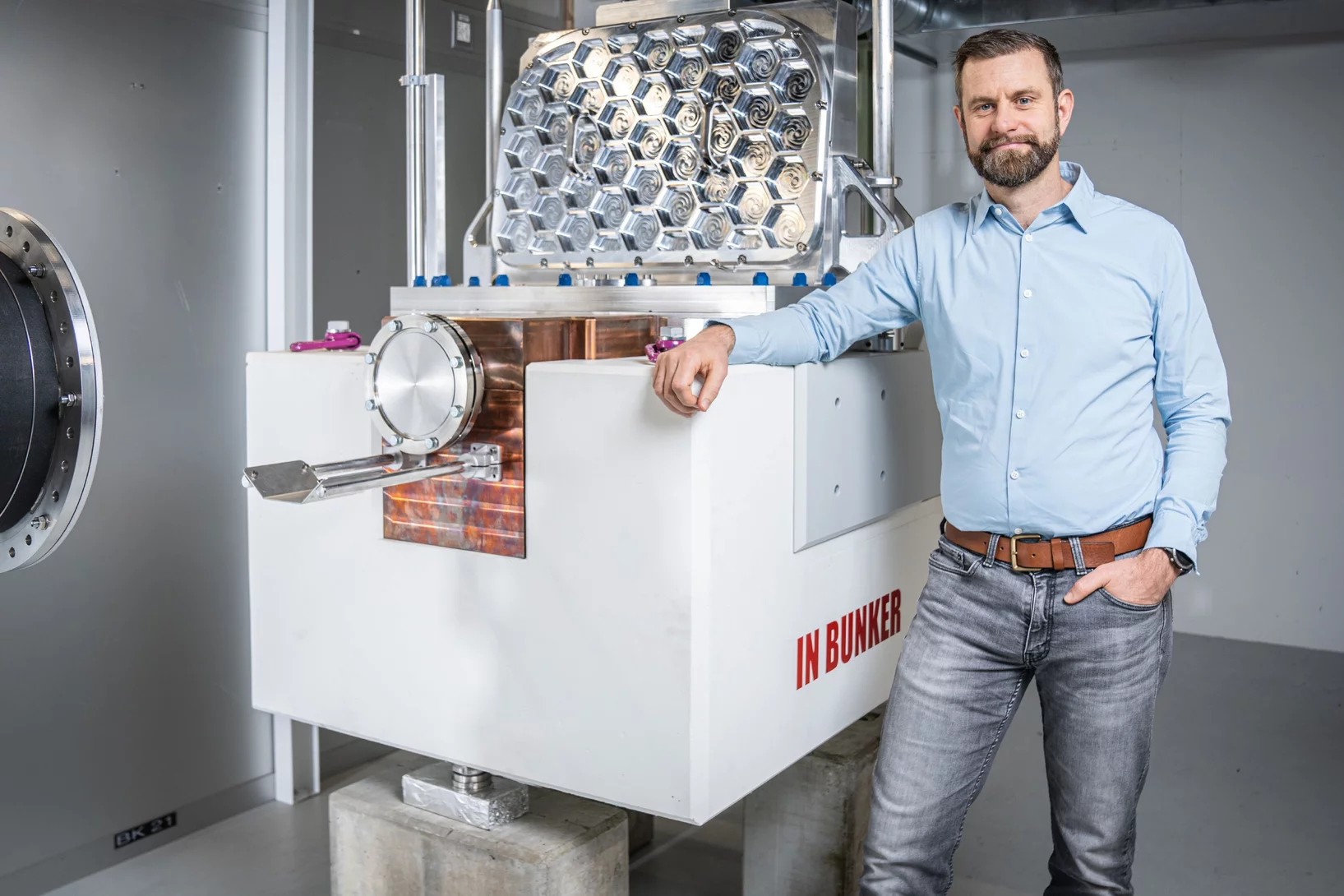
Le microscope à neutrons le plus précis du monde
Des chercheurs du PSI participent à la construction de la Source de spallation européenne ESS.
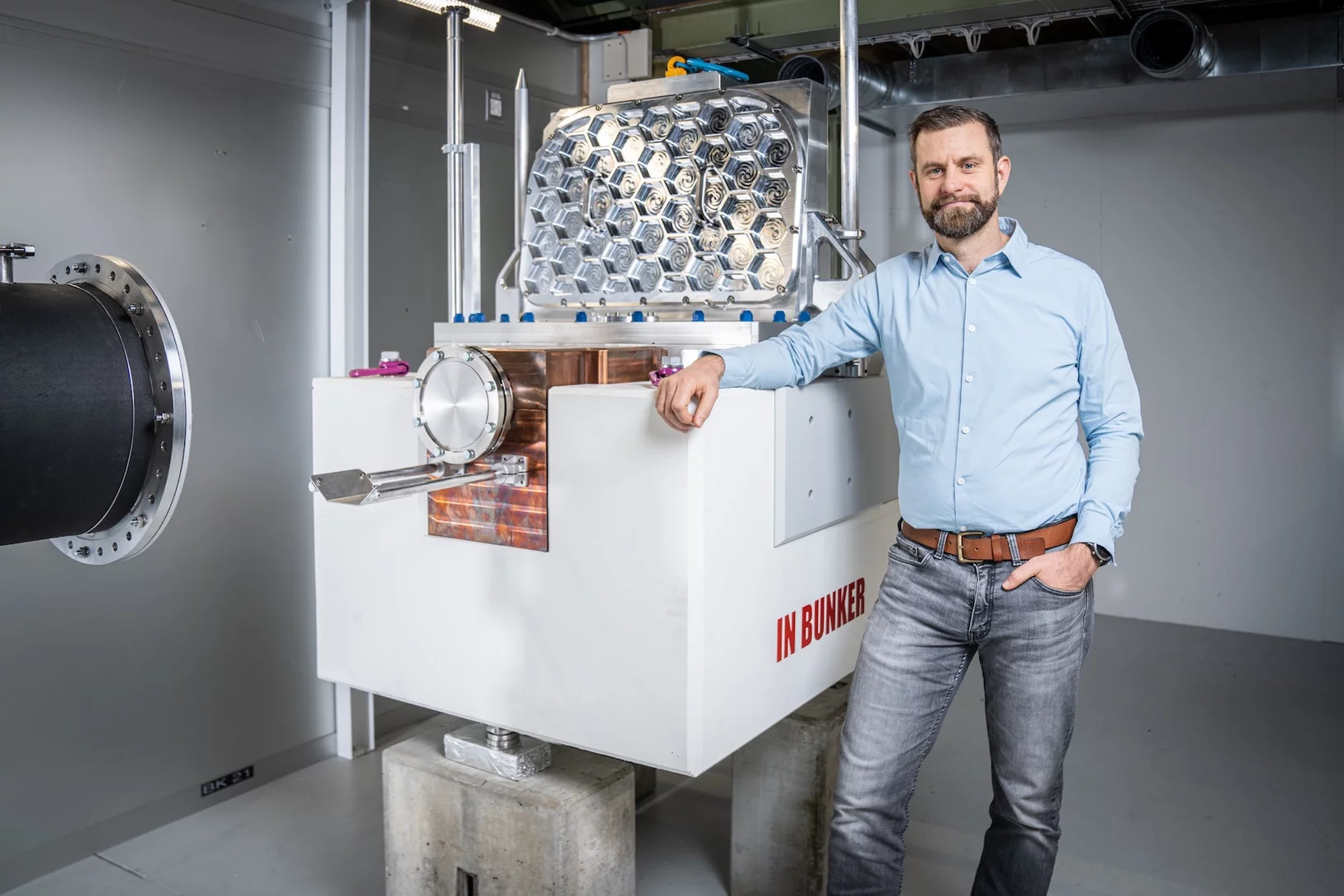
The world’s most powerful neutron microscope
Researchers from the Paul Scherrer Institute PSI in Villigen have delivered a key component for the ESTIA reflectometer at the European Spallation Source ESS based in Lund, Sweden. When it comes into service in 2026, ESS will be the world’s most powerful neutron source. Switzerland is making a vital contribution to the project. Scientists from across the globe will use ESS instruments to study processes and structures on the atomic scale, advancing materials research to a new level.
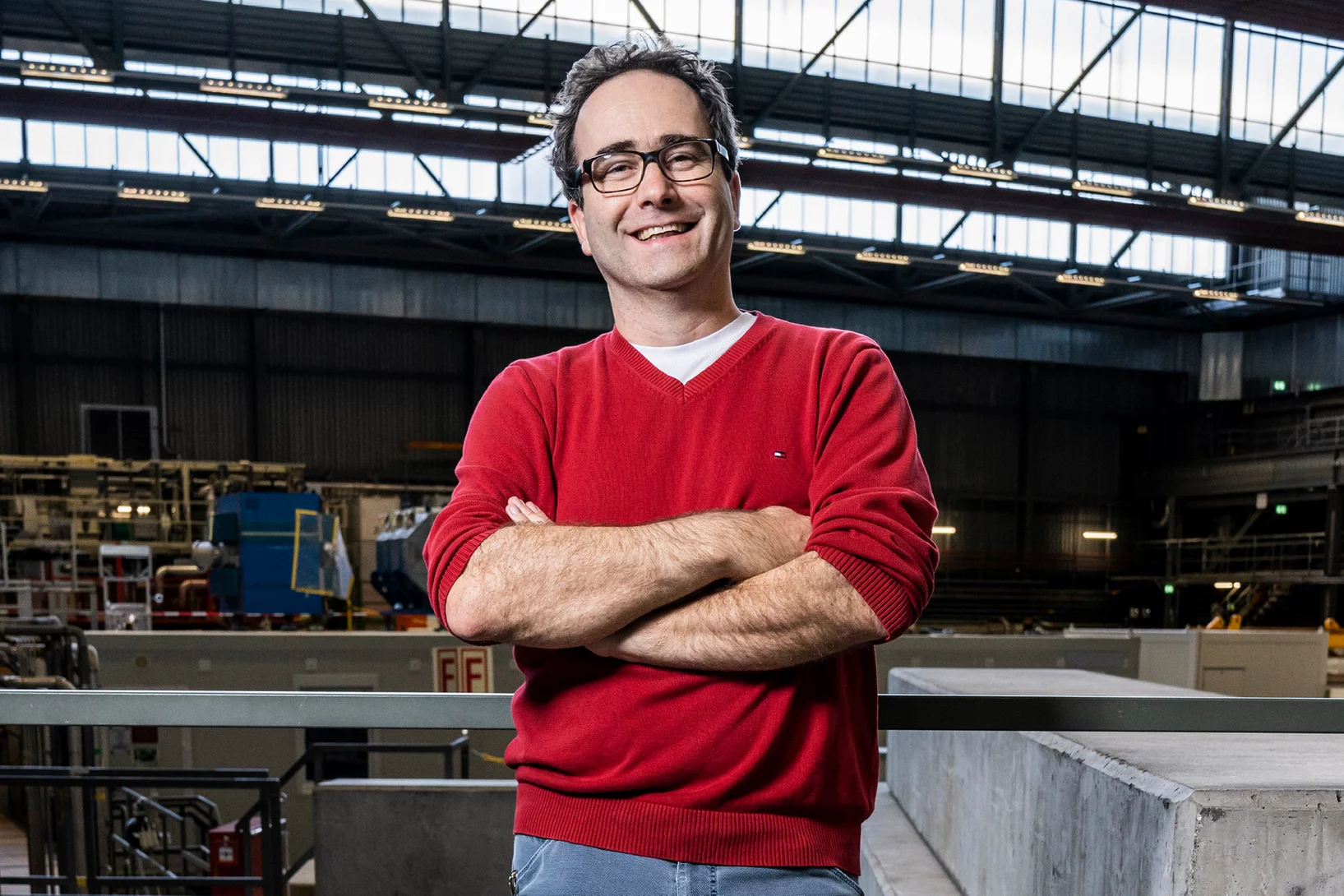
Le maillon entre théorie et expérience
Sans constantes fondamentales, pas de physique.

Silver medal at the EuroSkills
Silver medal for Mario Liechti at the EuroSkills in Graz, Austria.

CHRISP — All the key results in one place
A specialSciPost volume, entitled “Review of Particle Physics at PSI”, has recently been completed.
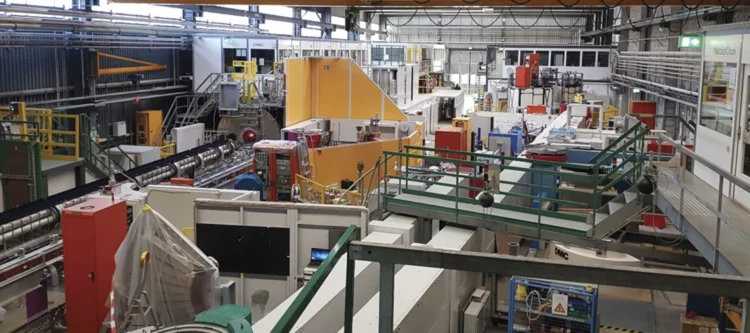
SINQ - performance of the new neutron guide system
In a recent open access article in "Neutron News" the performance of the new neutron delivery system after the SINQ upgrade has been described. Neutron flux gain factors between 2 and more than 10 have been measured at the various cold neutron instruments at SINQ.....
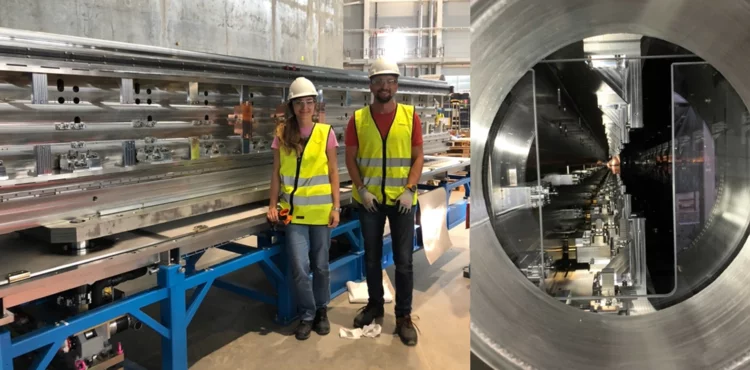
First Components of ESTIA arrive at ESS
The European Spallation Source (ESS) is currently under construction in Lund, Sweden and is set to become the most powerful neutron source in Europe and world-wide. The PSI-ESS project is delivering state-of-the-art contributions to five instruments at ESS, which will be home to a suite of 15 novel instruments. Among the five PSI instruments, the reflectometer ESTIA stands out as it is delivered in its entirety by PSI ...
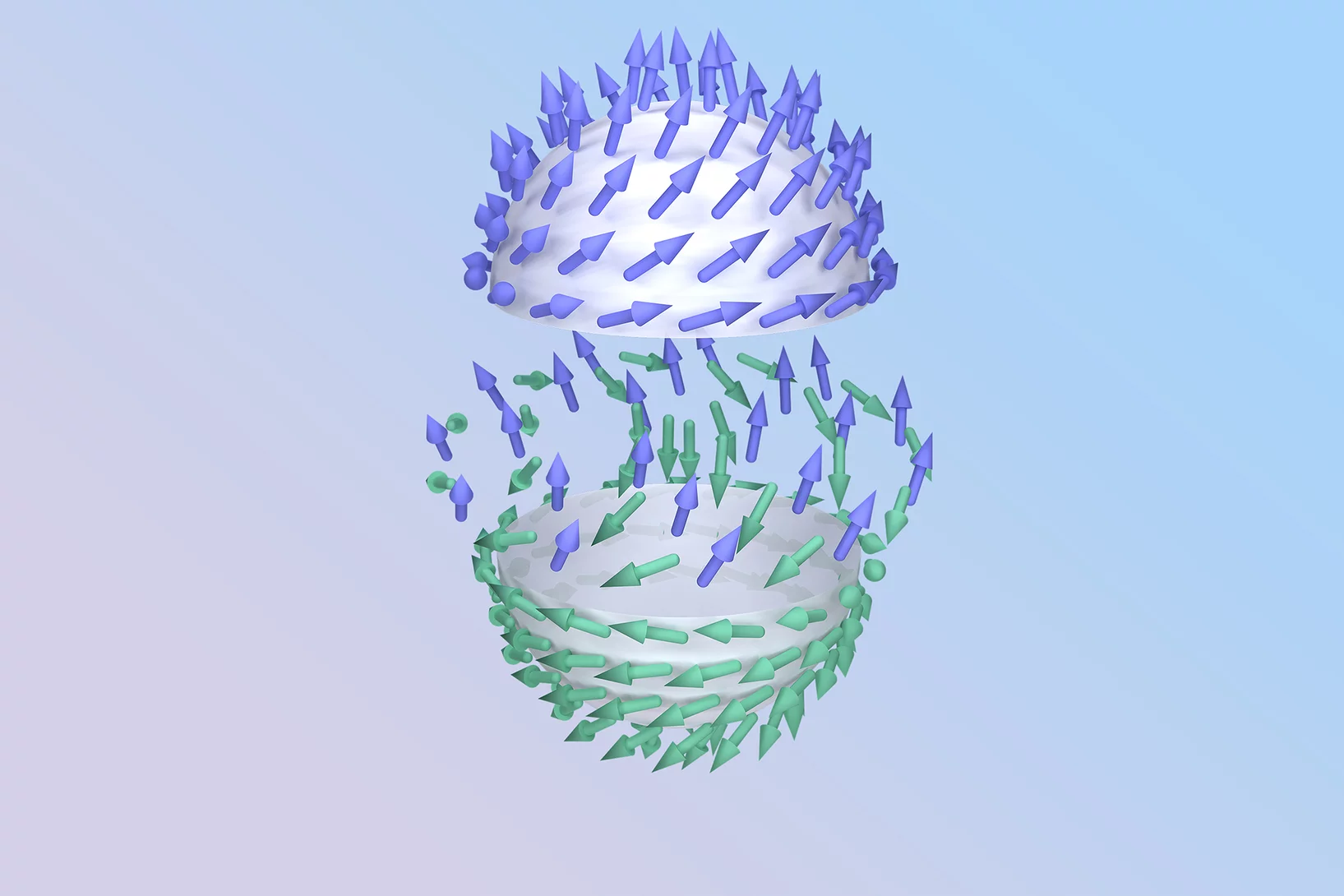
Nanomonde magnétique
Au PSI, les chercheurs sont confrontés à des phénomènes exotiques tels que les aimants frustrés et les nanotourbillons, qui pourraient un jour permettre de stocker les données plus efficacement.
L’eau et les aimants quantiques partagent la physique du point critique
À haute pression, l'eau liquide et la vapeur d'eau fusionnent - la frontière de phase disparaît. Les chercheurs ont maintenant découvert un comportement similaire dans un aimant quantique.
Hercules School 2021 at PSI
During the week of March 15 – 19, we had the pleasure to welcome 20 international PhD students, PostDocs and assistant professors at PSI, taking part in the first virtual Hercules School on Neutrons & Synchrotron Radiation.
L’Infrastructure suisse pour la physique des particules CHRISP
Les chercheurs recherchent les écarts par rapport au modèle standard actuel de la physique et veulent savoir comment notre univers est construit.
La taille du noyau d’hélium a été mesurée avec une précision inégalée
Dans le cadre d’expériences conduites à l’Institut Paul Scherrer PSI, une collaboration internationale de recherche a mesuré le rayon du noyau de l’atome d’hélium de manière cinq fois plus précise que tous les chercheurs avant elle. Ce nouveau résultat permet de tester certaines théories fondamentales en physique.
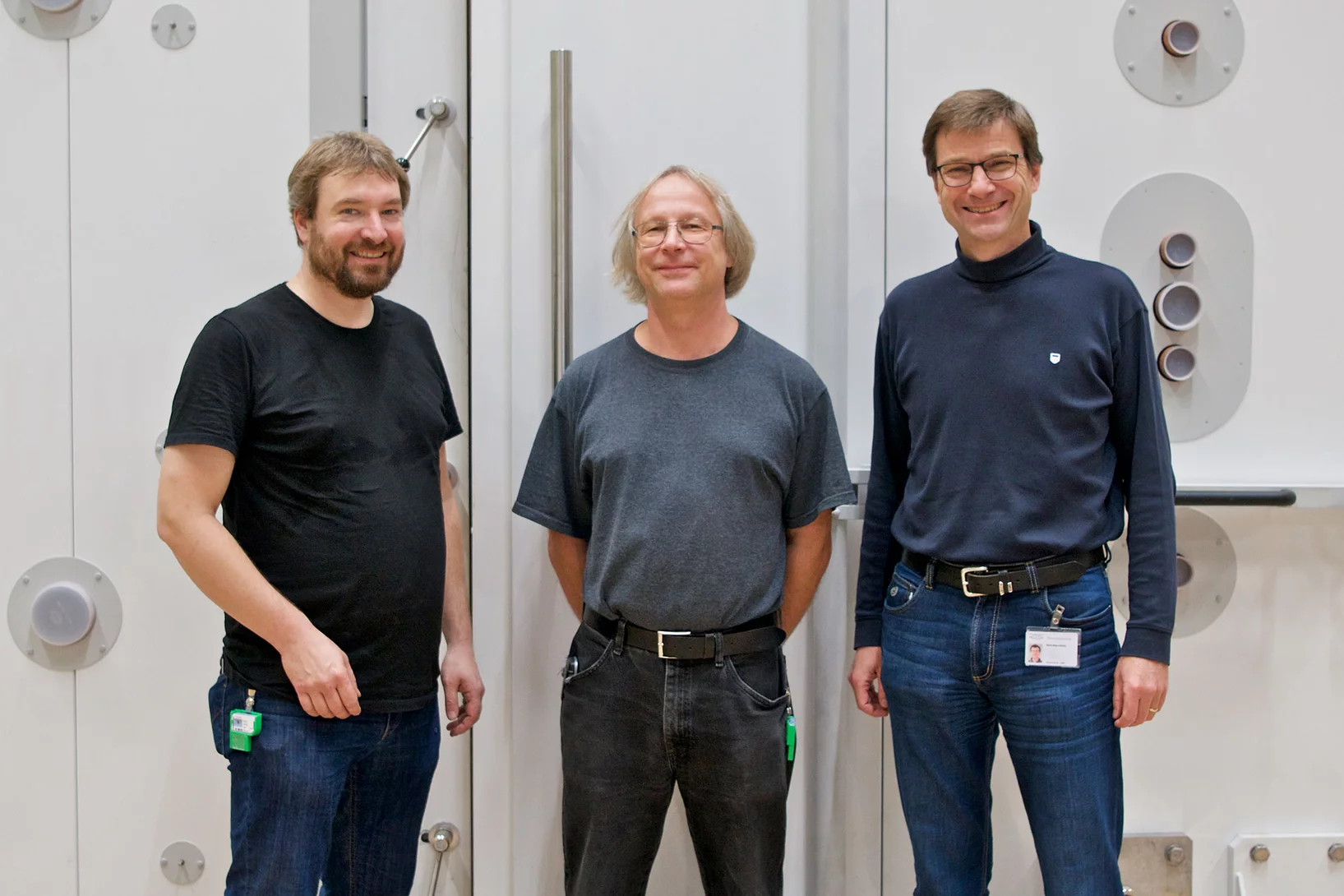
Isolé du monde par blindage magnétique
A l’Institut Paul Scherrer PSI, des chercheurs ont construit une chambre magnétiquement isolée du reste du monde dont les performances sont uniques au niveau planétaire. Leur objectif est de résoudre l’une des dernières énigmes sur l’origine de la matière et de répondre à la question fondamentale: pourquoi la matière, et par conséquent l’homme, existent-ils au sein de l’univers?
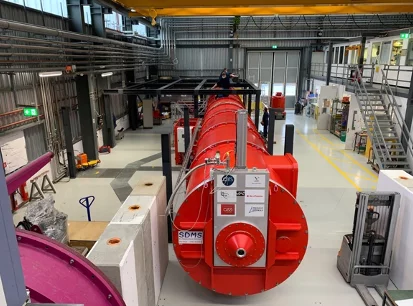
A new small angle neutron scattering instrument arrives at SINQ from LLB
In 2018 an agreement between the Laboratoire Léon Brillouin (LLB) and Paul Scherrer Institut has been signed with the aim to jointly operate a new small angle neutron scattering (SANS) instrument at the Swiss spallation neutron source SINQ.

Marc Janoschek appointed Associate Professor ad personam at University of Zurich
Marc Janoschek, the head of the Laboratory for Neutron and Muon Instrumentation (LIN), was appointed as Associate Professor ad personam for experimental physics – correlated quantum materials at the University of Zurich starting February 1, 2021.
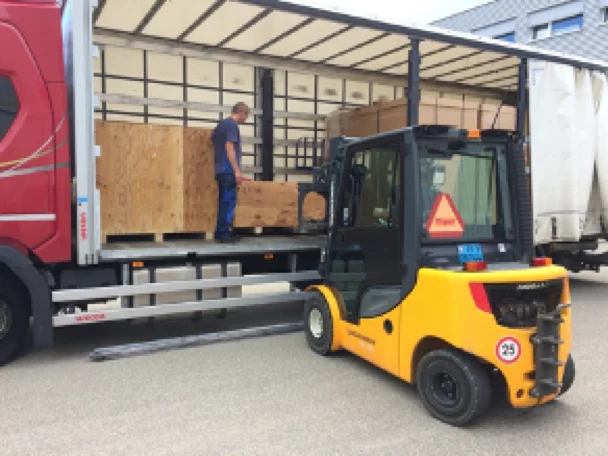
FALCON - a new instrument project at SINQ
Early 2020, an agreement between the Helmholtz-Zentrum Berlin and Paul Scherrer Institut has been signed, according to which the recently commissioned Laue Diffractometer Falcon (E11) would be transferred from HZB to PSI. The purpose of this agreement was to make state-of-the-art equipment from the recently closed research reactor BER-II at HZB work for scientific community at SINQ.

Prestigious IEEE award for Stefan Ritt
Stefan Ritt, leader of the Muon Physics group at the Laboratory for Particle Physics, has received today the prestigious IEEE Emilio Gatti Radiation Instrumentation Technical Achievement Award, for "contributions to the development and democratization of ultra-high-speed digitizers”.

On the winners’ podium at the SwissSkills professional championships
With Mario Liechti (gold) and Melvin Deubelbeiss (bronze) two of our electronics apprentices achieved a place on the winners’ podium at the SwissSkills 2020. The SwissSkills are the Swiss professional championships organized by the leading industry associations. The final competition took place October 27 - 30, 2020 at Schindler Elevators in Ebikon.

Swiss National Science Foundation Ambizione grant for Franziska Hagelstein
Franziska Hagelstein has been awarded a Swiss National Science Foundation Ambizione grant with PSI as host institution. She joined the particle theory group (NUM, Laboratory of Particle Physics LTP) in October 2020. In the near future she will be accompanied by a PhD student.
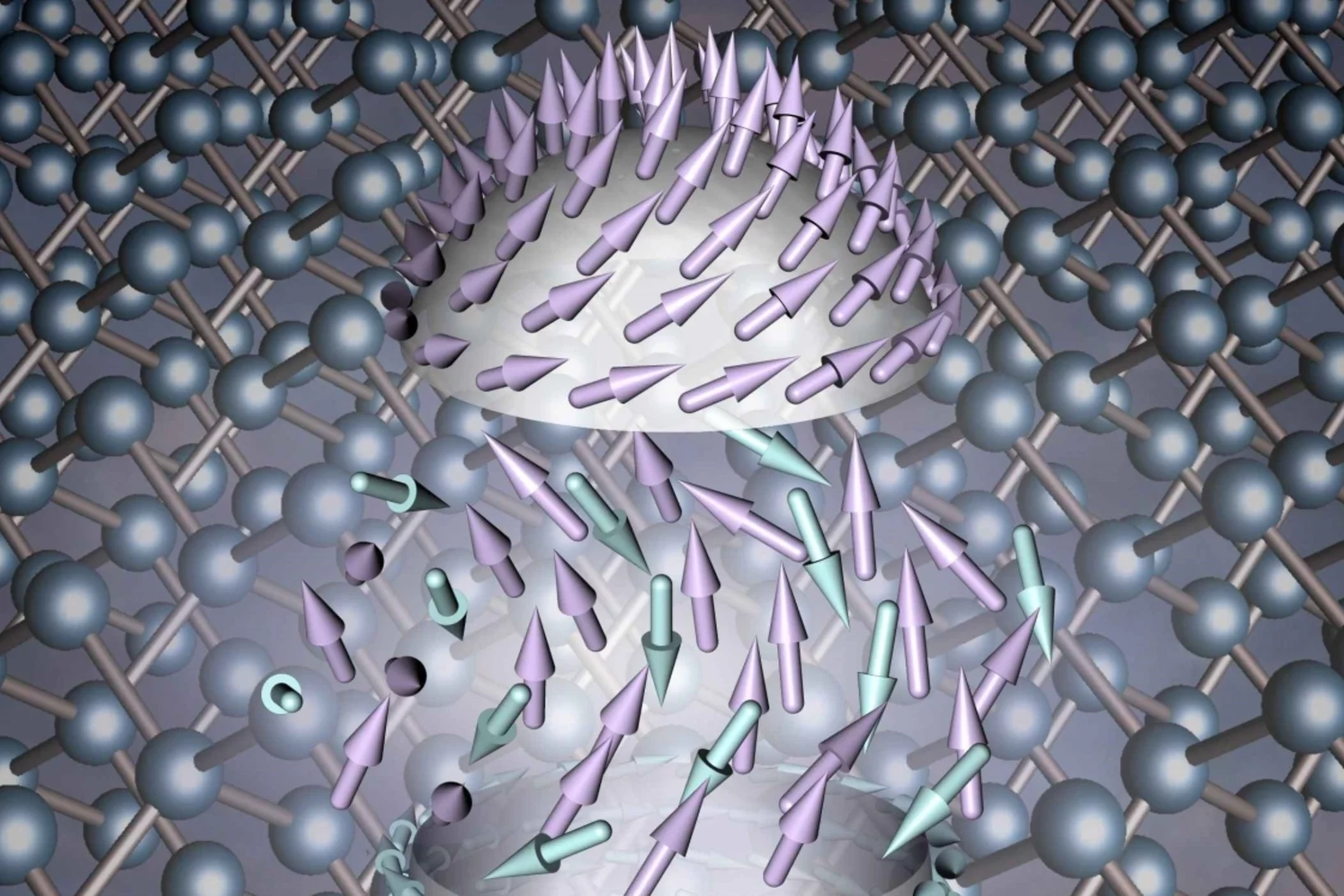
Nano-tourbillon doté d’une propriété bien particulière
Des chercheurs de l’Institut Paul Scherrer PSI ont établi pour la première fois l’existence de nano-tourbillons bien particuliers dans un matériau: des skyrmions antiferromagnétiques.

Mu3e magnet arrived at PSI
After almost three years of planning, design and construction, the 31-ton, 2.6 Tesla superconducting magnet for the Mu3e experiment arrived today at PSI. The magnet delivery is an important milestone in the Mu3e experiment at the Laboratory of Particle Physics LTP, which will search for New Physics in muon decays over the next years.
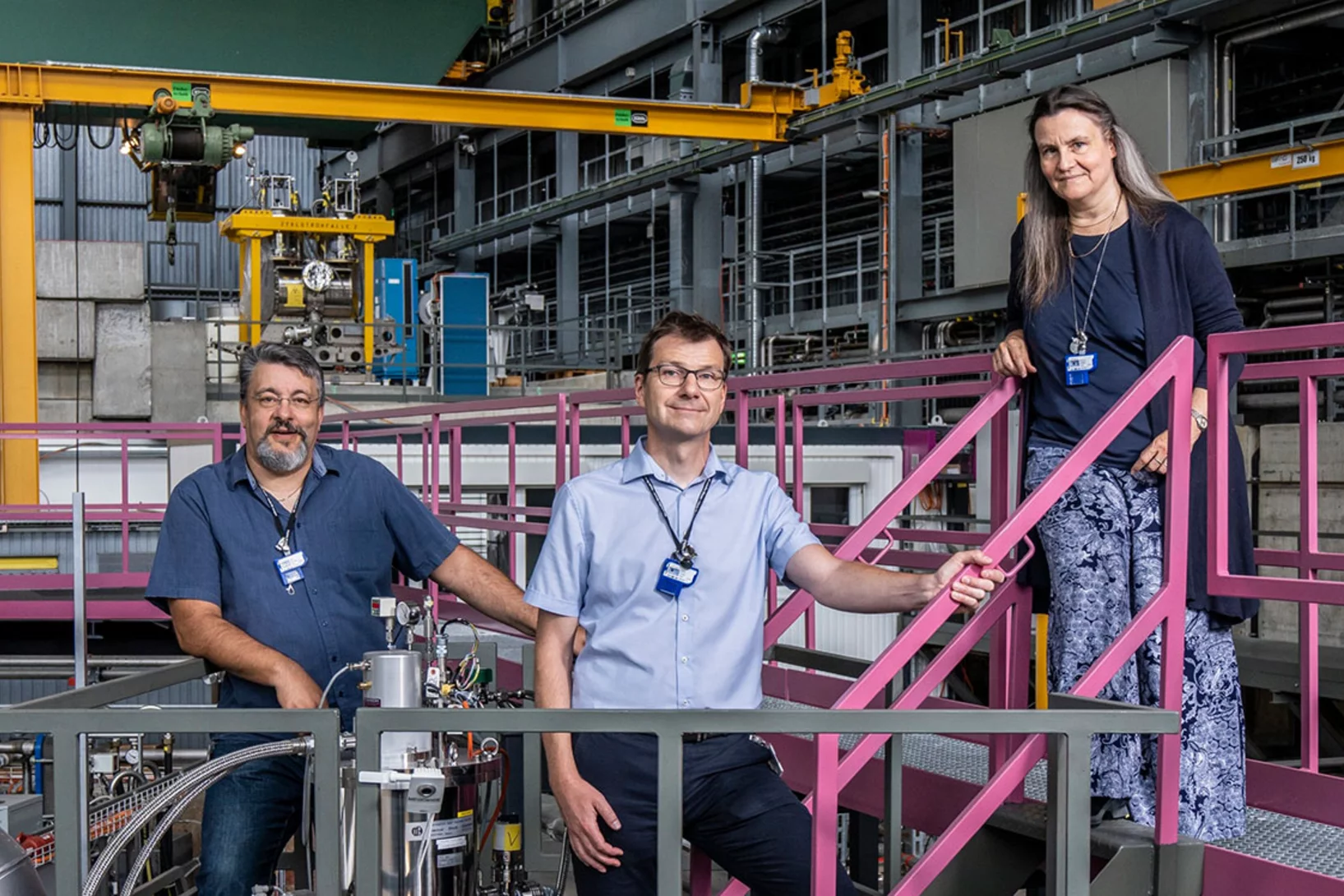
A la recherche d’une nouvelle physique
L’accélérateur de protons à haute intensité HIPA permet à l’Institut Paul Scherrer PSI de produire des particules élémentaires pour élucider la structure de notre univers. Les chercheurs utilisent des pions, des muons et des neutrons pour vérifier la validité du modèle standard de la physique des particules.

Anna Sótér appointed Tenure Track Assistant Professor at ETH Zurich
Anna Sótér, currently Lecturer and SNSF Ambizione Fellow at ETH Zurich, formerly member of the PSI Laboratory for Particle Physics and member of the PSI Fellow program, has been appointed Tenure Track Assistant Professor of Low Energy Particle Physics. Anna Sótér’s research is in the area of exotic atoms, where particle physics, atomic physics and quantum optics meet.

LENS Webinar on New Directions in Instrumentation
On June 25 the League of Advanced European Neutron Source LENS organized a second webinar on "New Directions in Instrumentation". Artur Glavic (LIN) gave a presentation on "Neutrons for Magnetic Nanostructures on Surfaces: Beyond the Specular Intensity Wars", which is still available online.

Young Scientist Award 2020
The Young Scientist Award 2020 of the European Magnetism Association (EMA) goes to Claire Donnelly for advances in the experimental characterization of spin textures and their dynamics in three dimensions with X-ray techniques.
Claire Donnelly, a former Ph.D. and postdoc at PSI in the Mesoscopic Systems Group, is currently a Leverhulme Early Career Research Fellow in the Cavendish Laboratory, University of Cambridge. She received her PhD in 2017 from the ETH Zurich for her work on hard X-ray tomography of three-dimensional magnetic structures based at the Paul Scherrer Institute. Following a postdoc at the ETH Zurich, she moved to the University of Cambridge and the Cavendish in January 2019, where she is focusing on the dynamics of three-dimensional magnetic nanostructures.
Her research focuses on three dimensional magnetic systems, which she studies using sophisticated synchorotron X-rays to determine the three-dimensional magnetic configurations, and their dynamic behaviour, at the nanoscale.
De l’hélium pionique avec une longue durée de vie: première preuve expérimentale de l’existence d’une matière exotique
Les atomes exotiques, où des électrons ont été remplacés par d’autres particules, permettent de scruter en profondeur l’univers quantique. Au terme de huit ans de travail, une équipe internationale de chercheurs a réussi une expérience difficile à la source de pions du PSI: créer un atome artificiel appelé «hélium pionique».

Le professeur Christian Rüegg est le nouveau directeur de l’Institut Paul Scherrer
Le nouveau directeur de l'Institut Paul Scherrer entre en fonction aujourd'hui: Christian Rüegg veut continuer à développer la position de leader des grandes installations de recherche du PSI et ainsi renforcer la Suisse en tant que site de recherche.

Symposium in memory of Jean-Pierre Blaser
Jean-Pierre Blaser (1923-2019) was one of the founders of the Swiss Institute for Nuclear Research SIN - one of the two institutions, which merged to the Paul Scherrer Institut in 1988. From 1988-1990 he was the first Director of the Paul Scherrer Institut. On the occasion of his first obit ETH Zurich and PSI organised a symposium to honour the lifetime achievement of this outstanding Swiss physicist.