
Lauren J. Riddiford, Jeffrey A. Brock, Katarzyna Murawska, Jacob Wisser, Xiaochun Huang, Nick A. Shepelin, Hans T. Nembach, Aleš Hrabec & Laura J. Heyderman;
Abstract:
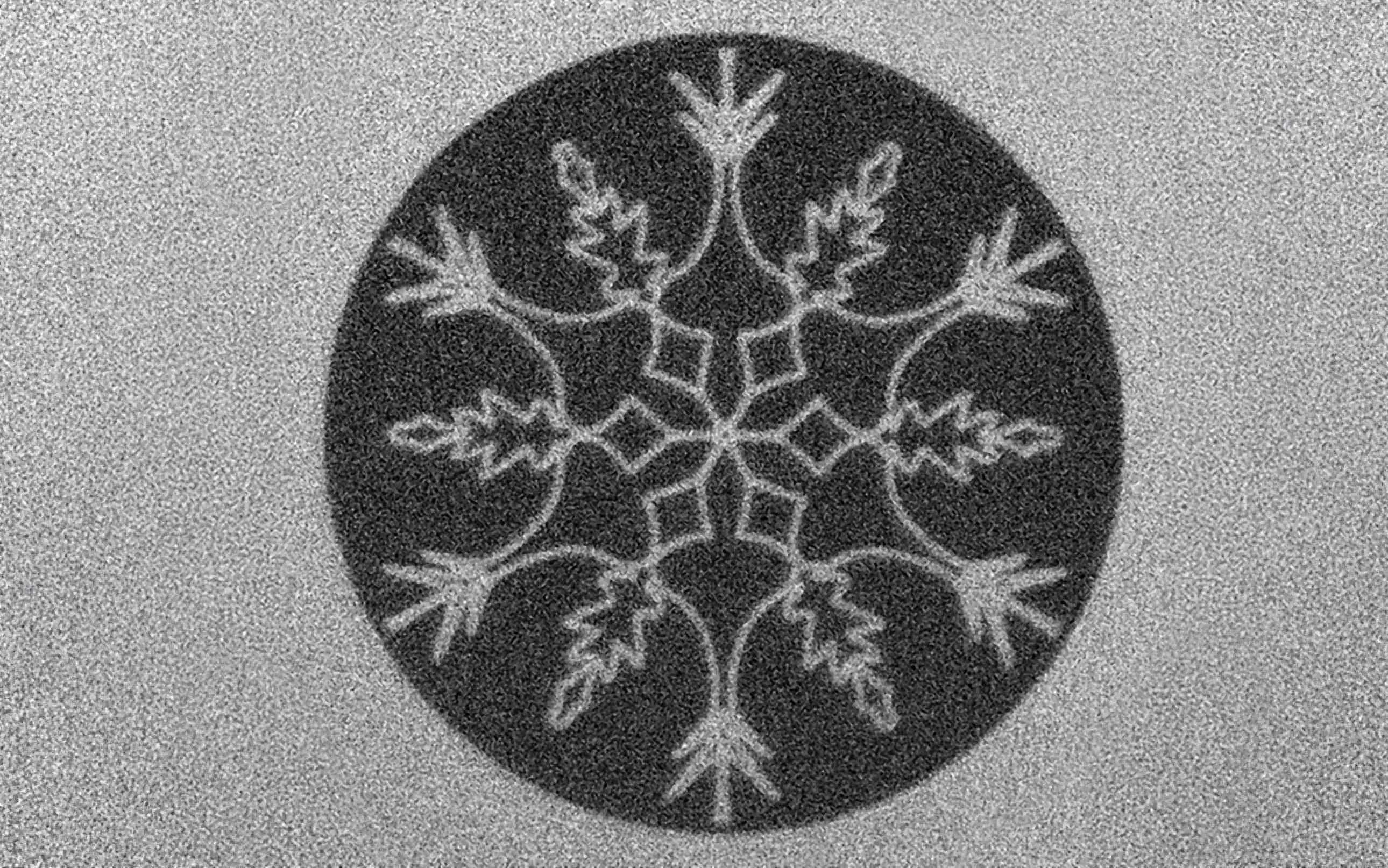
Across the fields of magnetism, microelectronics, optics, and others, engineered local variations in material properties can yield groundbreaking functionalities that play a crucial role in enabling future technologies. One-dimensional lateral gradients in material properties give rise to a plethora of new effects in thin-film magnetic systems. However, extending such gradient-induced behaviors to two dimensions has been challenging to realize experimentally. Here, we demonstrate the creation of two-dimensional complex patterns with continuous variations in magnetic anisotropy, interlayer exchange coupling, and ferrimagnetic compensation at the mesoscopic scale in numerous application-relevant magnetic materials. We exploit our engineered gradients in material properties to demonstrate novel magnetic functionalities, including the creation of a spin wave band pass filter and an architecture for passively resetting the position of a magnetic domain wall. Our results highlight the exciting new physics and device applications enabled by two-dimensional gradients in thin film properties.
Keywords: Magnetic properties and materials; controlled laser annealing
Facility: Thin Films and Interfaces; Mesosystems, LMX, PSI Center for Neutron and Muon Sciences; ETH Zurich;
Reference: L. Riddiford et al. , Nat Commun 16, 10979 (2025)
Read full article: here (link is external)