

Show filters

All'inseguimento degli atomi di idrogeno mancanti
Nelle rappresentazioni delle strutture cristalline dei materiali spesso mancano le informazioni relative alle posizioni degli atomi di idrogeno. I ricercatori dell'Istituto Paul Scherrer PSI hanno trovato un modo, impiegando l'intelligenza artificiale, per integrare la carenza di tali informazioni.

AiiDAlab: un software che fa avanzare la ricerca
Il software AiiDAlab è stato sviluppato per simulazioni al computer nell'ambito della ricerca sui materiali. Ora emerge che: la sua utilità ve ben oltre, ad esempio nel campo della ricerca sull'atmosfera, in quello del controllo degli esperimenti e nell'insegnamento.

A new database of inorganic materials is available on the Materials Cloud
A team of scientists, led by researchers at PSI, has introduced the Materials Cloud Three-Dimensional Structure Database (MC3D), a systematically curated database of quantum-mechanical calculations for inorganic materials derived from experimental crystal structures. The database contains more than 32 000 structures whose relaxed geometry and electronic structure were computed using carefully standardized DFT workflows, using three different functionals and/or computational protocols. Beyond providing a consistent reference dataset for computational materials science, MC3D also supports emerging data-driven approaches. For example, it served as a starting point for datasets used to train machine-learning interatomic potentials.

There’s an app for that: atomistic materials calculations made more accessible by the AiiDAlab Quantum ESPRESSO app
Powerful atomistic simulation tools have transformed materials research, but their complexity still limits who can use them and how easily results can be reproduced: a gap that a new web-based app now helps close. The AiiDAlab Quantum ESPRESSO app, described in a recent publication in npj Computational Materials, can run not only isolated calculations but also complete, end-to-end computational workflows involving multiple passages over several different materials, lowering the barrier for both experimentalists and computational experts. This is achieved through the tight integration of the widely-used Quantum ESPRESSO simulation software package with the AiiDA engine, a workflow-management system to help automate complex simulations in materials science (whose development is led by the Materials Software and Data group at PSI), which has provided substantial support to its development alongside contributions from the broader community.
Mapping the ecosystem of Wannier Functions software
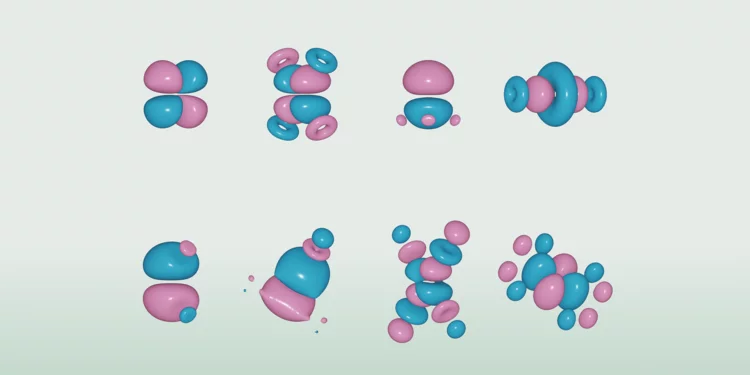
A new review article, just published in Reviews of Modern Physics and highlighted on the journal cover, provides a map to the vast landscape of software codes that allow researchers to calculate Wannier functions, and to use them for materials properties predictions. The authors, from all over Europe and the USA, include two PSI scientists. After providing readers with the theoretical foundations on Wannier functions and their calculation, together with intuitive graphical schematics to explain what Wannier functions are, the authors map the existing Wannier codes and the key applications.
New widgets and extensions expand the OSSCAR platform for educational notebooks in materials science
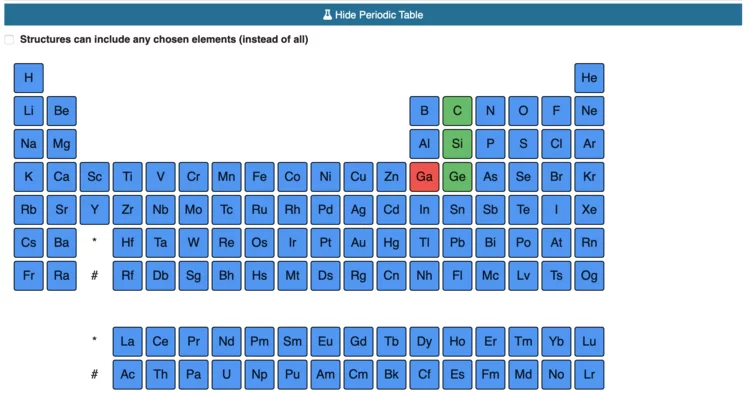
In a new article published in Computer Physics Communications, the team of the Open Software Services for Classrooms and Research project (OSSCAR) describes how to create custom widgets and extensions that can be used in interactive notebooks to teach computational materials science. The article also introduces two new entries in OSSCAR: a widget to display an interactive periodic table that allows users to group elements into different states, and one to plot and visualize electronic band structures and density of states.

Computational marathon matches the efficiency of the AiiDA platform with the power of Switzerland Alps supercomputer
A group of researchers from the LMS lab at PSI has conducted a "hero run" on the new Swiss supercomputer, occupying it entirely for about 20 hours with calculations managed remotely by the AiiDA software tools. The run demonstrated the efficiency and stability of AiiDA, that could seamlessly fill the entire capacity of an exascale machine, as well as the performance of the Alps supercomputer, that has been just inaugurated. All the results will soon be published on the Materials Cloud.
International collaboration lays the foundation for future AI for materials via the OPTIMADE standard
Artificial intelligence (AI) is accelerating the development of new materials. A prerequisite for AI in materials research is large-scale use and exchange of data on materials, which is facilitated by a broad international standard. A major international collaboration including researchers from the LMS laboratory now presents an extended version of the OPTIMADE standard.

Eine mögliche Abkürzung
Maschinelles Lernen und künstliche Intelligenz gehören heute zum Handwerkszeug der meisten Forschenden am PSI. Diese Methoden verändern die Wissenschaft teilweise grundlegend.