|
|
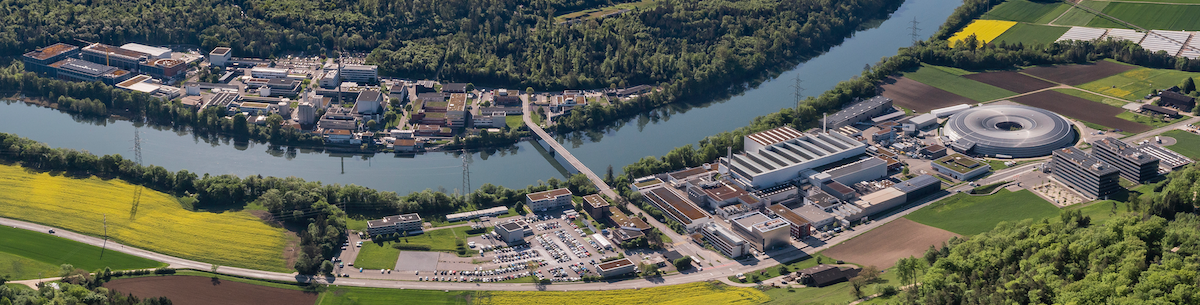
It has been a very busy year for the SLS teams, hectic at times and not without setbacks. Now at the end of the year, however, we are pleased to announce that all major milestones for the SLS 2.0 Phase-I upgrade have been achieved. This includes reaching the nominal ring current of 400 mA in record time after the start of operation, and getting the fast orbit feedback running, to name just two highlights. |

Frithjof Nolting
|
|
We managed to deliver light to all planned Phase-I beamlines, with most of them now at least in the commissioning or pilot-user phase. At five beamlines (Debye, ADDAMS, PXIII, PolLux and SuperXAS), we have been in regular user operation since mid-November, and several companies have conducted proprietary work. We are now gaining experience in user operation of the new, upgraded SLS, exploring the higher flux, higher stability and smaller X-ray foci with many international groups. Although a number of elements still need to be completed and optimized, we can safely say that the performance of SLS 2.0 is outstanding. This is only possible thanks to the excellent and dedicated work of many. We are now approaching Phase II of the upgrade, with a longer shutdown in Q1/Q2 2026 for major upgrades of several X-ray sources. This includes the installation of superconducting superbend magnets for S-TOMCAT and Debye, and the addition of further beamlines. In the second half of 2026, we will resume regular user operation. For all Phase-I beamlines (ADDAMS, cSAXS, Debye, ISS, PolLux, PXI, PXIII, SIM, SuperXAS, I-TOMCAT and S-TOMCAT), we will open a regular call for proposals in February 2026, for beamtime in the second half of 2026. The deadline will be March 2026. For the Phase-II beamlines XIL, VUV, X-Treme, Phoenix and PEARL, we will have a pilot user phase in 2026; the beamlines microXAS and ADRESS will follow in 2027, and QUEST in 2028. So, get prepared to submit a proposal and look out for the call in February 2026. We are looking forward to having you back at the SLS. Frithjof Nolting, Phil Willmott and Hans Braun
on behalf of the SLS 2.0 project |
|
Next proposal submission deadlines
|
|
|
An overview of all proposal submission deadlines of the PSI facilities can be found here. |
|
Jaw-dropping insights into early fishes
|
|
|
SLS — Novel assembly of a head–trunk interface in the sister group of jawed vertebrates
The evolution of jaws transformed vertebrate life, enabling the transition from grazers to predators. However, the morphological pathway from jawless to jawed vertebrates has remained unclear. The standard theory holds that jaws evolved first and that other body parts then underwent changes to sustain predatory behaviour. An international team led by scientists from the Canadian Museum of Nature and the University of Chicago has now challenged this sequence. Using X-ray microtomography at the TOMCAT beamline, the team reconstructed the brain, heart and fins of the extinct fish Norselaspis glacialis — made possible by impressions of soft organs in delicate bone membranes. The analysis of the images reveals that the jawless Norselaspis exhibited sensory enhancement, increased cardiac output and advanced locomotory control. These findings suggest that well before jaws and teeth evolved, acute senses and a powerful heart had already equipped this jawless fish for an active lifestyle. These adaptations, in turn, would later enable jawed descendants to become efficient hunters.
|
|
|
SINQ — Field-induced magnon decay, magnon shadows and rotonlike excitations in the honeycomb antiferromagnet YbBr₃
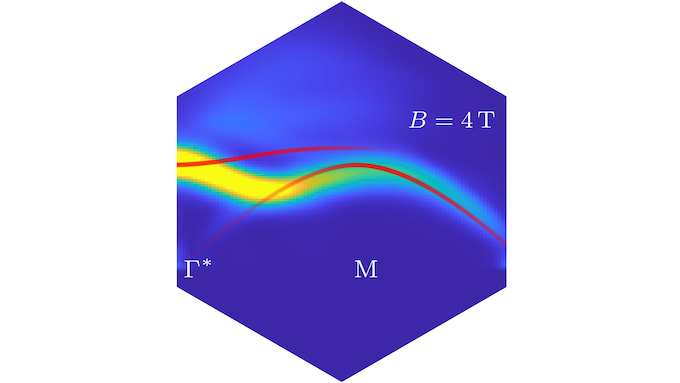
Quantum magnetic materials provide an excellent testing ground for studying highly entangled many-body states. While much research has focused on frustrated systems, where quantum fluctuations destroy magnetic order entirely, unfrustrated quantum magnets can exhibit unconventional phenomena in their spin-excitation spectra as well. This is highlighted in a recent investigation of YbBr3, a realization of the spin-1/2 antiferromagnetic Heisenberg model on the honeycomb lattice. In neutron spectroscopy experiments at SINQ and ILL, a team led by PSI researchers observed extensive excitation continua causing strong renormalization and decay of single magnons at higher fields, and near-complete suppression of magnon excitations at the K point at low fields. Coherent features include field-induced ‘shadows’ of the single magnons — collective two-magnon states offset by the Larmor energy — and the emergence of a rotonlike excitation reminiscent of the roton in superfluid helium. These results, in quantitative agreement with systematic calculations, reveal that strong quantum fluctuations indeed generate a wealth of many-body phenomena, even in the absence of magnetic frustration.
J. A. Hernández et al., Physical Review Letters 135, 146701 (2025) - Editors' Suggestion
DOI: 10.1103/q29r-8x1m |
|
A new twist on unconventional superconductivity
|
|
|
SμS — Discovery of nodal-line superconductivity in chiral crystals
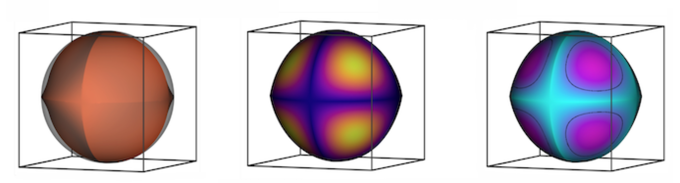
Chiral crystals are known to host a range of exotic quantum phenomena, yet unconventional superconductivity in these systems remains largely unexplored. An international team of researchers has now discovered remarkable superconducting behaviours in the La(Rh,Ir)Si family of chiral materials, which crystallize in a unique double-helix chiral structure featuring two intertwined helical chains with opposite handedness. Combining μSR measurements performed at SμS with band-structure calculations and theoretical modelling, they found that whereas LaRhSi is a fully-gapped superconductor, LaIrSi exhibits exotic nodal-line superconductivity, a state where the superconducting gap vanishes along lines on the Fermi surface. The crucial difference lies in the significantly enhanced spin–orbit coupling as 4d-Rh is substituted with heavier 5d-Ir. Importantly, the theoretical model shows that in LaIrSi nodal-line superconductivity arises from isotropic SOC combined with the anisotropic Fermi surfaces characteristic of these chiral structures — a mechanism fundamentally different from conventional scenarios requiring highly anisotropic SOC or strong magnetic fluctuations.
|
|
Disorder begins at the surface of quantum materials
|
|
|
SwissFEL — Ultrafast surface melting of orbital order in a layered manganite
In certain materials, the electrons arrange themselves in well-defined patterns, and this order can influence everything from how the material conducts electricity to how it responds to magnetic fields. One example is the layered manganite La0.5Sr1.5MnO4, in which electrons exhibit orbital ordering. To enable functionality and thus device applications, it is crucial to understand how light can be used to control such orbital states. However, until now it has not been possible to measure how these quantum materials change at the surface when photoexcited on ultrafast timescales, with previous studies capturing only the average response over the whole crystal. A team led by scientists from Aarhus University has now overcome this limitation by studying the most common form of light-induced heterogeneity, surface melting, at SwissFEL. Instead of a simple response, they found a complex process in La0.5Sr1.5MnO4, with more pronounced disorder at the surface than in the bulk. These findings reveal that orbital order melts through an incoherent, disorder-driven process, potentially involving local polaron formation, rather than through the uniform structural changes previously assumed.
|
|
New limit on the μ⁺ → e⁺γ decay
|
|
|
CHRISP — MEG II collaboration establishes new upper limit
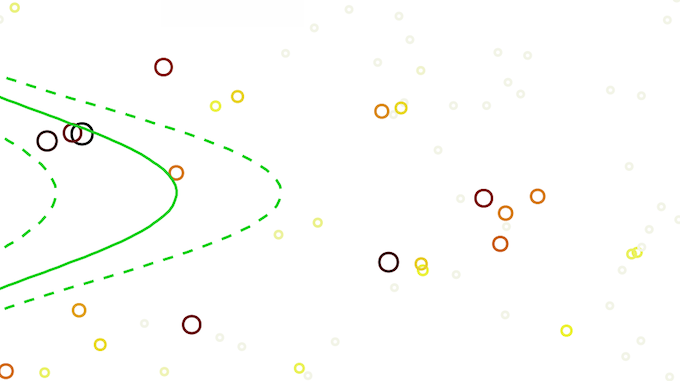
In the Standard Model (SM) of particle physics, charged lepton flavour-violating (CLFV) processes are forbidden, with extremely small branching ratios when considering non-zero neutrino mass differences and mixing angles. A positive signal in searches for such processes would therefore be unambiguous evidence for physics beyond the SM. Several SM extensions predict experimentally accessible CLFV decay rates, and the channel μ+ → e+γ is a particularly sensitive one. The MEG II collaboration at CHRISP had already set the most stringent upper limit on the μ+ → e+γ branching ratio, by combining the full dataset of the MEG experiment with the dataset of the MEG II experiment collected in 2021. Now the collaboration has published a new limit based on the analysis of the data collected in 2022 combined with an updated analysis of the 2021 dataset. The data analysis did not reveal any significant excess of events over the expected background, but the sensitivity of the branching ratio measurement in this new search is now a factor of 2.4 higher than that of the full MEG dataset. Additional improvements are expected with the data collected during 2023 and 2024, with data-taking continuing in the coming years.
|
|
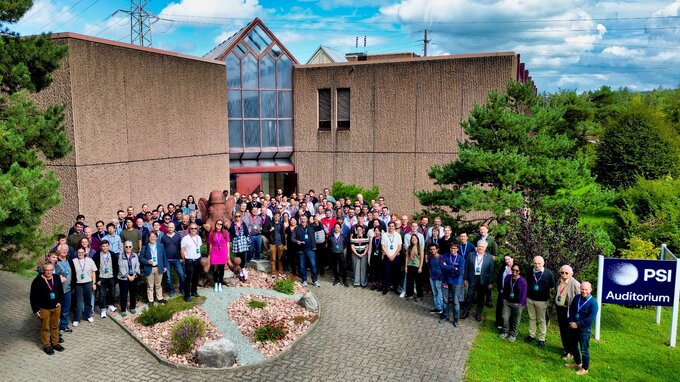
PSI2025 Workshop on the ‘Physics of fundamental Symmetries and Interactions’From 7 to 12 September, more than 170 participants from 20 countries met for the PSI2025 workshop, the 7th edition in the series and now a fixture in the calendar of the international community. New findings from low-energy precision atomic, nuclear and particle physics — and related topics — were presented in around 60 plenary lectures and more than 60 posters. Muons and neutrons were key topics, as were pions, kaons and antiprotons, alongside studies of fundamental physics with atomic, molecular and nuclear systems, covering both experimental and theoretical aspects and approaches. A satellite workshop assembled an expert community to discuss the status of the neutron lifetime puzzle, including possible theoretical explanations for the observed effects and upcoming, even more sensitive experiments for cross-checking. |
|
News from the user facilities
|
|
|
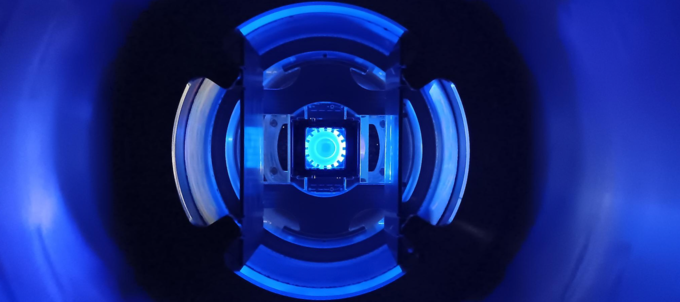
SμS — The new µSR spectrometer VMS successfully commissionedPhotomultiplier tubes (PMTs) have served the μSR community well for decades as highly effective positron detectors. However, technological advances such as silicon photomultipliers (SiPMs) have made them increasingly obsolete. The new SiPM detectors are much smaller, require lower voltages, and are insensitive to magnetic fields. The μSR spectrometers at PSI have gradually been upgraded to use SiPMs, except for Dolly, the last one to use the old PMTs. After almost two years of work on a new detector concept, detailed beam simulations, and the development of a two-port sample holder, the new spectrometer started collecting data in June 2025. It boasts several new features, including a high-precision lifting table, a new vacuum-port design, improved magnet cooling, beam-profile monitoring and muon-beam collimators. (The photo above shows the detector system.) Given these significant changes, we have chosen a new name for it: Versatile Muon Spectrometer (VMS). This also reflects the threefold improvement in time resolution (250 ps), the twofold increase in magnetic-field strength (0.8 T) and the unique range of experiments possible, most notably μSR under strain. Low-temperature experiments (down to 300 mK) can still be conducted using a new helium-3 insert, as previously. The VMS will be available starting from the next proposal call. Thanks to its unique range of features, we are confident that it will continue to support researchers in their search for new phenomena for many years to come. |
|
SINQ — Automated background estimation for multiplexing spectrometersModern multiplexing neutron spectrometers such as CAMEA at SINQ enable simultaneous measurements of thousands of points in momentum and energy space, dramatically accelerating data collection. However, this capability creates challenges in data analysis — researchers have to manually identify and mask spurious background features, a process requiring expert knowledge and consuming many hours per dataset. Researchers from PSI and the Swiss Data Science Center have now developed AMBER (Algorithm for Multiplexing spectrometer Background Estimation with Rotation-independence), a segmentation algorithm that automatically decomposes measured neutron-scattering data into foreground and background contributions. Tested on data from CAMEA, AMBER reduced background determination from approximately eight hours of expert work to less than one minute of computational time, achieving results comparable to manual expert analysis. AMBER is available as an open-source Python library and has already been integrated into the MJOLNIR analysis software for multiplexing spectrometers. Please also note that the next submission deadline for SINQ proposals has been postponed to 15 January 2026 in order to shorten the waiting period between proposal submission and the start of the beamtime cycle in late May 2026. |
|
SLS — First magnetic image at PolLux with SLS 2.0On 5 October, the first magnetic image using the newly upgraded SLS 2.0 diffraction-limited synchrotron light source was acquired at the PolLux scanning transmission X-ray microscope. The sample was a perpendicularly magnetized Co-based multilayer stack, and the pixel size was 10 nm, with the spatial resolution limited by the focusing optics to 35 nm. The high flux of coherent photons offered by SLS 2.0 will routinely enable fast acquisition of such high-resolution, high-quality magnetic images. |
|
SwissFEL — Testing limits of serial crystallographySheet-on-sheet (SOS) fixed-target chips are a versatile and cost-effective sample-delivery method for ambient-temperature data acquisition using serial crystallography approaches at synchrotrons and XFELs. An international team working at the Cristallina-MX station of SwissFEL has now systematically explored radiation damage limits using such chips. Collecting data from the radiation-sensitive protein DtpAa, they found that for translation distances between exposures of 25 μm or greater, damage can be prevented. However, smaller step sizes triggered crystal phase transitions, likely from heat and hydrogen gas diffusing between exposure sites — underlining that vigilance against radiation damage remains essential. |
|
CHRISP — Phase-space compression of a positive muon beam in two spatial dimensionsA wide range of fundamental and applied science cases involving muons are intrinsically limited by the large phase spaces of conventional muon beams. For example, for ultrahigh-precision spectroscopy of muonium atoms in vacuum, the atoms have to be confined to very small volumes illuminated by CW lasers, and for µSR investigations of microscopic samples, tunable micro-beams are needed. Overcoming current limitations and enabling novel research directions therefore requires phase-space cooling of positive muon beams. Led by researchers from PSI and ETH Zurich, the muCool collaboration now presents a major step towards that goal, demonstrating the first simultaneous phase-space compression in two spatial dimensions. This was achieved in a cryogenic helium-gas target with a strong density gradient, placed in a homogeneous magnetic field and a complex electric field. The next step will be the extraction of the compressed muon beam into vacuum. |
|
JUSAP - The Joint Users Association
|
|
|
As 2025 draws to a close, JUSAP would like to take the opportunity to thank the user community and PSI staff for a year of strong scientific activity and constructive collaboration. Throughout the year, many of you have contributed to a vibrant research environment, combining ambitious experiments with openness, mutual support and valuable feedback that helps improve the user experience at PSI. |

Yasmine Sassa
|
|
Despite the usual pressures of busy beamtime schedules and evolving infrastructure, the commitment of the community has been clearly visible. We are encouraged by the continued engagement of both long-standing users and early-career researchers, and by the positive dialogue between users and facility teams. Looking ahead to 2026, we anticipate further improvements to infrastructure and services, alongside exciting scientific opportunities across the PSI facilities. JUSAP remains committed to representing the interests of users and fostering clear communication within the community. Finally, we wish you all a peaceful festive season and a well-deserved break, and we look forward to welcoming you back in the New Year with renewed energy and ideas. |
|
|
|