SwissFEL Cristallina Endstation
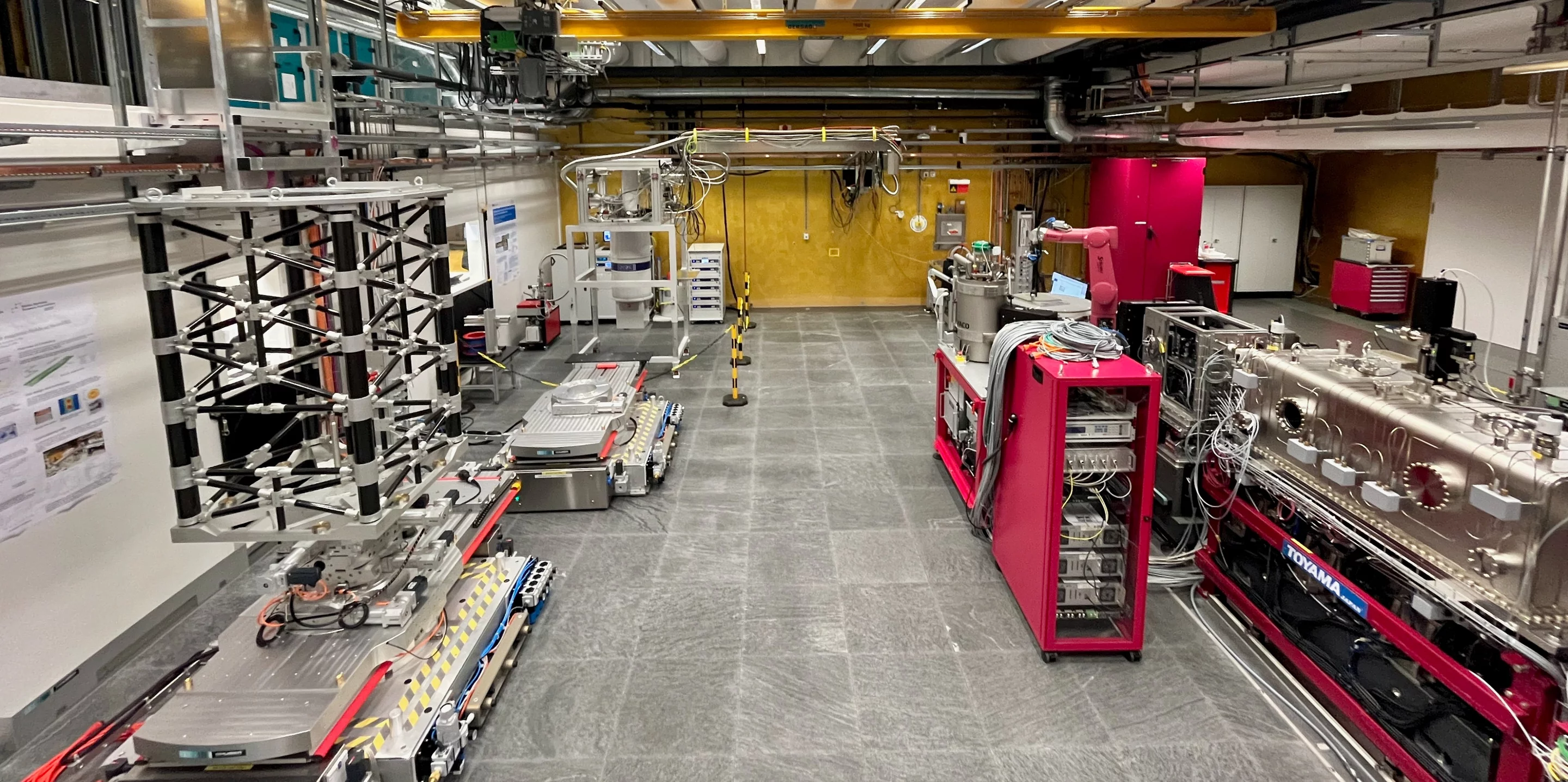
Cristallina is the third endstation of the SwissFEL ARAMIS hard X-ray beamline. It serves both quantum science (Cristallina-Q) and structural biology (Cristallina-MX), enabling the imaging of quantum many-body states under extreme conditions and serial femtosecond protein crystallography, respectively.
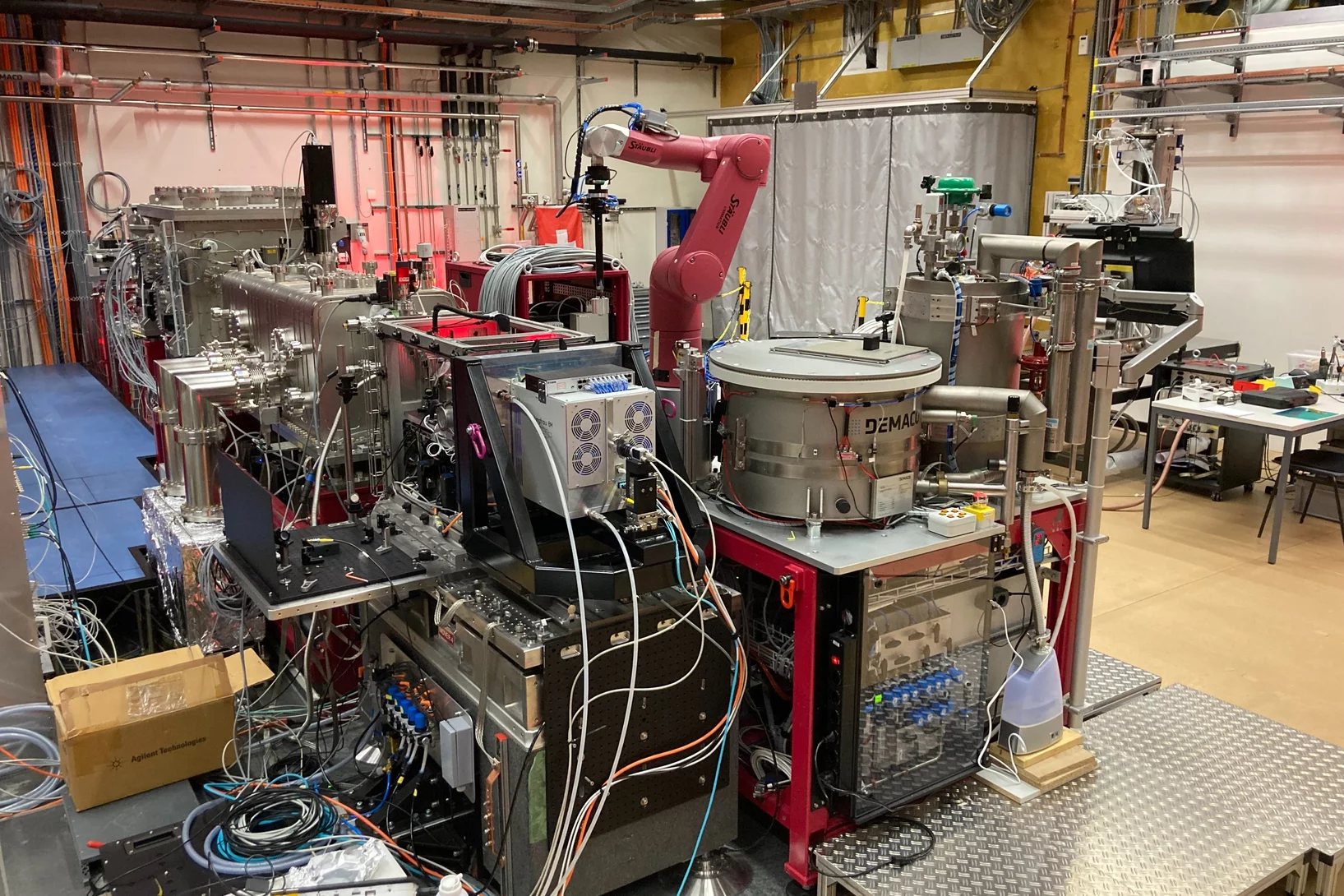
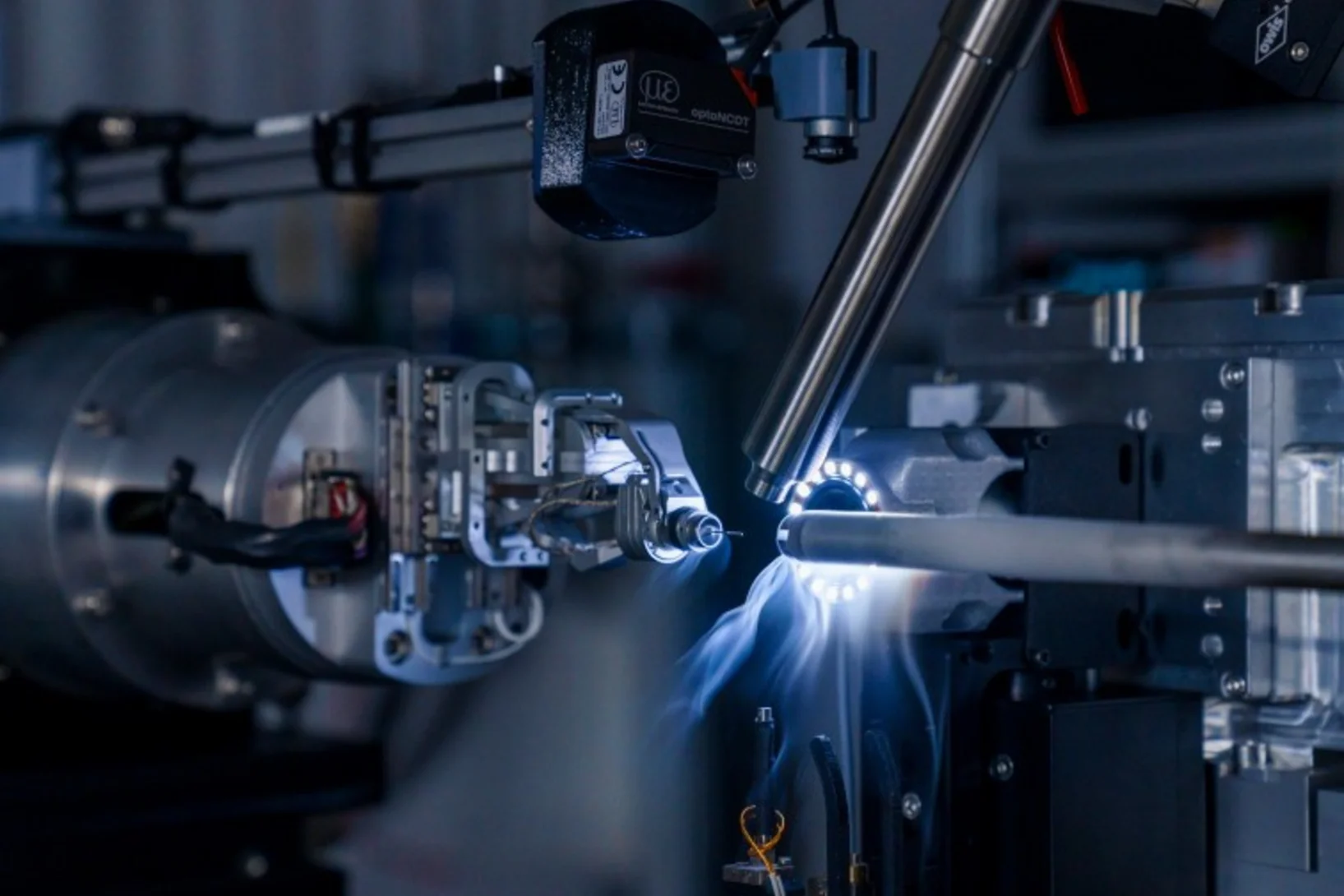
The Cristallina-MX experimental stations are designed for serial femtosecond crystallography (SFX), and operated by the Cristallina-MX team with the support of the Macromolecular Crystallography Group. The SwissMX fixed-target SFX experimental station is in user operations since January 2024. Experimental stations for different means of sample delivery are in conception.
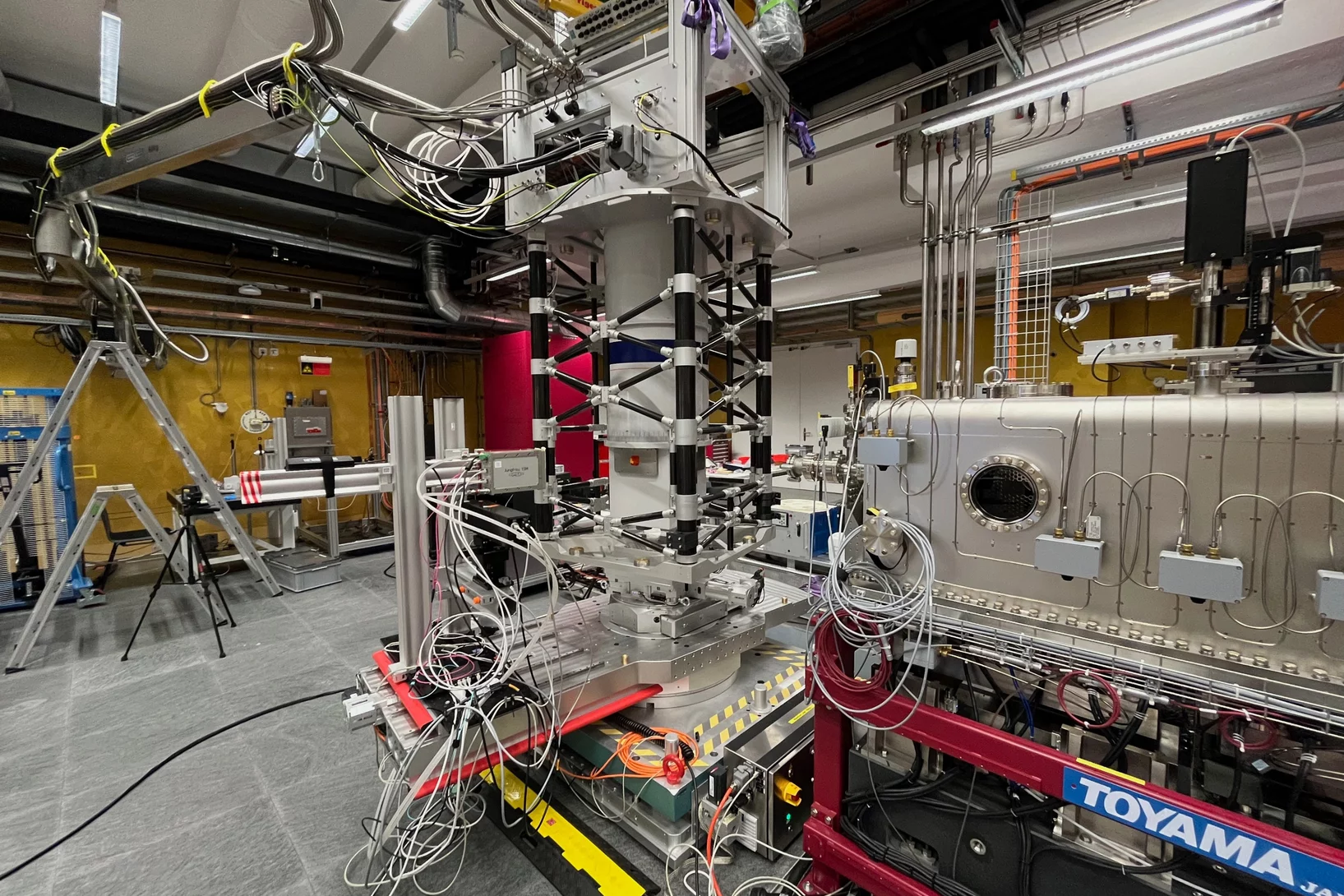
The Cristallina-Q experimental stations provide unique high-field and low-temperature capabilities, and are operated by the Cristallina-Q team within the Quantum Photon Science Group. Cristallina-Q has been partially funded by the University of Zurich, the Swiss National Science Foundation and PSI via the R’Equip scheme. The experimental stations include the Ultralow-T Vectormagnet, open to users since January 2025, and the Pulsed Magnet, which is currently under commissioning. Both experimental stations rely on heavy-load diffractometers to orient the sample in the beam.
The overall Cristallina endstation layout allows for reshuffling of the experimental stations between the X-ray beam experiment position and dedicated preparation areas by sliding the setups over a granite floor by means of airpads. The Cristallina beamline can operate with both pink and monochromatic beam, and provides a variable beam size at the sample position down to smaller than 2 µm using bendable KB mirrors.
Cristallina News and Scientific Highlights
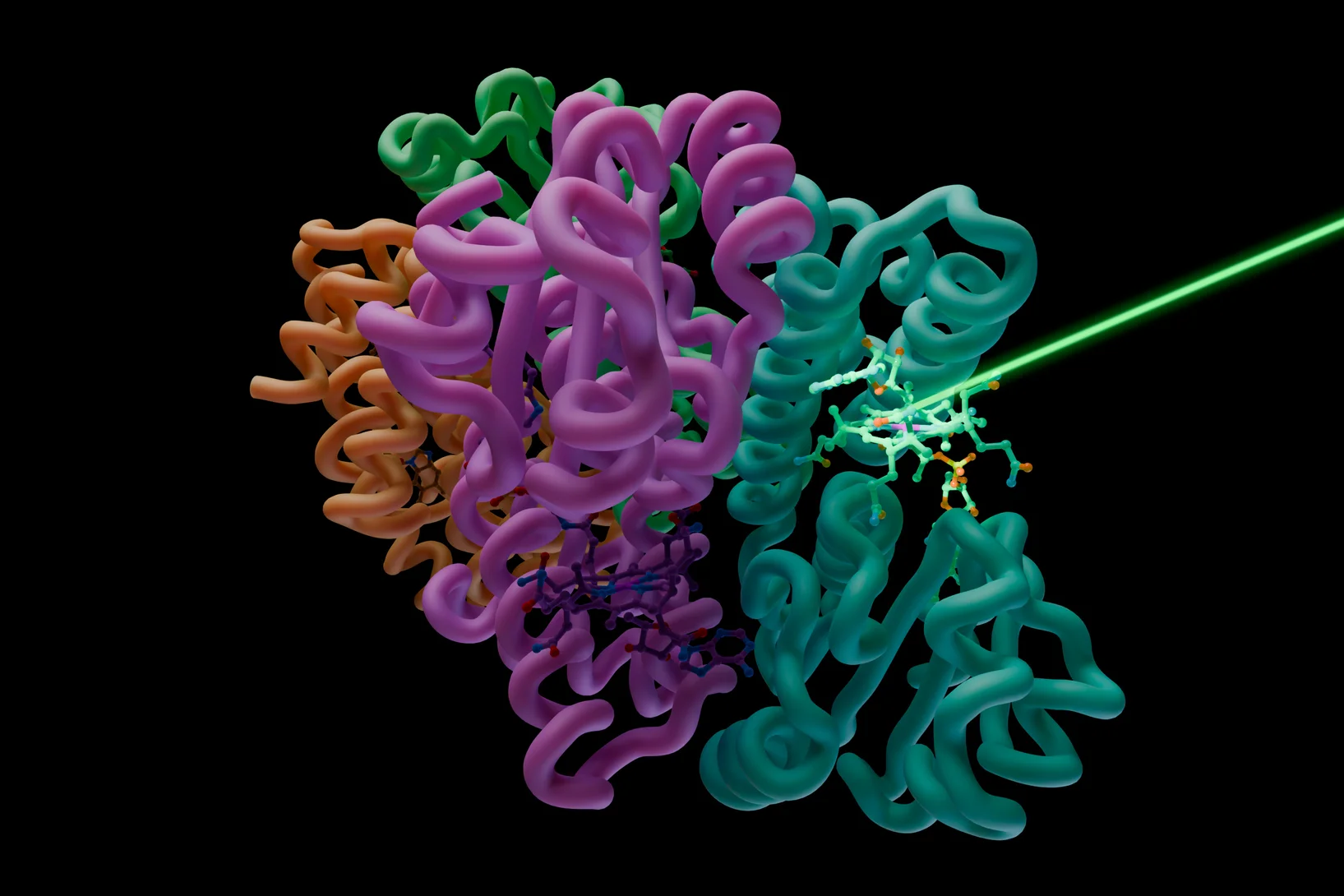
Filming a vitamin B12 photoreceptor in action
SwissFEL shows the molecular events that occur when a vitamin B12 photoreceptor absorbs light
Kelvin: la scala del freddo
Zero Kelvin: è il punto zero assoluto della temperatura. Poiché il calore è energia, il freddo significa meno energia, ma non può mai esserci energia negativa. Espresso nella scala di temperatura a cui siamo abituati, lo zero Kelvin corrisponde a -273,15 gradi Celsius: niente può essere più freddo di così. Alcuni ricercatori del PSI stanno conducendo esperimenti a bassa temperatura vicino a questo punto zero; altri stanno lavorando su metodi tecnici per abbassare la temperatura nel modo più efficiente possibile.

SwissFEL leuchtet für industrielle Anwender
Dank Hochdurchsatzexperimenten können neue Nutzergruppen aus der Strukturbiologie vom XFEL-Licht profitieren.
Publications
-
Rios-Santacruz R, Poddar H, Pounot K, Heyes DJ, Coquelle N, Mackintosh MJ, et al.
Integrated structural dynamics uncover a new B12 photoreceptor activation mode
Nature. 2026. https://doi.org/10.1038/s41586-025-10074-2
DORA PSI -
Gorel A, Shoeman RL, Hartmann E, Nizinski S, Appleby MV, Beale EV, et al.
Testing the limits: serial crystallography using unpatterned fixed targets
IUCrJ. 2025; 12(6): 12 (18 pp.). https://doi.org/10.1107/S2052252525008371
DORA PSI -
Williams LJ, Thompson AJ, Dijkstal P, Appleby M, Assmann G, Dworkowski FSN, et al.
Damage before destruction? X-ray-induced changes in single-pulse serial femtosecond crystallography
IUCrJ. 2025; 12(3): 1-14. https://doi.org/10.1107/S2052252525002660
DORA PSI