

Show filters
Prestigious funding for three research projects at PSI
John Provis is studying concrete and the complex interplay between its many components. The aim is to develop a better understanding of this building material and make it more sustainable. © Paul Scherrer Institute PSI/Mahir Dzambegovic
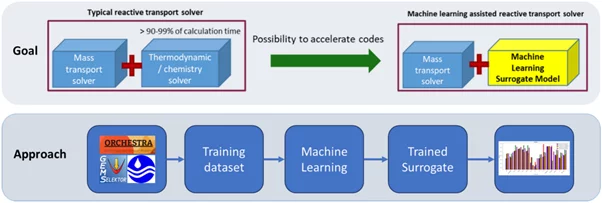
Geochemistry and machine learning: methods and benchmarking
Prasianakis, N. I., et al.
Thanks to the recent progress in numerical methods and computer technology, the application fields of artificial intelligence (AI) and machine learning methods (ML) are growing at a very fast pace. The field of geochemistry for nuclear waste management has recently started using ML for the acceleration of numerical simulations of reactive transport processes, for the improvement of multiscale and multiphysics couplings efficiency, and for uncertainty quantification and sensitivity analysis......
Quantifying anomalous chemical diffusion through disordered porous rock materials
Rajyaguru et al., 2025
Fickian (normal) diffusion models show limitations in quantifying diffusion-controlled migration of solute species through porous rock structures, as observed in experiments. Anomalous diffusion prevails and can be interpreted using a Continuous Time Random Walk (CTRW) framework with a clear mechanistic underpinning. From the associated fractional diffusion equation we derive solutions over a broad range of anomalous diffusion behaviours, from highly anomalous to nearly Fickian, that yield temporal breakthrough curves and spatial concentration profiles of...

Master of the flow
Even as a student, Athanasios Mokos was excited by the dynamics of fluids. Today at the Paul Scherrer Institute PSI, he models complex processes such as the formation of deposits on reactor fuel rods.
Artificial intelligence explores the underground
Researchers at the Paul Scherrer Institute PSI have shown that artificial neural networks have the potential to determine very precisely the characteristics of rock layers, like their mineralogical composition, solely on the basis of drill core images. This could speed up future geological investigation efforts while simultaneously optimising costs.
Impact of Fe(II) on 99Tc diffusion behavior in illite.
Chen, P., Churakov, S. V., Glaus, M., & Van Loon, L. R.
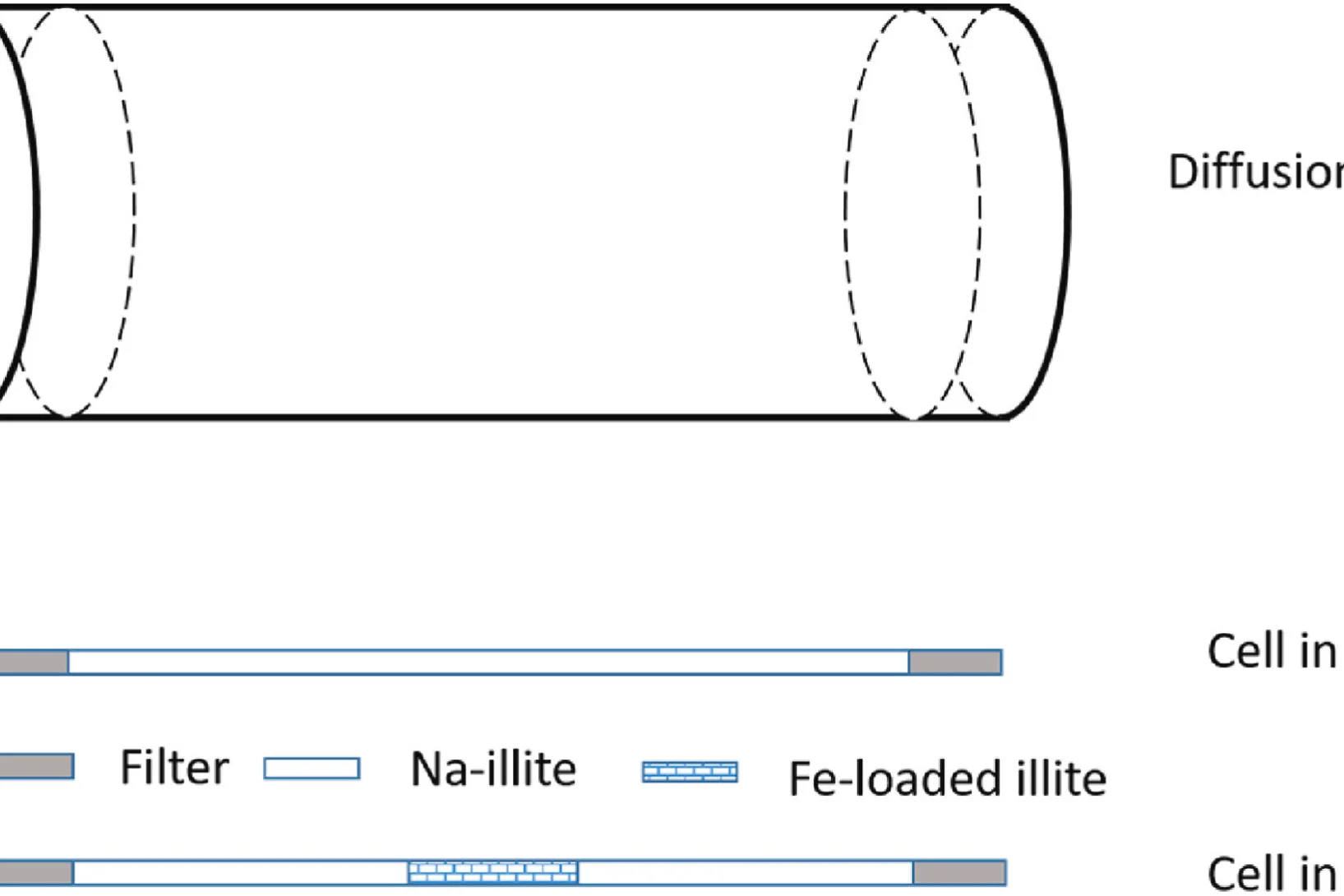
A comprehensive understanding of the geochemical behavior of 99Tc is of great importance for safe disposal of radioactive waste and remediation of contaminated environmental sites. Illite is one of the most common constituents of clay rocks, and thus used in this work as a model system for studying the retention and transport of 99Tc in clay-rich systems. In this study, a through-diffusion technique was applied to investigate the diffusion behavior of Tc in compacted illite clay under oxic and anoxic conditions. Particular focus of this investigation was on the role of Fe(II) on the redox state and mobility of Tc in clay.
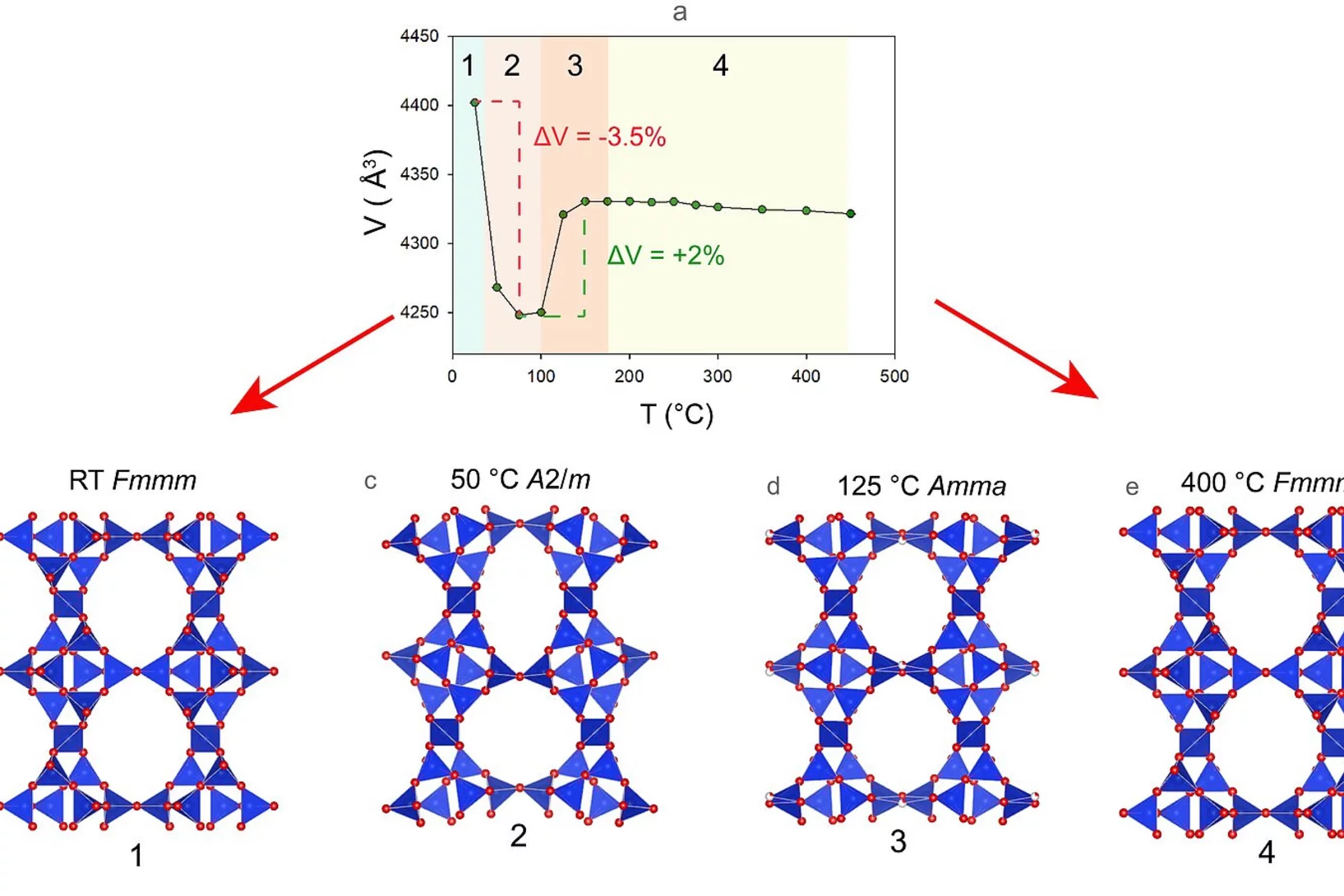
Simulations on "Piz Daint" explain surprising mineral behaviour
Zeolites are a class of shapely, colourful minerals with very special properties, making them omnipresent in our surroundings. They accelerate chemical reactions, absorb hazardous contaminants and water to a high degree, for example. Their only limitation is that they usually lose their peculiar crystalline structure at high temperatures. Now researchers at the University of Bern have found an unexpected exception.
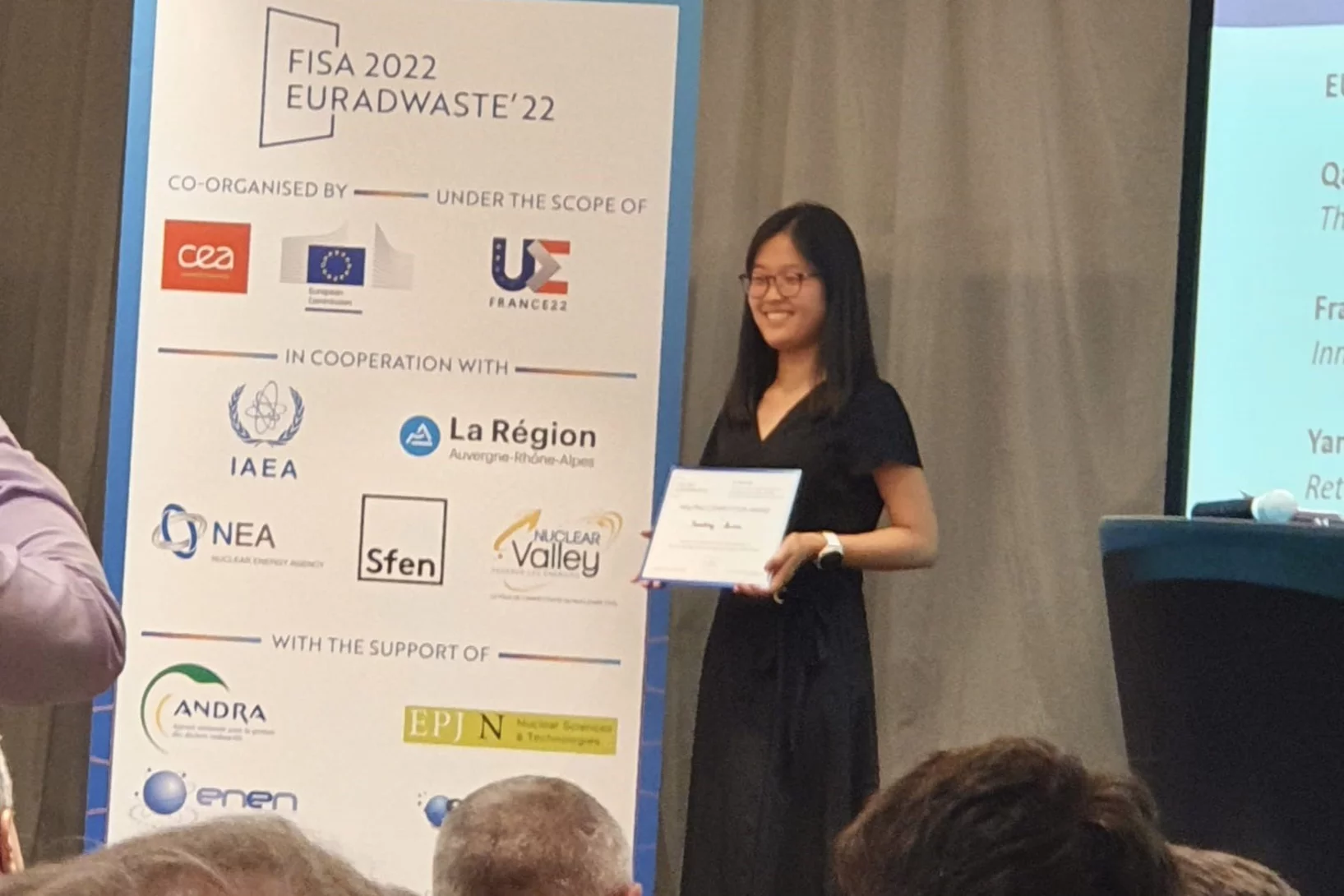
Yanting Qian has received the MSc/PhD competition award in the FISA2022-EURADWASTE'22 conference
Yanting Qian has received the MSc/PhD competition award in the FISA2022-EURADWASTE'22 conference. She works on the retention of redox-sensitive Tc on Fe-bearing clay minerals.
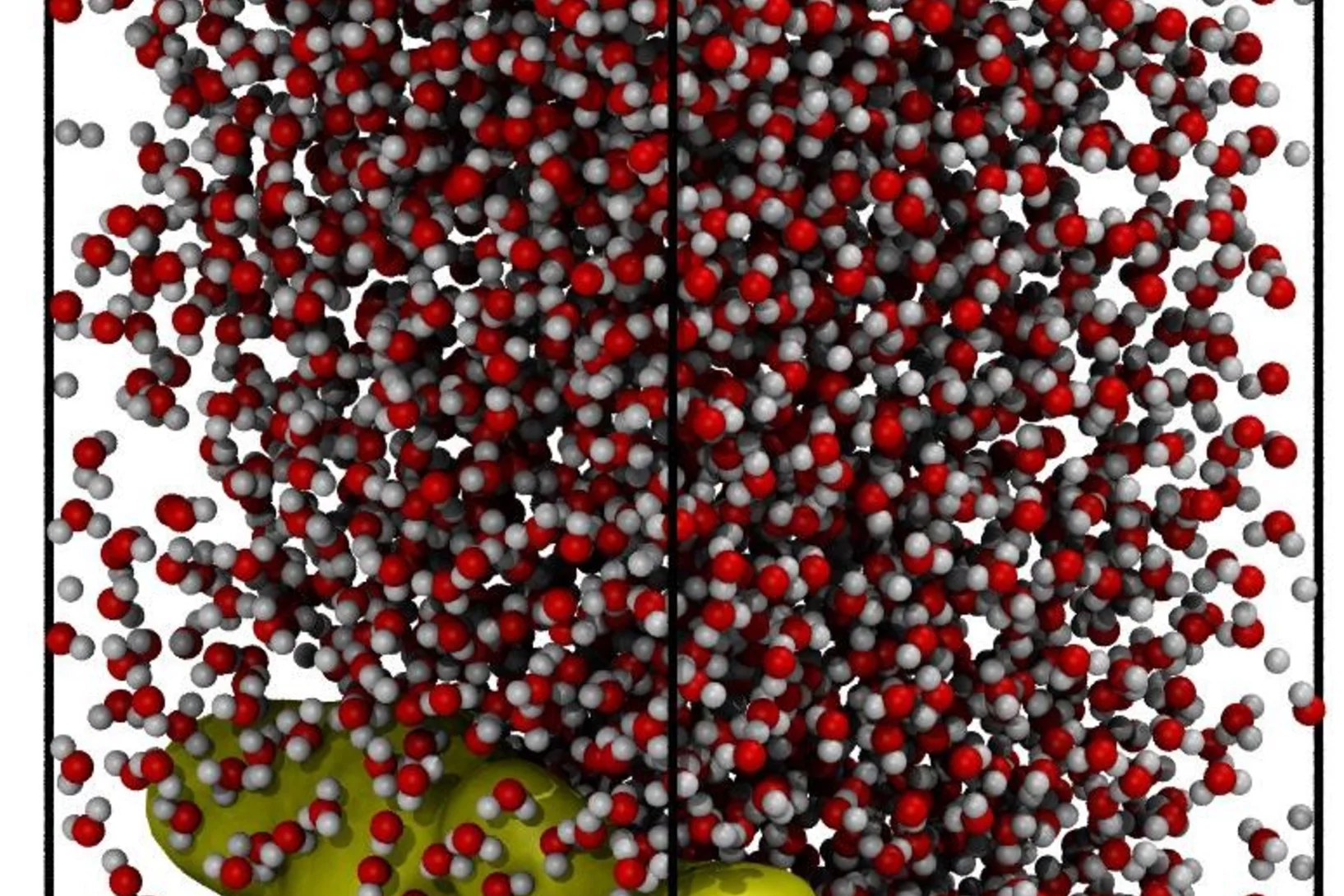
Deciphering the molecular mechanism of water boiling at heterogeneous interfaces
Water boiling control evolution of natural geothermal systems is widely exploited in industrial processes due to the unique non-linear thermophysical behavior. Even though the properties of water both in the liquid and gas state have been extensively studied experimentally and by numerical simulations, there is still a fundamental knowledge gap in understanding the mechanism of the heterogeneous nucleate boiling controlling evaporation and condensation. In this study, the molecular mechanism of bubble nucleation at the hydrophilic and hydrophobic solid–water interface was determined by performing unbiased molecular dynamics simulations using the transition path sampling scheme. Analyzing the liquid to vapor transition path, the initiation of small void cavities (vapor bubbles nuclei) and their subsequent merging mechanism, leading to successively growing vacuum domains (vapor phase), has been elucidated. The simulations reveal the impact of the surface functionality on the adsorbed thin water molecules film structuring and the location of high probability nucleation sites.