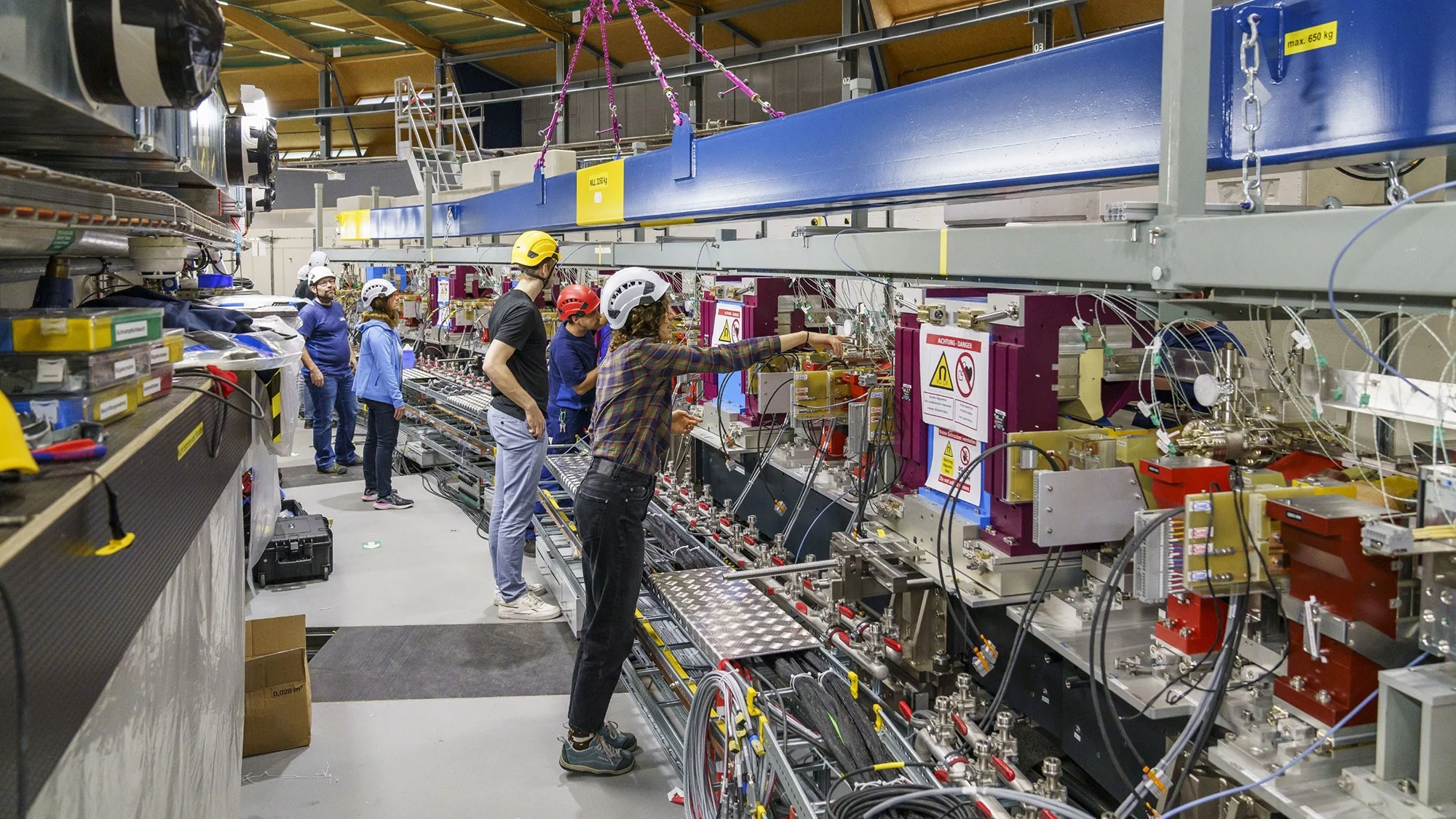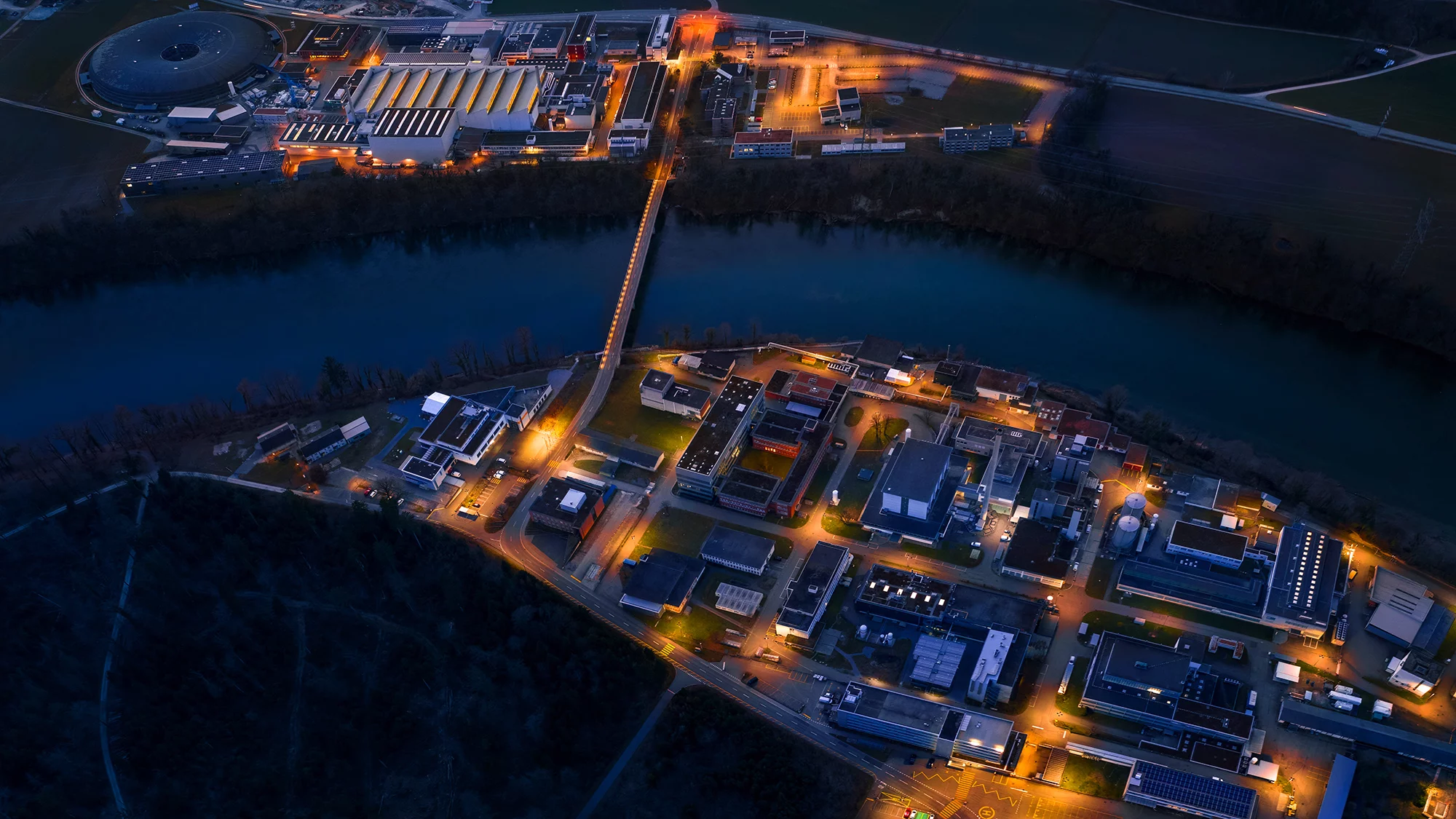
Research Departments and Labs
The institute is organized into five research and two service departments.Research with Neutrons and Muons (NUM)
The NUM department focuses on the research with neutrons and muons. The department operates the spallation neutron source SINQ, the Swiss muon source SμS and the PSI source of ultracold neutrons UCN. The in-house research covers a wide range of activities from particle physics on the one hand to solid state physics (magnetism, superconductivity), materials sciences and soft condensed matter on the other. The department consists of five laboratories/divisions and 2 independent groups.Homepage NUM
Laboratories:
- Particle Physics Homepage LTP
- Neutron Scattering Homepage LNS
- Spallation Neutron Source Homepage ASQ
- Muon Spin Spectroscopy Homepage LMU
- Development and Methods Homepage LDM
- Condensed Matter Theory Homepage CMT
- PSI User Office Homepage
Synchrotron Radiation and Nanotechnology (SYN)
The SYN-department comprises four laboratories. The three laboratories for synchrotron radiation are dedicated to research on macromolecules and bioimaging (LSB), condensed matter and materials (LSC) and energy and environment (LSE). These laboratories operate 16 beamlines at the Swiss light Source. They support and accompany research carried out by external users as well as they perform their “in-house” research. The fourth laboratory for micro- and nanotechnology (LMN) research focus is on nanoscience and basic research on properties of correlated nanostructures on surfaces. The LMN develops new experimental methods and turns the knowledge into nanofabrication processes.Homepage SYN
Laboratories:
- Macromolecules and Bioimaging Homepage LSB
- Condensed Matter (LSC)
- Energy and Environment (LSE)
- Micro- und Nanotechnology Homepage LMN
General Energy (ENE)
Research at ENE comprises all aspects of human energy use, with the ultimate goal of promoting development towards a sustainable energy supply system. Technologies are being advanced for the utilization of renewable energy sources, low-loss energy storage, efficient conversion, and low emission energy use. Experimental and model-based assessment of these emissions forms the basis of a comprehensive assessment of economic, ecological and environmental consequences, for both present and future energy supply systems.Homepage ENE
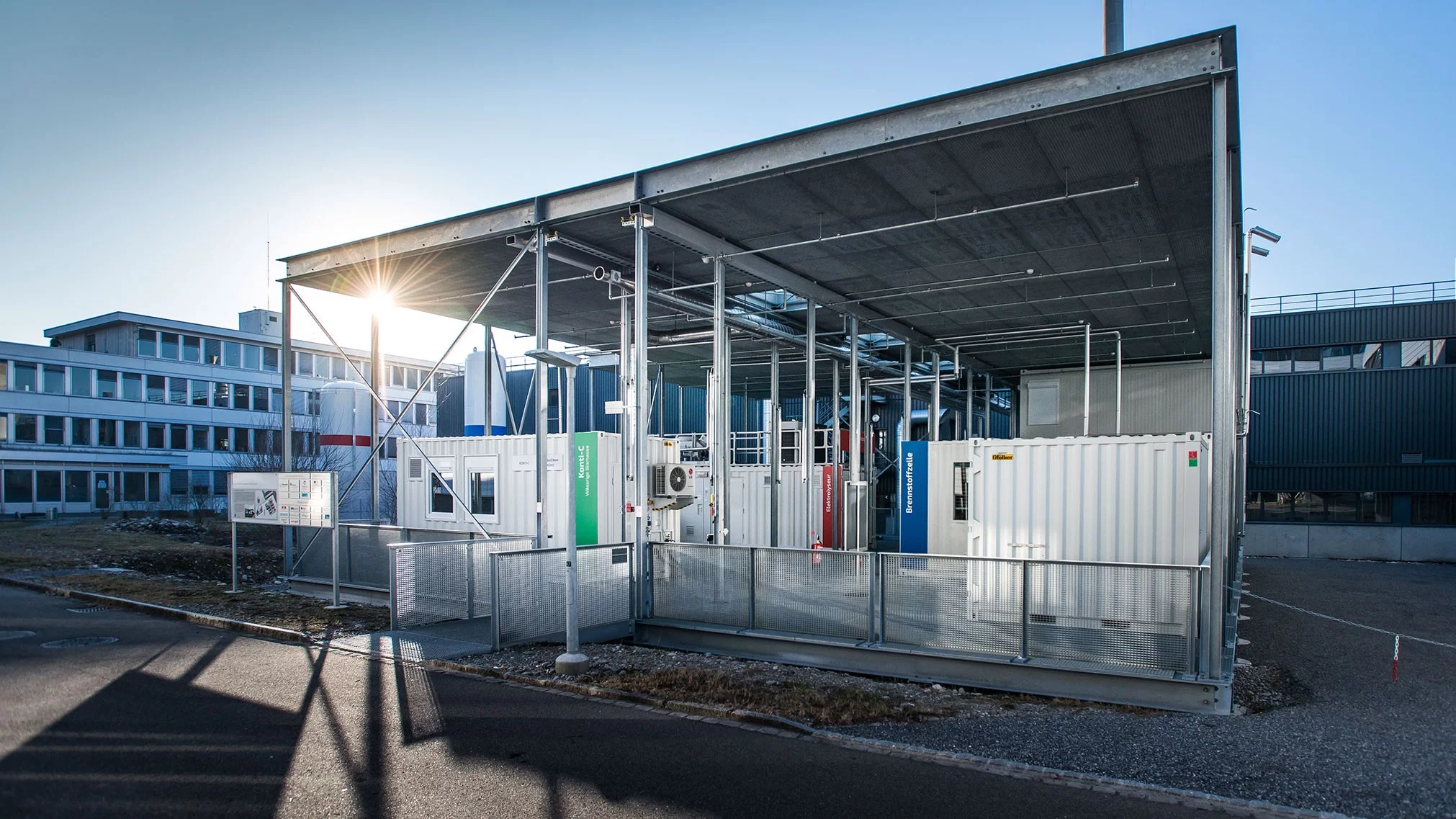
Laboratories:
- Bioenergy and Catalysis Homepage LBK
- Solar Technology Homepage LST
- Combustion Research Homepage LVF
- Electrochemistry Homepage LEC
- Atmospheric Chemistry Homepage LAC
- Energy Systems Analysis Homepage LEA
- Energy and Environment (LSE)
Nuclear Energy and Safety (NES)
The Paul Scherrer Institute has a long tradition in energy research. With respect to nuclear energy, PSI has a unique position in Switzerland. This is due to its heavy infrastructure, namely the Hot Laboratory with so-called “hot cells”, well equipped and shielded zones for work and research on radioactive material, and the PROTEUS facility for reactor physics investigations. Based on this infrastructure, PSI’s large facilities (SLS and SINQ) and the know-how of its collaborators, the Department is involved in three main topics of research: Safety of currently operating light-water reactors, safety characteristics of future reactor concepts and related fuel cycles, and long-term safety of deep geological repositories for nuclear wastes of all kind.Homepage NES
Laboratories:
- Reactor Physics and Systems Behaviour Homepage LRS
- Thermal Hydraulics Homepage LTH
- Hot Laboratory Homepage AHL
- Waste Management Homepage LES
- Energy Systems Analysis Homepage LEA
- Nuclear Materials Homepage LNM
Biology and Chemistry (BIO)
The department of Biology and Chemistry at PSI is subdivided into three laboratories pursuing research in the areas of cell and structural biology, radio-pharmacy, and radiochemistry and environmental chemistry.The Laboratory of Biomolecular Research (BMR) focuses on basic biological research projects with the emphasis on structure-function analysis of complex biological systems. The laboratory consists of four groups engaged in research projects focussing on Structural Biology of Membrane Proteins, Protein Interaction Networks and Transmembrane Signaling by Receptor Tyrosine Kinases. The laboratory maintains a technology platform for expression vector cloning and protein expression screening and collaborates with scientists at the Swiss Synchrotron Light Source (SLS) developing new methods and hardware for structural analysis of biomolecules. The combination of its activities and its excellent research infrastructure provide an attractive environment for young scientists in the fields of biology and biophysics.
The Center of Radiopharmaceutical Sciences pursues research in the fields of tracer preparation and in vivo imaging of tissues, in particular of disseminated tumors that cannot be removed surgically or by external radiation therapy. The laboratory is operated jointly by ETH Zürich and PSI. The laboratory creates therapeutic molecules by combining particular types of biomolecules, such as for instance antibodies, with radioactive nuclides. These reagents are used to image tumors and to selectively target and destroy tumor cells in animal models. PSI cooperates with universities, hospitals and the pharmaceutical industry to ensure the most effective coordination of its basic research capabilities with clinical applications.
The Laboratory of Radiochemistry and Environmental Chemistry focuses on fundamental research and on education in the field of radiochemistry, atmospheric chemistry and climate research. The Laboratory is a joint activity of the PSI and the University of Bern. The five research groups explore the chemistry of heavy elements, reconstruct palaeoclimate and historic air pollution from ice cores drilled at high-altitude glaciers, investigate the physiochemical interaction of trace gases with surfaces in the atmosphere, study the radionuclide inventory in beam targets of large scale irradiation facilities, and develop measurement techniques of environmental radionuclides in geoscientific research.
Homepage BIO
Laboratories:
- Center for Radiopharmaceutical Sciences Homepage ZRW
- Biomolecular Research Homepage LBF
- Radiochemistry and Environmental Chemistry Homepage LCH
Department Large Research Facilities (GFA)
The Department of Large Research Facilities (GFA) is responsible for the construction, operation and development of the paricle accelerators at PSI. Two of these accelerators are dedicated “user” facilities. The high intensity proton cyclotron is used to generate muons for muon spin spectroscopy (LMU) and neutrons by spallation from a target (SINQ). The Swiss Light Source (SLS.) is an electron storage ring which generates high brightness photon beams for users of synchrotron radiation (SYN). Both of these instruments are used by a large national and international multi-disciplinary research community.GFA is also responsible for the operation of the COMET proton cyclotron and for the development of its beam lines. This superconducting cyclotron is dedicated to the treatment of cancer patients within the Centre for Proton Therapy (ZPT).
Currently, GFA is heavily involved in the construction of a prototype 250 MeV injector facility which is being developed for the future x-ray free electron laser “SwissFEL”. The high energy electron linac required for SwissFEL is also being designed within GFA.
The Department is organized in three Divisions. The division “Accelerator Concepts” ABK is responsible for beam dynamics studies, radio-frequency systems, beam diagnostics and controls of all accelerators on the PSI site. The Division “Operations and Development” ABE is responsible for the daily operation of the accelerators, target development and, in particular, for development of the high intensity proton cyclotron. The Division “Technical Co-ordination” ATK is responsible for providing technical support in the fields of alignment, cryogenics, vacuum, magnet design and measurement, accelerator infrastructure and support for external groups.
Homepage GFA
Laboratories:
- Accelerator/Concepts and Development Homepage ABK
- Accelerator/Operation and Development Homepage ABE
- Technical Support/Co-ordination and Operation Homepage ATK
- 250 MeV injector facility at Homepage SwissFEL
Department Logistics (LOG)
The Department of Logistics provides technical and administrative services for the whole institute.Homepage LOG