Research Using Synchrotron Light
5. May 2013
Tiny Magnets as a Model System
Media Releases Matter and Material Materials Research Research Using Synchrotron LightScientists use nano-rods to investigate how matter assembles
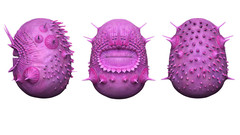
To make the magnetic interactions between the atoms visible, scientists at the Paul Scherrer Institute PSI have developed a special model system. It is so big that it can be easily observed under an X-ray microscope, and mimics the tiniest movements in Nature. The model: rings made from six nanoscale magnetic rods, whose north and south poles attract each other. At room temperature, the magnetisation direction of each of these tiny rods varies spontaneously. Scientists were able to observe the magnetic interactions between these active rods in real time. These research results were published on May 5 in the journal “Nature Physics”.
21. March 2013
From methane to methanol - or how to extinguish the torches of waste
Energie und Umwelt Research Using Synchrotron LightIn nighttime photographs taken from space, the large cities of the world can easily be recognised by the flood of their public lighting. However, probably only the trained eye is able to see, as well as New York or Tokyo, the locations of many oil-producing wells . The light in these cases originates mainly from the combustion of methane. This huge waste of an energy-rich gas has devastating economic and ecological consequences. Reasearchers at the Paul Scherrer Institute PSI are looking for a solution: the conversion of methane into the liquid energy carrier methanol
12. February 2013
Superconductors surprise with intriguing properties
Media Releases Matter and Material Research Using Synchrotron LightScientists at the Paul Scherrer Institute, together with Chinese and German collaborators, have obtained new insights into a class of high-temperature superconductors. The experimental results of this fundamental research study indicate that magnetic interactions are of central importance in the phenomenon of high-temperature superconductivity. This knowledge could help to develop superconductors with enhanced technical properties in the future.
31. January 2013
Magnetic nano-chessboard puts itself together
Media Releases Micro- and Nanotechnology Materials Research Matter and Material Research Using Synchrotron LightResearchers from the Paul Scherrer Institute and the Indian Institute of Science Education and Research have been able to intentionally ‘switch off’ the magnetization of every second molecule in an array of magnetized molecules and thereby create a ‘magnetic nano-chessboard’. To achieve this, they manipulated the quantum state of a part of the molecules in a specific way.
23. January 2013
Excitement that rivals a moon landing
Matter and Material User Experiments Research Using Synchrotron LightInterview with Thomas Huthwelker
The Paul Scherrer Institut makes its research facilities available to scientists from all over the world. To ensure these scientists are exposed to optimal conditions when they arrive is the hard work of many PSI staff. An interview with one of these scientists provides a glimpse behind the scenes. This interview is taken from the latest issue of the PSI Magazine Fenster zur Forschung
3. January 2013
How stabilised cell fibres prevent cancer cell division
Media Releases Human Health Biology Research Using Synchrotron LightAnti-cancer drugs are used under the heading of “Chemotherapeutics” to prevent cells from dividing. Because the cells in a growing tumour divide more frequently than others, tumour cells are damaged more severely. Scientists at the Paul Scherrer Institute and the ETH Zurich have now clarified the exact mechanism of action of one class of these drugs. The data acquired is so accurate, that targeted drugs could now be developed that are even better suited to fulfil their task.
17. October 2012
The evolutionary origins of our pretty smile
Media Releases Biology User Experiments Research Using Synchrotron LightUntil recently, it was not obvious whether the earliest vertebrates (animals with a backbone) which had jawbones already possessed teeth or not. Now, an international research team has shown that the jaws of the prehistoric fish Compagopiscis already had teeth. This means that teeth appeared at the same evolutionary time as jaws – or at least shortly afterwards. The leaders of this project were scientists from the University of Bristol, England, who carried out their decisive experiments at the SLS at PSI.
16. October 2012
X-rays provide insights into volcanic processes
Media Releases Research Using Synchrotron Light Environment User ExperimentsExperiments performed at the Paul Scherrer Institute (PSI) investigate processes inside volcanic materials that determine whether a volcano will erupt violently or mildly. In the experiments, scientists heated small pieces of volcanic material similarly to conditions present at the beginning of a volcanic eruption. They used X-rays from the SLS to observe, in real time, what happens to the rock as it goes from the solid to the molten state.
5. September 2012
New Insights into Superconducting Materials
Media Releases Matter and Material Materials Research Research Using Synchrotron LightA new X-ray technique provides insights into the magnetic properties of atomically thin layers of a parent compound of a high-temperature superconductor. It turns out that the magnetic properties of material films which are only a few atoms thick differ by only a surprisingly small degree from those of macroscopically thick samples. In the future, this method can be used to study the processes occurring in very thin layers of superconductors and help us to understand this intriguing phenomenon.
5. June 2012
Alzheimer plaques in 3D
Media Releases Human Health Research Using Synchrotron Light BiologyResearchers have succeeded in generating detailed three-dimensional images of the spatial distribution of amyloid plaques in the brains of mice afflicted with Alzheimer’s disease. The new technique used in the investigations provides an extremely precise research tool for a better understanding of the disease. In the future, scientists hope that it will also provide the basis for a new and reliable diagnosis method. The results were achieved within a joint project of two research teams – one from the Paul Scherrer Institute (PSI) and ETH Zurich, the other from the École Polytechnique Fédérale de Lausanne (EPFL).
18. April 2012
Physicists observe the splitting of an electron inside a solid
Media Releases Matter and Material Materials Research Research Using Synchrotron LightAn electron has been observed to decay into two separate parts, each carrying a particular property of the electron: a spinon carrying its spin – the property making the electron behave as a tiny compass needle – and an orbiton carrying its orbital moment – which arises from the electron’s motion around the nucleus. These newly created particles, however, cannot leave the material in which they have been produced.
29. February 2012
Creating magnetism takes much longer than destroying it
Media Releases Matter and Material Materials Research Research Using Synchrotron LightResearchers at the Paul Scherrer Institute are finding out how long it takes to establish magnetism and how this happens. Establishing a magnetically ordered phase in the metallic alloy iron-rhodium takes much longer than the reverse process of demagnetization. The result comes from basic research, but has relevance for the computer industry, as it shows which processes limit the speed of magnetic data storage and where improvements might be made.
16. February 2012
How the body distinguishes between self and non-self – important structures explained
Media Releases Biology User Experiments Research Using Synchrotron LightLike a shredder, the immunoproteasome cuts down proteins into peptides that are subsequently presented on the cellular surface. The immune system can distinguish between self and non-self peptides and selectively kills cells that present non-self peptides at their surface. In autoimmune diseases, this mechanism is deregulated. However, inhibition of the immunoproteasome may alleviate disease symptoms and progression. With the help of measurements taken at the Paul Scherer Institute, scientists have now succeeded in determining the first structure of an immunoproteasome.
7. February 2012
Using heat for storing data
Media Releases Matter and Material Research Using Synchrotron Light Materials ResearchAn international research team has demonstrated a new way to record information on a magnetic medium without the use of a magnetic field. Instead, they found that they could record information using only a heat pulse. This method of recording might allow one to record Terabytes (1000s of Gigabytes) of information per second being 100s of times faster than present hard drive technology, and consumes much less energy by using heat without the need for a magnetic field. Using modern lithographic methods and x-ray microscopy, researchers from the Paul Scherrer Institute contributed considerably to this work.
23. December 2011
Fossile Vorläufer der ersten Tiere
Media Releases Biology Research Using Synchrotron Light User ExperimentsEinzellige Organismen, die vor über einer halben Milliarde Jahre gelebt haben und deren Fossilien in China gefunden wurden, sind wohl die unmittelbaren Vorläufer der frühesten Tiere. Die amöbenartigen Einzeller haben sich in einer Weise in zwei, vier, acht usw. Zellen geteilt, wie es heute tierische (und menschliche) Embryonen tun. Die Forscher glauben, dass diese Organismen einem der ersten Schritte vom Einzeller zum Vielzeller in der Entwicklung richtiger Tiere entsprechen.
This news release is only available in German.
21. December 2011
Wenn die Datenleitung in die Zelle versagt
Media Releases Human Health Biology Research Using Synchrotron LightLebende Zellen empfangen dauernd Informationen von aussen, die über Rezeptoren in das Zellinnere weitergeleitet werden. Genetisch bedingte Fehler in solchen Rezeptoren sind der Grund für zahlreiche Erbkrankheiten darunter verschiedene hormonelle Funktionsstörungen oder Nachtblindheit. Forschern des Paul Scherrer Instituts ist es nun erstmals gelungen, die exakte Struktur eines solchen fehlerhaften Rezeptors aufzuklären.
This news release is only available in German.
11. November 2011
Nanoforscher untersuchen Karies
Media Releases Biology Medical Science Research Using Synchrotron Light User ExperimentsForscher der Universität Basel und des Paul Scherrer Instituts konnten im Nanomassstab zeigen, wie sich Karies auf die menschlichen Zähne auswirkt. Ihre Studie eröffnet neue Perspektiven für die Behandlung von Zahnschäden, bei denen heute nur der Griff zum Bohrer bleibt. Die Forschungsergebnisse wurden in der Fachzeitschrift «Nanomedicine» veröffentlicht.
This news release is only available in German.
14. September 2011
Zehn Jahre Forschung in der fliegenden Untertasse
Media Releases Matter and Material Research Using Synchrotron LightMit einem Festakt hat das Paul Scherrer Institut (PSI) in Villigen (AG) heute an das zehnjährige Bestehen ihrer bedeutendsten Grossforschungsanlage erinnert. Seit der Inbetriebnahme im Sommer 2001 haben Tausende von Forschern aus Hochschule und Industrie an der Synchroton Lichtquelle Schweiz (SLS) qualitativ hochwertige Experimente durchgeführt. Ihre Forschung mündete in über 2000 wissenschaftlichen Publikationen und brachte darüber hinaus einen Nobelpreis sowie eine Vielzahl industrieller Anwendungen hervor.
This news release is only available in German.
18. August 2011
Getting inside the mind (and up the nose) of our ancient ancestors
Media Releases Biology Research Using Synchrotron Light User ExperimentsReorganisation of the brain and sense organs could be the key to the evolutionary success of vertebrates, one of the great puzzles in evolutionary biology, according to a paper by an international team of researchers, published today in Nature. The study claims to have solved this scientific riddle by studying the brain of a 400 million year old fossilized jawless fish – an evolutionary intermediate between the living jawless and jawed vertebrates.
23. May 2011
X-ray methods help to understand brain disorders better
Media Releases Human Health Biology Research Using Synchrotron LightAn international team of researchers has developed a new method for making detailed X-ray images of brain tissue, which has been used to make the myelin sheaths of nerve fibres visible. Damage to these protective sheaths can lead to various disorders, such as multiple sclerosis. The facility for creating these images of the protective sheaths of nerve cells is being operated at the Swiss Light Source (SLS), at the Paul Scherrer Institute.
9. March 2011
The basic structures of sight deciphered
Media Releases Matter and Material Biology Research Using Synchrotron LightAt the beginning of the process of sight, light interacts with a protein molecule called Rhodopsin. This molecule contains the actual light sensor that is stimulated by the incoming light and changes its form, in order to trigger the rest of the process. Researchers have now managed to determine the exact structure of the Rhodopsin molecule in its short-lived, excited state. From this, they have obtained a precise picture of the first step of the process of sight.
27. January 2011
Dem Rätsel der Centriolen-Bildung auf der Spur
Media Releases Human Health Biology Research Using Synchrotron LightIn menschlichen Zellen finden sich stammesgeschichtlich sehr alte Funktionseinheiten, die als Centriolen bezeichnet werden. Ein Forscherteam vom PSI und der ETH Lausanne hat nun erstmals ein Modell für die Bildung der Centriolen vorgestellt. Das erstaunende Ergebnis ist, dass die Neuner-Symmetrie des Centriols durch die Fähigkeit eines einzelnen Proteins sich selbst zu organisieren zustande kommt.
This news release is only available in French and German.
18. January 2011
Understanding the nanomachines of life
Media Releases Biology User Experiments Research Using Synchrotron LightRibosomes are the protein factories of the living cell and themselves very complex biomolecules. Now, a French research group has for the first time determined the structure of the ribosome in a eukaryotic cell – a complex cell containing a cell nucleus. An important part of the experiments was performed with synchrotron light at the Swiss Light Source SLS of the Paul Scherrer Institute.
17. October 2010
Moving Monopoles Caught on Camera
Media Releases Matter and Material Materials Research Micro- and Nanotechnology Research Using Synchrotron LightFor decades researchers have searched for magnetic monopoles – isolated magnetic charges that can move freely like electric charges. Now a team of researchers from the Paul Scherrer Institute and University College Dublin have been able to produce monopoles in the form of quasiparticles in an assembly of nanoscale magnets and have directly observed how they move.
23. September 2010
Advanced imaging for bone research and materials science
Media Releases Human Health Biology Research Using Synchrotron LightHigh-resolution method for computed nano-tomography developed
A novel nano-tomography method developed by a team of researchers from the Technische Universität München, the Paul Scherrer Institute and the ETH Zurich opens the door to computed tomography examinations of minute structures at nanometer resolutions. The new method makes possible, for example, three-dimensional internal imaging of fragile bone structures.
4. August 2010
Researchers Find Universal Law For Material Evolution
Media Releases Materials Research Research Using Synchrotron LightMany important materials are composed of several phases. When such a material is heated, atoms move from one phase to another, which changes the distribution of the phases – and thus, the properties of the material. A team of researchers has now shown that for an important case, there is a general law describing this process that is valid for all classes of materials.
29. July 2010
Understanding plastic semiconductors better
Media Releases Materials Research Research Using Synchrotron LightSemiconductors made from polymer materials are becoming increasingly important for the electronics industry – as a basis for transistors, solar cells or LEDs. Usually, they consist of more than one substance as they get their particular electric properties only when several materials are blended. Researchers from the Paul Scherrer Institute and the University of Cambridge have developed a method that allows them to determine the detailed structure of the material.
22. July 2010
New X-ray technique distinguishes between that which previously looked the same
Media Releases Biology Research Using Synchrotron LightImages generated using the phase-contrast technique allow one to distinguish between tissue types such as muscle, cartilage, tendons or soft-tissue tumours that look virtually identical in conventional X-ray images. Researchers at the Paul Scherrer Institute and the Chinese Academy of Science have further developed the technique to make it easier to use in the future. This could help in the detection of tumours or in the identification of hazardous objects in luggage.
28. June 2010
Proton pump generates energy from food and oxygen
Media Releases Biology Research Using Synchrotron Light User ExperimentsA central feature of any living organism is that food reacts with oxygen and, in the process, energy is released and made available for a variety of reactions within the organism. Using investigations performed at the Swiss Light Source, SLS, researchers have now been able to explain a crucial part of this process at a molecular level.
8. February 2010
Magnetspeicher der neusten Generation sind 100 000 mal schneller als herkömmliche Festplatten
Media Releases Materials Research Research Using Synchrotron Light Matter and MaterialComputer-Festplatten könnten bald ausgedient haben: Forscher des Paul Scherrer Instituts PSI und der Universität Konstanz haben neuartige Magnetbänder untersucht und gezeigt, dass sie nicht nur sehr hohe Speicherdichten, sondern auch viel schnellere Zugriffszeiten als heutige Speichermedien zulassen. Leiter der Studie war Mathias Kläui, der am 1. April eine von der ETH Lausanne und dem PSI gemeinsam finanzierte Professur antritt.
This news release is only available in French and German.
18. January 2010
Attacking the lifeline of tumour cells
Media Releases Biology Research Using Synchrotron Light Human HealthResearchers at Biomedicum Helsinki, Finland, and the Paul Scherrer Institute (PSI) in Villigen, Switzerland, have determined the crystal structure of the ligand-binding domain of a vascular endothelial growth factor (VEGF) receptor in complex with one of its ligands (VEGF-C).
1. December 2009
Synchrotron light
Matter and Material Research Using Synchrotron Light Materials ResearchSynchrotron light is a particularly intense form of X-ray light that allows insights into many different materials and compounds. This allows processes in magnetic materials or within the complex structures of biomolecules to be determined. In comparison to conventional X-rays, it offers numerous advantages: for example, one can precisely adjust its properties to fit the requirements of each experiment carried out. At the Paul Scherrer Institute, synchrotron light is available at the Swiss Light Source SLS.
1. December 2009
Studies on protein structures – understanding the basic building blocks of life
Human Health Biology Research Using Synchrotron LightProteins are the building blocks of all living organisms. In the living cell these complex molecules perform countless tasks. The precise function a protein performs is directly related to its structure. Researchers at the PSI investigate a wide range of proteins, in order to understand their structures and functions, often to lay the foundations for developing new drugs. In addition, researchers explore new techniques for determining protein structure – in particular with synchrotron light at the Swiss Light Source (SLS).
1. December 2009
The Swiss Light Source SLS
Matter and Material Research Using Synchrotron Light Large Scale FacilitiesThe synchrotron light in the SLS is emitted from electrons, which move at a velocity of almost the speed of light along a circular path with an overall circumference of 288 metres. The synchrotron light is emitted tangentially to the trajectory of the electrons, i.e. in the same direction as sparks would fly from a grindstone, or a hammer from the hands of a hammer thrower.
The production of synchrotron radiation makes use of the fact that electrically charged particles emit light as they move along a curved path. Bending magnets keep the electrons on their curved track, as a magnetic field deflects fast-moving electrically-charged particles.
1. December 2009
The PSI proton accelerator
Matter and Material Research Using Synchrotron Light Research Using Neutrons Research Using Muons Large Scale Facilities Particle PhysicsThe neutrons and muons used for experiments at PSI are all produced by a beam of fast protons colliding with a target – made of lead in the case of the SINQ neutron source and of carbon in the case of the SμS muon source. For that purpose, the protons are accelerated to 80% of the speed of light at PSI's accelerator facility. The facility has been in operation since 1974. After numerous improvements, it provides the most intense proton beam in the world.
1. December 2009
Service to the scientific community
Matter and Material Research Using Synchrotron Light Research Using Muons Research Using Neutrons Large Scale Facilities Particle PhysicsNeutrons, synchrotron light and muons are very useful for researchers in a variety of disciplines. Using these “probes”, we can determine the structure of crystals, they help us understand magnetic processes, or they can reveal the structures of biological materials. However, producing these probes is so difficult that most research groups will not have a neutron, muon or synchrotron light at their own scientific centre.
12. November 2009
Aufbau von Materialien nanogenau untersuchen
Media Releases Research Using Synchrotron Light Large Scale Facilities Matter and Material Materials ResearchEin neues Mikroskop an der Synchrotron Lichtquelle Schweiz SLS des Paul Scherrer Instituts wird es möglich machen, den Aufbau von Materialien mit bisher unerreichter Auflösung darzustellen. Dazu werden Forschende einzelne Bereiche in einem Material betrachten, die nur wenige Nanometer (millionstel Millimeter) gross sind, und für jeden dieser Bereiche bestimmen, welche chemischen Elemente darin enthalten sind.
This news release is only available in German.
7. October 2009
Winner of Nobel Prize in Chemistry is long-term user of Swiss Light Source at the Paul Scherrer Institute
Media Releases Research Using Synchrotron Light User Experiments BiologyThe Paul Scherrer Institute congratulates Professor Venkatraman Ramakrishnan on the Nobel Prize in Chemistry. Ramakrishnan is a long-term user of the Swiss Light Source SLS at the Paul Scherrer Institut in Switzerland. He used this facility for his prize winning studies on the structure of the ribosome.
24. July 2009
Ticket für die Reise durch die Zelle
Media Releases Biology Human Health Research Using Synchrotron LightPublikation in “Cell”. Forscher entdecken Mechanismus für wesentliche Erkennungsvorgänge in lebenden Zellen. Über ihre Ergebnisse berichten die Forscher in der neuesten Ausgabe der Fachzeitschrift Cell.
This news release is only available in German.
12. December 2008
Moleküle bei der Arbeit fotografiert
Media Releases Matter and Material Materials Research Research Using Synchrotron LightPublikation in Online-Ausgabe von “Science”. Röntgenblitze am Paul Scherrer Institut zeigen, wie sich Moleküle während des Ablaufs einer chemischen Reaktion verändern.
This news release is only available in German.
18. July 2008
Super-Resolution X-ray Microscopy unveils the buried secrets of the nanoworld
Media Releases Matter and Material Research Using Synchrotron Light Micro- and NanotechnologyPublication in “Science”. A novel super-resolution X-ray microscope developed by a team of researchers from the Paul Scherrer Institut (PSI) and EPFL in Switzerland combines the high penetration power of x-rays with high spatial resolution, making it possible for the first time to shed light on the detailed interior composition of semiconductor devices and cellular structures.
27. November 2007
First structure of a Rhesus family membrane protein solved
Human Health Biology Research Using Synchrotron LightResearchers at PSI, in collaboration with scientists in France and England, have solved the first structure of a Rhesus (Rh) protein and thereby shed new light on a group of proteins of great importance in human transfusion medicine.
21. November 2007
The early relatives of flowering plants
Biology User Experiments Research Using Synchrotron LightHigh-resolution phase-contrast X-ray images of fossil seeds
The emergence of flowering plants is regarded as a major botanical mystery. In the 22nd November edition of the scientific magazine “Nature”, an international research team with participation from the Paul Scherrer Institute (PSI) publishes results that shed fresh light on this controversial question. New three-dimensional non-destructive imaging procedures have been used to carry out investigations into fossilised plant seeds. As a result, it has been possible to confirm an earlier scientific theory, which had previously been cast into doubt by molecular genetic analyses.
5. October 2007
Important protein structure determined
Media Releases Biology Research Using Synchrotron LightCAP-Gly domains control fundamental cellular processes
18. January 2007
Key proteins illuminated by SLS
Media Releases Human Health Biology Research Using Synchrotron LightHow cells regulate nitrogen uptake can be better understood.