
Media Releases

Media releases of the current year.
Please found information for media representatives at our media corner.
Please note: Not every news release has been translated into English.

5. May 2013

teaserbild.jpg

Tiny Magnets as a Model System

Media Releases Matter and Material Materials Research Research Using Synchrotron Light

Scientists use nano-rods to investigate how matter assembles
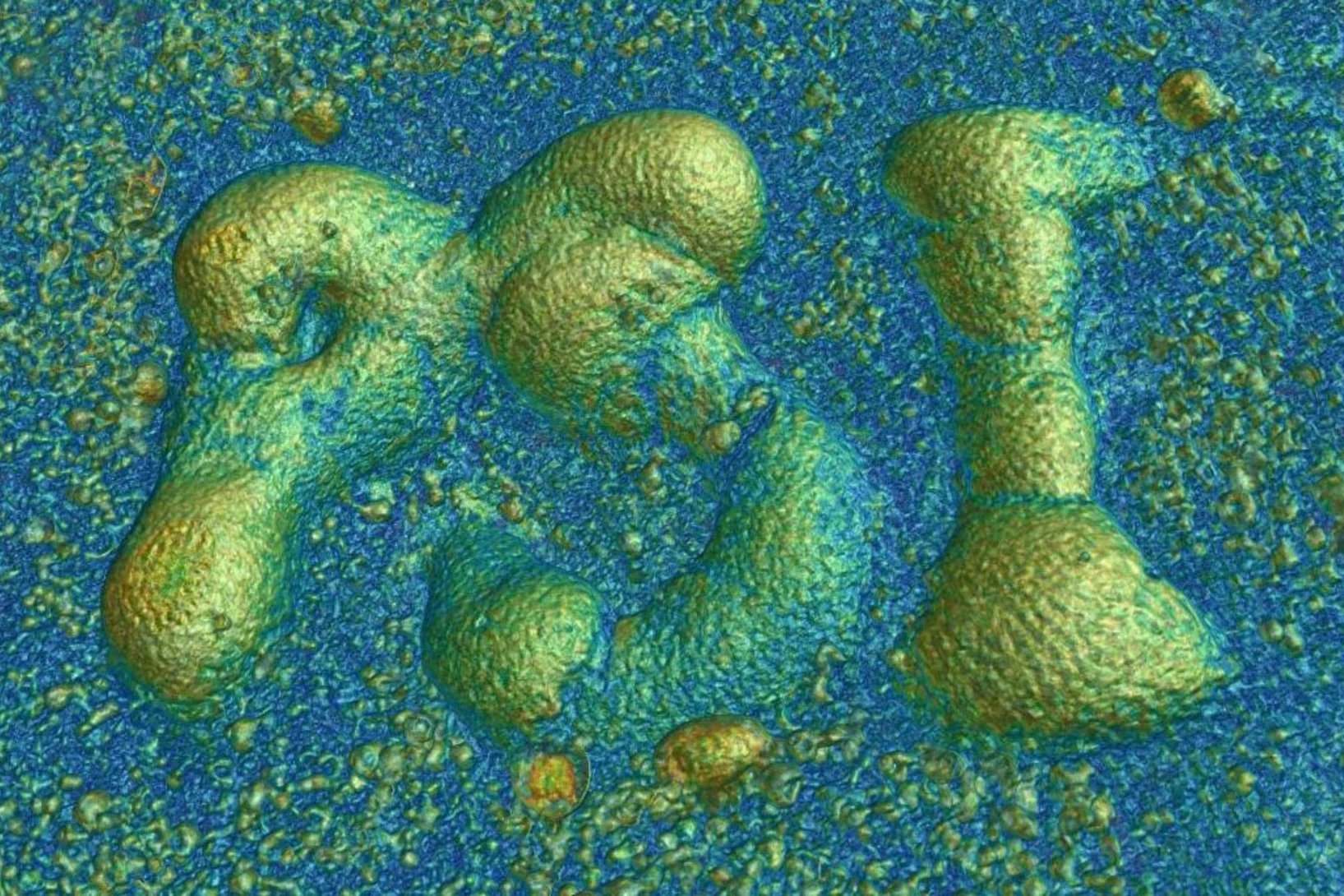
To make the magnetic interactions between the atoms visible, scientists at the Paul Scherrer Institute PSI have developed a special model system. It is so big that it can be easily observed under an X-ray microscope, and mimics the tiniest movements in Nature. The model: rings made from six nanoscale magnetic rods, whose north and south poles attract each other. At room temperature, the magnetisation direction of each of these tiny rods varies spontaneously. Scientists were able to observe the magnetic interactions between these active rods in real time. These research results were published on May 5 in the journal “Nature Physics”.

22. April 2013

teaserbild.jpg

Germanium – zum Leuchten gezogen

Media Releases Matter and Material Micro- and Nanotechnology Materials Research

Forscher des PSI und der ETH Zürich haben mit Kollegen vom Politecnico di Milano in der aktuellen Ausgabe der wissenschaftlichen Fachzeitschrift "Nature Photonics" eine Methode erarbeitet, einen Laser zu entwickeln, der schon bald in den neuesten Computern eingesetzt werden könnte. Damit könnte die Geschwindigkeit, mit der einzelne Prozessorkerne im Chip miteinander kommunizieren, drastisch erhöht werden. So würde die Leistung der Rechner weiter steigen.
This news release is only available in German.

14. April 2013

teaserbild.JPG

Memory effect now also found in lithium-ion batteries

Media Releases Energy and Environment

Lithium-ion batteries are high performance energy storage devices used in many commercial electronic appliances. Certainly, they can store a large amount of energy in a relatively small volume. They have also previously been widely believed to exhibit no memory effect. That’s how experts call a deviation in the working voltage of the battery, caused by incomplete charging or discharging, that can lead to only part of the stored energy being available and an inability to determine the charge level of the battery reliably. Scientists at the Paul Scherrer Institute PSI, together with colleagues from the Toyota Research Laboratories in Japan have now however discovered that a widely-used type of lithium-ion battery has a memory effect. This discovery is of particularly high relevance for advances towards using lithium-ion batteries in the electric vehicle market. The work was published today in the scientific journal Nature Materials.


8. April 2013

teaserbild.jpg

X-ray Laser: A novel tool for structural studies of nano-particles

Media Releases SwissFEL Matter and Material

Prominent among the planned applications of X-ray free electron laser facilities, such as the future SwissFEL at the Paul Scherrer Institute, PSI, are structural studies of complex nano-particles, down to the scale of individual bio-molecules. A major challenge for such investigations is the mathematical reconstruction of the particle form from the measured scattering data. Researchers at PSI have now demonstrated an optimized mathematical procedure for treating such data, which yields a dramatically improved single-particle structural resolution. The procedure was successfully tested at the Swiss Light Source synchrotron at PSI.

3. April 2013

teaserbild.jpg

Observing engine oil beneath metal

Media Releases Matter and Material Research Using Neutrons

Developmental Engineers from the firm LuK (D) wanted to see right through the metal housing of a clutch. They wanted to observe how the oil that lubricates and cools a clutch is distributed. A transparent disc becomes dirty very quickly, and X-rays merely reveal the metal. These engineers therefore turned to scientists at the Paul Scherrer Institute, who illuminated the metal with neutrons and thus made the lubricating oil visible. The results surprised everyone: only three of the eight lamellae were sufficiently lubricated.

25. February 2013

teaserbild.jpg

Computed tomography provides real-time 3D pictures showing how oil and water flow in porous rock

Media Releases

For the first time, experiments using computed tomography have allowed scientists to observe in 3D the flow of oil and water in real rock on an unprecedented scale. The new approach trailed and the information gathered by the experiments contribute to an improved understanding of multiphase flow and transport in porous media.

22. February 2013

teaserbild.jpg

Building rights agreement signed

Media Releases SwissFEL SwissFEL Construction

A new Large-Scale Research Facility, SwissFEL, is to be built in the Würenlingen forest, very close to the Paul Scherrer Institute (PSI). On Friday, February 22, 2013, the building permit was signed with the Citizens’ Commune of Würenlingen.

14. February 2013

teaserbild.jpg

A glimpse inside the control centres of cell communication

Media Releases Biology Human Health

Numerous processes taking place within our body, such as sight, smell or taste, are accomplished by an important family of sensors on cell surfaces, which are known as G protein-coupled receptors (GPCR). Researchers have now compared the hitherto known structures of GPCRs and discovered a stabilising framework of fine struts that is characteristic for the architecture of the entire GPCR family. Knowledge about this constructional feature, which has been conserved over the course of evolution, can be of significant assistance in the development of new pharmaceuticals.

12. February 2013

teaserbild.jpg

Superconductors surprise with intriguing properties

Media Releases Matter and Material Research Using Synchrotron Light

Scientists at the Paul Scherrer Institute, together with Chinese and German collaborators, have obtained new insights into a class of high-temperature superconductors. The experimental results of this fundamental research study indicate that magnetic interactions are of central importance in the phenomenon of high-temperature superconductivity. This knowledge could help to develop superconductors with enhanced technical properties in the future.

12. February 2013

teaserbild.jpg

Joint venture in the bioenergy and resource efficiency sector: PSI and FHNW establish joint institute

Media Releases Energy and Environment Renewable Energies

The Institute of Biomass and Resource Efficiency was founded by the two institutions, PSI (Paul Scherrer Institute) and FHNW (University of Applied Sciences Northwestern Switzerland), at the start of 2013. The aim of this new institute is to tackle the issue of resource efficiency throughout Switzerland, concentrating simultaneously on energy and material for the first time, and to thus make a significant contribution to the Federal Government’s "Energy Strategy 2050". The focus is on the sustainable use of biomass.

8. February 2013

teaserbild.jpg

Focussed construction expertise for the SwissFEL

Media Releases SwissFEL SwissFEL Construction

The joint venture “EquiFEL Suisse”, a consortium of three well-established Swiss companies, has been awarded the contract as general contractor for the construction of the SwissFEL building and for providing the necessary technical infrastructure. The contract for work and services was signed by the Paul Scherrer Institute PSI and the joint venture yesterday evening.

7. February 2013

teaserbild.jpg

Imaging fluctuations with X-ray microscopy

Media Releases

X-rays are used to investigate nanoscale structures of objects as varied as single cells or magnetic storage media. Yet, high-resolution images impose extreme constraints on both the X ray microscope and the samples under investigation. Researchers at the Technische Universität München the PSI now showed how to relax these conditions without loss of image quality. They further showed how to image objects featuring fast fluctuations, such as the rapid switching events that determine the life time of data storage in magnetic materials.

31. January 2013

teaserbild.jpg

Magnetic nano-chessboard puts itself together

Media Releases Micro- and Nanotechnology Materials Research Matter and Material Research Using Synchrotron Light

Researchers from the Paul Scherrer Institute and the Indian Institute of Science Education and Research have been able to intentionally ‘switch off’ the magnetization of every second molecule in an array of magnetized molecules and thereby create a ‘magnetic nano-chessboard’. To achieve this, they manipulated the quantum state of a part of the molecules in a specific way.

25. January 2013

teaserbild.jpg

Proton size puzzle reinforced!

Media Releases Particle Physics Research Using Muons Large Scale Facilities Matter and Material

An international team of scientists confirmed the surprisingly small value of the proton radius with laser spectroscopy of exotic hydrogen. The experiments were carried out at PSI which is the only research institute in the world providing the necessary amount of muons for the production of the exotic hydrogen atoms made up of a muon and a proton.

7. January 2013

teaserbild.jpg

The weak side of the proton

Media Releases Matter and Material Research Using Muons Particle Physics

An international research team has determined with a high level of accuracy, how the proton participates in the weak interaction – one of the fundamental forces of nature. Their results confirm the predictions of the Standard Model of particle physics. The experiment observed the probability of muon capture by protons – a process governed by the weak interaction. The experiment was conducted at the Paul Scherrer Institute, the only institute in the world with an accelerator capable of generating enough muons for carrying out this project in a realistic timeframe.

3. January 2013

teaserbild1.jpg

How stabilised cell fibres prevent cancer cell division

Media Releases Human Health Biology Research Using Synchrotron Light

Anti-cancer drugs are used under the heading of “Chemotherapeutics” to prevent cells from dividing. Because the cells in a growing tumour divide more frequently than others, tumour cells are damaged more severely. Scientists at the Paul Scherrer Institute and the ETH Zurich have now clarified the exact mechanism of action of one class of these drugs. The data acquired is so accurate, that targeted drugs could now be developed that are even better suited to fulfil their task.

17. October 2012

teaserbild.jpg

The evolutionary origins of our pretty smile

Media Releases Biology User Experiments Research Using Synchrotron Light

Until recently, it was not obvious whether the earliest vertebrates (animals with a backbone) which had jawbones already possessed teeth or not. Now, an international research team has shown that the jaws of the prehistoric fish Compagopiscis already had teeth. This means that teeth appeared at the same evolutionary time as jaws – or at least shortly afterwards. The leaders of this project were scientists from the University of Bristol, England, who carried out their decisive experiments at the SLS at PSI.

16. October 2012

teaserbild.jpg

X-rays provide insights into volcanic processes

Media Releases Research Using Synchrotron Light Environment User Experiments

Experiments performed at the Paul Scherrer Institute (PSI) investigate processes inside volcanic materials that determine whether a volcano will erupt violently or mildly. In the experiments, scientists heated small pieces of volcanic material similarly to conditions present at the beginning of a volcanic eruption. They used X-rays from the SLS to observe, in real time, what happens to the rock as it goes from the solid to the molten state.

10. October 2012

teaserbild.jpg

Nobelpreiswürdig: G-Protein-gekoppelte Rezeptoren

Media Releases Biology

Der Nobelpreis für Chemie geht in diesem Jahr an Robert J. Lefkowitz und Brian K. Kobilka. Sie haben herausgefunden, wie eine Familie von Rezeptoren funktioniert, die man G-Protein-gekoppelte Rezeptoren (GPCR) nennt. Auch am PSI leisten Wissenschaftler Beiträge auf diesem Forschungsgebiet.
This news release is only available in German.

2. October 2012

teaserbild.jpg

Silicon – Close to the Breaking Point

Media Releases Materials Research Micro- and Nanotechnology Matter and Material

Stretching a layer of silicon can lead to internal mechanical strain which can considerably improve the electronic properties of the material. Researchers at the Paul Scherrer Institute and the ETH Zurich have created a new process from a layer of silicon to fabricate extremely highly strained nanowires in a silicon substrate. The researchers report the highest-ever mechanical stress obtained in a material that can serve as the basis for electronic components. The long term goal aim is to produce high-performance and low-power transistors for microprocessors based on such wires.

10. September 2012

teaserbild.jpg

Built-in Germanium Lasers could make Computer Chips faster

Media Releases Materials Research Micro- and Nanotechnology Matter and Material

Paul Scherrer Institute (PSI) researchers have investigated the mechanisms necessary for enabling the semiconductor Germanium to emit laser light. As a laser material, Germanium together with Silicon could form the basis for innovative computer chips in which information would be transferred partially in the form of light. This technology would revolutionise data streaming within chips and give a boost to the performance of electronics.

5. September 2012

teaserbild.jpg

New Insights into Superconducting Materials

Media Releases Matter and Material Materials Research Research Using Synchrotron Light

A new X-ray technique provides insights into the magnetic properties of atomically thin layers of a parent compound of a high-temperature superconductor. It turns out that the magnetic properties of material films which are only a few atoms thick differ by only a surprisingly small degree from those of macroscopically thick samples. In the future, this method can be used to study the processes occurring in very thin layers of superconductors and help us to understand this intriguing phenomenon.

11. July 2012

teaserbild.jpg

Ultra-short X-ray laser pulses precisely surveyed for the first time

Media Releases SwissFEL SwissFEL Technology Micro- and Nanotechnology

X-ray lasers are modern light sources from which scientists expect to obtain new knowledge about the structure and function of materials at the atomic level. The scientific value of an X-ray laser stands or falls on the quality of the ultra-short X-ray pulses it produces and which researchers use to illuminate their samples. An international team led by scientists from the Paul Scherer Institute, PSI, has now precisely measured these pulses

11. July 2012

teaserbild.jpg

Distribution of soot particles in particulate filters of diesel vehicles seen for the first time

Media Releases Research Using Neutrons Materials Research

Diesel motor vehicles have to be equipped with soot particulate filters, so the harmful soot and ash cannot get into the environment. Whilst these operate according to appropriate standards, up until now, the details about the distribution of soot and ash inside these filters has been unknown. Now, thanks to the special examination techniques of the Paul Scherrer Institute [PSI], the actual filter loads have been seen for the first time.

4. July 2012

teaserbild.jpg

Observation of a New Particle

Media Releases Matter and Material Particle Physics

In a joint seminar today at CERN and the “ICHEP 2012” conference in Melbourne, researchers of the Compact Muon Solenoid (CMS) experiment at the Large Hadron Collider (LHC) presented their preliminary results on the search for the standard model (SM) Higgs boson in their data recorded up to June 2012.

3. July 2012

teaserbild.jpg

Controversy clarified: Why two insulators together can transport electricity

Media Releases Matter and Material Materials Research

How can two materials which do not conduct electricity create an electrically conducting layer when they are joined together? Since this effect was discovered in 2004, researchers have developed various hypotheses to answer this question. Now, an international team under the leadership of researchers at the Paul Scherrer Institute has probably settled the controversy.

5. June 2012

teaserbild.jpg

Alzheimer plaques in 3D

Media Releases Human Health Research Using Synchrotron Light Biology

Researchers have succeeded in generating detailed three-dimensional images of the spatial distribution of amyloid plaques in the brains of mice afflicted with Alzheimer’s disease. The new technique used in the investigations provides an extremely precise research tool for a better understanding of the disease. In the future, scientists hope that it will also provide the basis for a new and reliable diagnosis method. The results were achieved within a joint project of two research teams – one from the Paul Scherrer Institute (PSI) and ETH Zurich, the other from the École Polytechnique Fédérale de Lausanne (EPFL).

22. May 2012

teaserbild.jpg

Reconstruction of atmospheric lead concentrations in Russia since 1680

Media Releases Energy and Environment Environment

A research team from the Paul Scherrer Institute has reconstructed the concentration record of lead in the atmosphere in Russia since 1680. The results demonstrate a significant increase in the atmospheric lead concentrations since the 1930s and a significant reduction since the 1970s.

16. May 2012

teaserbild.jpg

Energiewende: Das Ganze sehen, die Details bedenken

Media Releases Energy and Environment

Die Energiewende als politischer Wille ist Realität, aber wie wird die Schweiz ihre Energieversorgung aus dem heutigen Stand in diejenige überführen, die die für das Jahr 2050 formulierten Ziele erfüllt? Mit Fragen der Umsetzung, mit den Optionen und den Herausforderungen des beschlossenen Umbaus der schweizerischen Energielandschaft befasste sich am 14. Mai 2012 die Energietagung des Paul Scherrer Institut. Im Mittelpunkt stand der bei einer zunehmend dezentralen Energieversorgung notwendige Umbau der Stromnetze.
This news release is only available in German.

27. April 2012

20120302 NES Jodrueckhal tn.jpg

Retention of radioactive iodine in serious NPP accidents

Media Releases Energy and Environment Nuclear Power Plant Safety

Researchers at the Paul Scherrer Institute [PSI] have developed a highly efficient technique for filtering radioactive iodine. It removes virtually all of the iodine from radioactively contaminated exhaust air before its release into the environment after a meltdown at a damaged nuclear power plant. The process has recently become ready for worldwide use at nuclear power installations, after PSI and the industrial company CCI AG (Balterswil/TG) have signed a licensing agreement for the PSI patented process.

Media corner

Information and contacts for media representatives

psi forum

The visitors' centre of the Paul Scherrer Institute

School Lab "iLab"

The laboratory for the iPod generation

Follow the PSI