
Magnetisieren braucht mehr Zeit als Entmagnetisieren
Forscher am Paul Scherrer Institut finden heraus, wie lange der Aufbau von Magnetismus in einem Metall dauert und wie der Vorgang abläuft
Wenn die Metalllegierung Eisen-Rhodium magnetisiert wird, dauert dieser Prozess deutlich länger als der gegenläufige Vorgang der Entmagnetisierung. Diese Erkenntnis haben Forscher des Paul Scherrer Instituts PSI in Villigen (AG/Schweiz) zusammen mit einem internationalen Forscherteam gewonnen. Der Aufbau des Magnetismus erfolgt in zwei Schritten: Zunächst bilden sich kleine magnetische Regionen, jedoch zeigt das Magnetfeld in zufällige Richtung. Dann erst drehen sich diese Bereiche in eine gemeinsame Richtung. Die entsprechende Studie ist dieser Tage in der renommierten Fachzeitschrift „Physical Review Letters“ erschienen. Die Erkenntnisse aus der Grundlagenforschung sind relevant für die Computerindustrie: Sie zeigen, welche Prozesse die Eigenschaften magnetischer Datenspeicherung begrenzen und wo es potential für Verbesserung gibt.
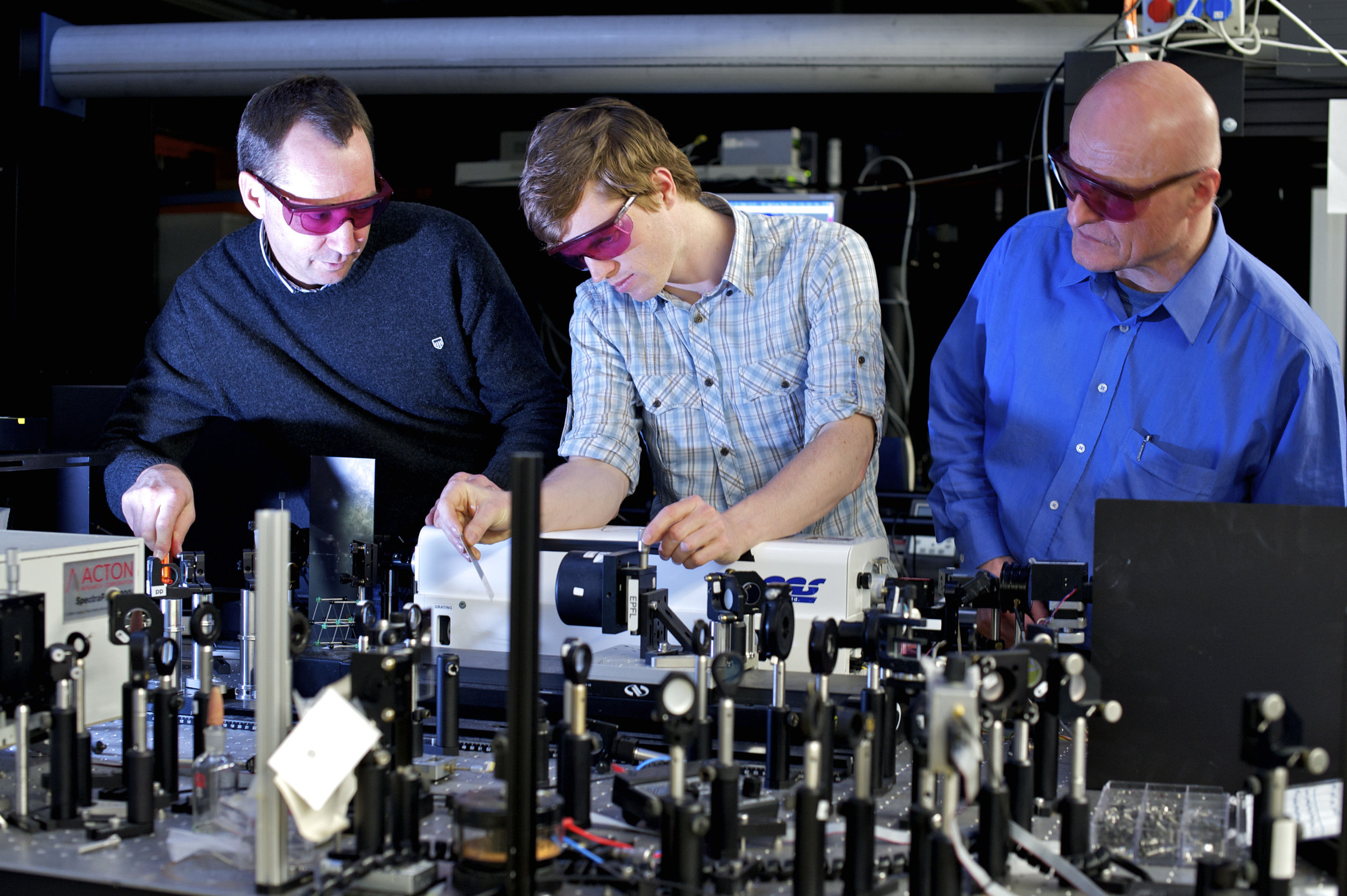
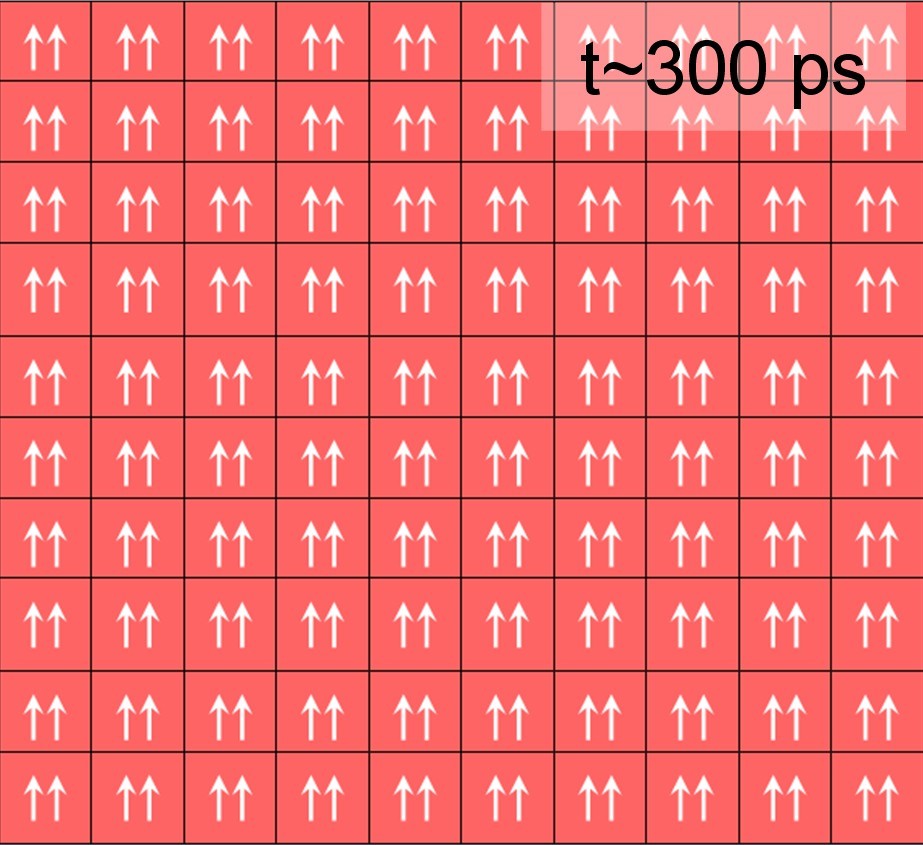
Magnetismus ist eines der Phänomene, bei denen der Mensch Naturkräfte unmittelbar erfährt. Kinder kuppeln die Waggons der Brio-Eisenbahn durch Magnete, Erwachsene pinnen Notizen mit Magneten an den Kühlschrank, und in Elektroautos setzen Magnete Strom in Bewegung um. Physiker sind von der Kraft der Magnete seit deren Entdeckung in der Antike fasziniert und wollen sie verstehen. Vor rund 20 Jahren haben sie herausgefunden, wie lange es dauert, ein Material vom magnetischen in den nichtmagnetischen Zustand zu überführen. Forscher des PSI haben nun zusammen mit Kollegen aus Deutschland und den USA den gegenteiligen Prozess untersucht, also das „Anschalten“ des Magnetismus. Sie konnten dabei zeigen, dass es etwa 0,3 Milliardstelsekunden dauert, bis die Metalllegierung Eisen-Rhodium magnetisiert ist. Für die Forscher ist das eine vergleichsweise lange Zeit. Denn das „Anschalten“ von Magnetismus dauert 300 Mal länger als das „Ausschalten“, wie sie mit ihren Experimenten nachweisen können. „Es ist wie beim Hausbau: Es nimmt mehr Zeit in Anspruch, ein Haus zu bauen als es abzureissen“, sagt PSI-Forscher Dr. Christoph Quitmann, der das Experiment vor fünf Jahren angeregt hat und seither leitet.
Magnetisierung in zwei Schritten
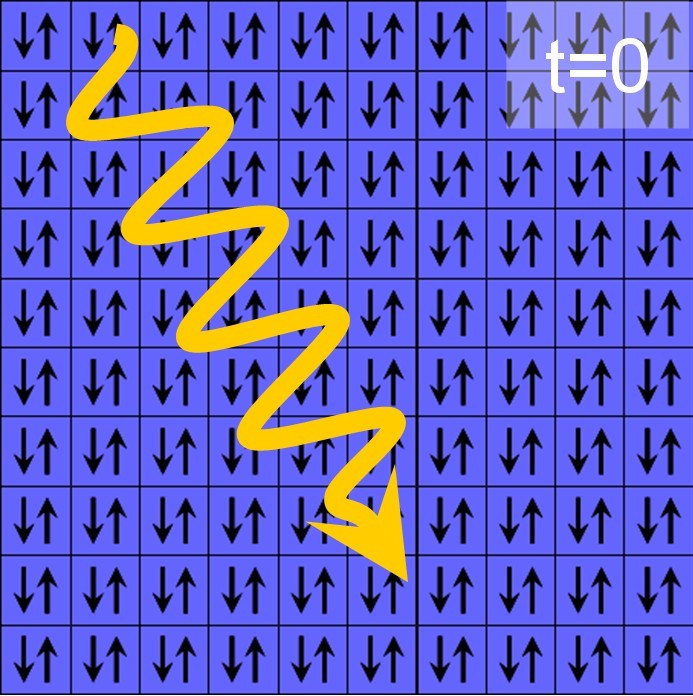
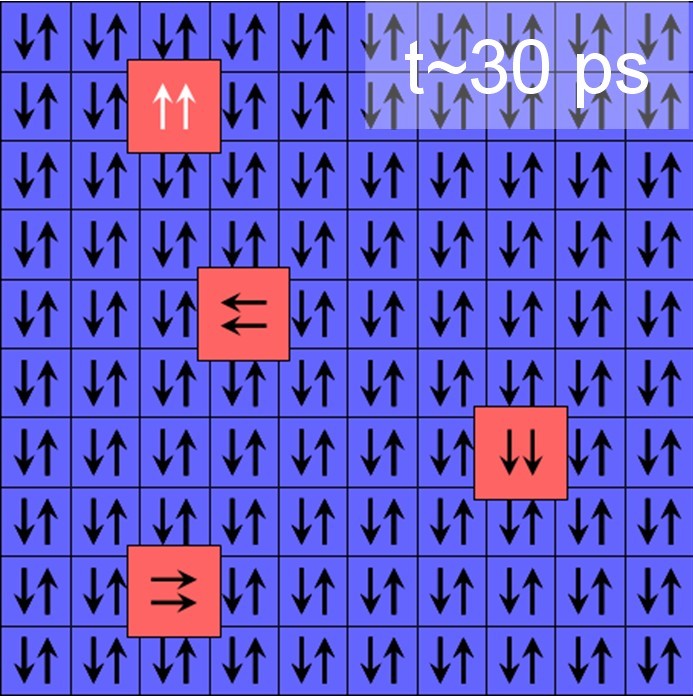
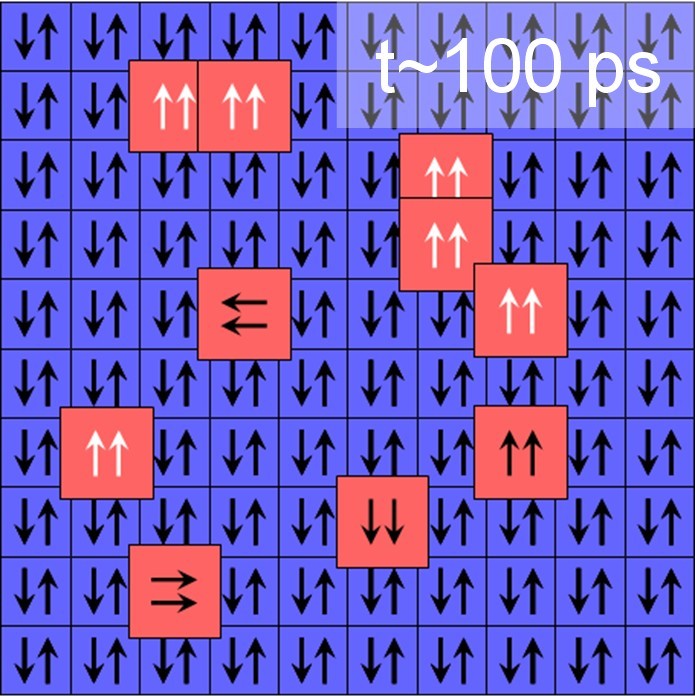
Die Forscher hat nicht nur interessiert, wie schnell Eisen-Rhodium vom nichtmagnetischen in den magnetischen Zustand übergeht, sondern auch, wie sich dabei der Magnetismus im Material aufbaut. Jedes Eisenatom hat einen sogenannten Spin, es benimmt sich wie eine winzige Kompassnadel. Ein Material ist magnetisch, wenn all diese Spins in die gleiche Richtung zeigen. Dann summiert sich ihre magnetische Kraft und wird messbar. Das „Anschalten“ des Magnetismus ist mithin der Vorgang, die Spins (oder atomaren Kompassnadeln), die im unmagnetisierten Zustand unterschiedliche Orientierungen haben, in dieselbe Richtung zu bringen. Die PSI-Forscher konnten zeigen, dass der Magnetisierungsvorgang nicht gleichmässig abläuft, etwa von einer Seite der Materialprobe zur anderen oder vom Zentrum zum Rand, sondern in zwei Phasen. Der Magnetismus entsteht gleichzeitig, aber unabhängig in vielen kleinen Regionen des Materials, den sogenannten Domänen (Phase 1). Später (Phase 2) drehen sich die Domänen in eine gemeinsame Richtung. In Phase 1 – der sogenannten Nukleation – zeigen die Spins jeder Domäne in eine zufällige Richtung, der Magnetismus von zwei unterschiedlich ausgerichteten Domänen kann sich deshalb aufheben. In Phase 2 – der sogenannten Reorientierung – werden die Spins der Domänen in eine einzige gemeinsame Richtung gedreht. So wird die magnetische Kraft nach aussen wirksam. Die Nukleation läuft vergleichsweise rasch ab, die nachfolgende Reorientierung nimmt länger in Anspruch und bestimmt damit die Gesamtdauer des Magnetisierungsvorgangs.
Beobachtung mit Röntgen- und Laserstrahlen
Für ihre Untersuchungen nutzten die Forscher am PSI die Synchrotron Lichtquelle Schweiz SLS. Die SLS ist im Prinzip ein sehr leistungsstarkes Mikroskop, das Materialuntersuchungen in kleinsten Dimensionen erlaubt. Zur Untersuchung des Magnetismus beleuchten die Forscher die Materialprobe mit einem kurzen Puls eines Röntgenstrahls. Dieser wird beim Auftreffen auf die Atome abgelenkt („gebeugt“). Aus dem Grad der Ablenkung errechnen die Forscher den Abstand der Atome. Jetzt wird die Materialprobe durch einen Laserpuls erhitzt und dadurch magnetisch. (Eisen-Rhodium wird bei 120°C magnetisch). Nach einer kurzen Zeitverzögerung misst ein weiterer Röntgenpuls wiederum den Abstand der Atome. Dieser ist im magnetischen Zustand grösser. Mit dieser Versuchsanordnung können die Forscher beobachten, wie schnell sich der Abstand zwischen den Atomen vergrössert – und damit unmittelbar nachvollziehen, wieviel Zeit der Aufbau des Magnetismus in Anspruch nimmt.
International vernetzt
Zu den Erkenntnissen rund um das „Anschalten“ von Magnetismus haben die drei PSI-Forscher Christoph Quitmann, Simon Mariager und Gerhard Ingold beigetragen, dazu weitere Forscher aus Deutschland und den USA. Christian Back und sein Team von der Universität Regensburg stellten mit Messungen auf der Grundlage des magnetooptischen Kerr-Effekts fest, wie lange es braucht, bis über die ganze Probe hinweg der gleiche Magnetismus herrscht. Eric Fullerton und seine Kollegen vom der University of California in San Diego haben die Eisen-Rhodium-Proben hergestellt. Die Probe für die Experimente besteht aus einer nur gerade 500 Atome dicken Schicht aus Eisen und Rhodium. Damit die Atome der beiden Metalle regelmässig nebeneinander zu liegen kamen, wurden sie schichtenweise auf einen kristallinen Träger aufgedampft.
Leistungsfähige Datenspeicher
Die Forschungspartnerschaft mit Kalifornien zeigt die Richtung an, in der die Grundlagenforschung des PSI in Zukunft industriell nutzbar werden könnte. Die University of California in San Diego entwickelt nämlich mit Industriepartnern neue Computer-Festplatten. Wo immer Computerdaten heute langzeitgespeichert werden, geschieht dies magnetisch. Um die Speicherkapazität auszureizen, sind Materialien gefragt, bei denen die Magnetisierung möglichst schnell vonstatten geht. Eisen-Rhodium, mit dem die PSI-Forscher bisher arbeiten, ist in Diskussion für die nächste Generation von Computer-Festplatten. „Wir untersuchen, welches die physikalisch beschränkenden Prozesse sind, wenn es um die weitere Miniaturisierung von Datenspeichern oder die Erhöhung von deren Geschwindigkeit geht“, sagt PSI-Forscher Quitmann. Er und seine Kollegen werden in Zukunft weitere Materialien auf ihre Magnetisierungseigenschaften hin untersuchen. Für die Forschungsarbeit werden sie ab 2016 neben der SLS auch den Röntgenlaser SwissFEL benutzen, die neue, noch leistungsfähigere Grossforschungsanlage am PSI, die zurzeit in Bau ist.
Über das PSI
Das Paul Scherrer Institut entwickelt, baut und betreibt grosse und komplexe Forschungsanlagen und stellt sie der nationalen und internationalen Forschungsgemeinde zur Verfügung. Eigene Forschungsschwerpunkte sind Materie und Material, Elementarteilchenphysik, Biologie und Medizin, Energie- und Umweltforschung. Mit 1400 Mitarbeitenden und einem Jahresbudget von rund 300 Mio. CHF ist es das grösste Forschungsinstitut der Schweiz.
