LCH - Laboratory of Radiochemistry and Environmental Chemistry
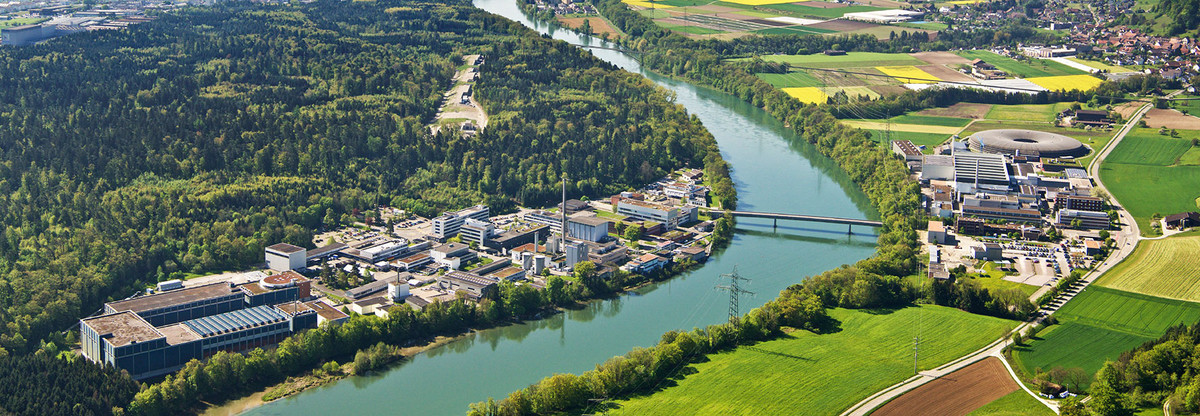
The Laboratory of Radiochemistry and Environmental Chemistry (LCH) at the Paul Scherrer institute is part of a joint research unit with the University of Bern, where the head of LCH holds the only chair of radiochemistry in Switzerland.One of the main mission of LCH is to disseminate the knowledge and skills required to handle radioactive materials to a large number of doctoral and master students. The LCH holds six integrating research groups focusing on radiochemical basic and applied science.
News
12 April 2013
Annual Report 2012
LCH proudly presents:The Annual Report 2012
Contact: Andreas Türler
Download Internet
Search & Download Intranet
6 March 2013
Focus on Chemistry in Snow
Our research on chemistry on ice and snow was recently covered in the MediaAn article in the Neue Zürcher Zeitung (NZZ) View at NZZ
A comment in Nature View at Nature
A podcast from Nature Listen at Nature
A note in Horizonte Read at SNF
An interview Read at PSI
Contact: Thorsten Bartels-Rausch
Contact: Markus Ammann
15 October 2012
Research Portrait in "Fenster zur Forschung"
Anja Eichler and her research are presented in the current PSI publication "Fenster zur Forschung".Contact: Anja Eichler
More Info: Download pdf
Recent Scientific Highlight
Effect of surface charge density on the affinity of oxide nanoparticles for the vapor–water interface
Research Department Biology and Chemistry (BIO), Surface Chemistry Group, Head Markus Ammann. Using in-situ X-ray photoelectron spectroscopy at the vapor-water interface, the affinity of nanometer-sized silica colloids to adsorb at the interface is shown to depend on colloid surface charge density. In aqueous suspensions at pH 10 corrected Debye-Hückel theory for surface complexation calculations predict that smaller silica colloids have increased negative surface charge density that originates from enhanced screening of deprotonated silanol groups by counterions in the condensed ion layer. The increased negative surface charge density results in an electrostatic repulsion from the vapor-water interface that is seen to a lesser extent for larger particles that have a reduced charge density in the XPS measurements. We compare the results and interpretation of the in-situ XPS and corrected Debye-Hückel theory for surface complexation calculations with traditional surface tension measurements. Our results show that controlling the surface charge density of colloid particles can regulate their adsorption to the interface between two dielectrics.
Citation: M. A. Brown, N. Duyckaerts, A. B. Redondo, I. Jordan, F. Nolting, A. Kleibert, M. Ammann, H. J. Wörner, J. A. van Bokhoven and Z. Abbas, Langmuir 29, 5023 (2013)
Publication: http://dx.doi.org/10.1021/la4005054
Further publications: LCH Homepage
Publication: http://dx.doi.org/10.1021/la4005054
Further publications: LCH Homepage
Recent Publications
-
Effect of surface charge density on the affinity of oxide nanoparticles for the vapor–water interface
Langmuir 29, 5023-5029 (2013).DOI: 10.1021/la4005054
-
Temporal variations of perfluoroalkyl substances and polybrominated diphenyl ethers in alpine snow
Environmental Pollution 178, 367-374 (2013).DOI: 10.1016/j.envpol.2013.03.043
-
Adsorption characteristics of 210Pb, 210Po and 7Be onto micro-particle surfaces and the effects of macromolecular organic compounds
Geochimica et Cosmochimica Acta 107, 47-64 (2013).DOI: 10.1016/j.gca.2012.12.039